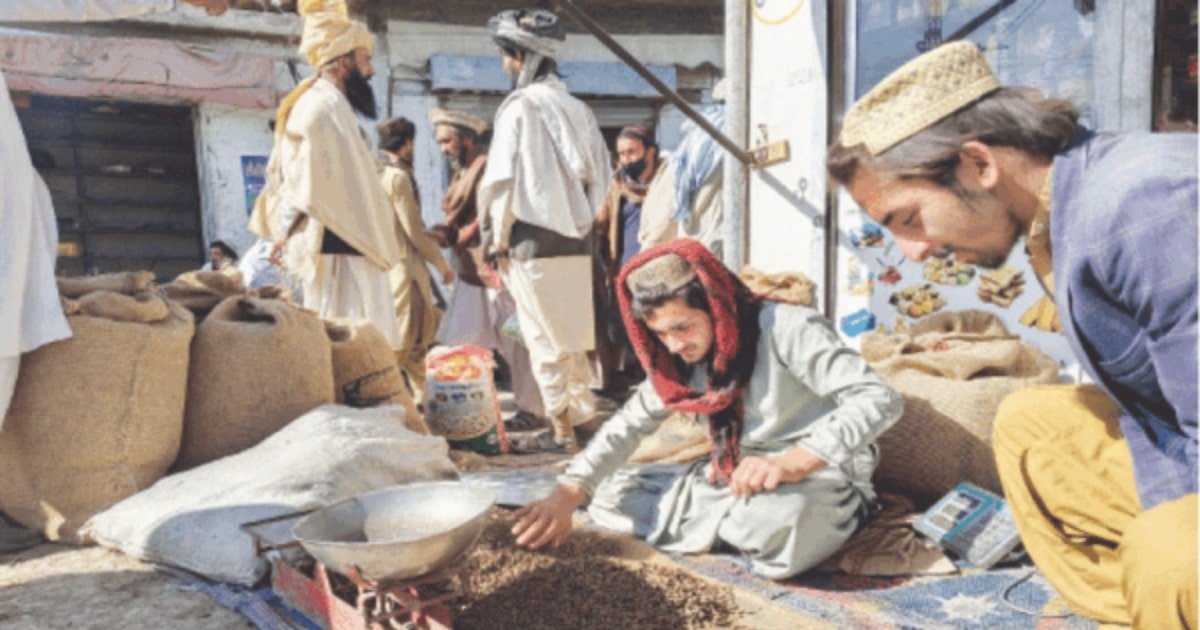





SOUTH WAZIRISTAN: The price of pine nuts (chilgoza) in Lower South Waziristan has fallen to an unprecedented low this season, dropping from last year’s Rs10,000 per kilogram to just Rs3,000 per kilogram — a decline that has left thousands of families involved in the trade facing severe financial losses.
Local traders say the sharp drop has destabilised one of the region’s most valuable dry fruit markets. Commission agent Imran Wazir told this correspondent that the steep decline stemmed from three major factors: exceptionally high production, shrinking international demand and what traders described as systematic harassment by customs and police personnel in major cities including Lahore and Rawalpindi.
He said pine nut output surged significantly in Lower South Waziristan this year, sending large quantities into the market. “Farmers expected a strong harvest to mean better earnings, but the reverse happened. Oversupply pushed prices down faster than anyone anticipated,” he said.
Traders cite high production, shrinking demand and harassment by police and customs officials as main reasons. https://t.co/u3pnspNSmR
— Dawn.com (@dawn_com) November 21, 2025
Growers and traders said the new rate — less than one-third of last year’s price — had alarmed local households who had invested heavily in labour, transport and processing. They alleged that repeated interference from customs and police outside the district had further worsened the situation. “In Lahore, Rawalpindi and other cities, officials stop trucks without reason, re-check documents and pressure traders,” Mr Wazir alleged, adding that delays increased transport costs and reduced the nuts’ freshness and market value.
You May Also Like: 40 former TLP ticket-holders part ways with proscribed party in Bahawalpur division
Traders recalled that the pine nut market run by Waziristan traders in Lahore was sealed last year, causing significant losses. “We had barely recovered from last year’s shock. This season has pushed the market into another crisis,” said one trader.
They emphasised that chilgoza trading was a labour-intensive seasonal activity involving harvesting cones in rugged mountains, followed by shelling, cleaning, drying and storage. Traders said they fulfilled all legal obligations, including paying the required Rs5 per kilogram duty to the forest department, yet still faced repeated highway checks. “When all dues are paid, why are traders stopped again and again?” one questioned.
Grower Javed Wazir said production had nearly tripled this year, exerting immense pressure on the market. He added that declining demand from Gulf and East Asian buyers had further contributed to the slump. “When global demand falls, local prices immediately feel the impact,” he said.
Traders warned that persistent interference by authorities could affect exports, damaging Pakistan’s reputation in the global pine nut market. They urged the government to abolish unnecessary checkpoints and direct customs and police officials not to exceed their mandate. “Thousands of families rely on this trade. Immediate action is crucial to stabilise the market before the next harvest,” a trader said.
Check out our latest video: