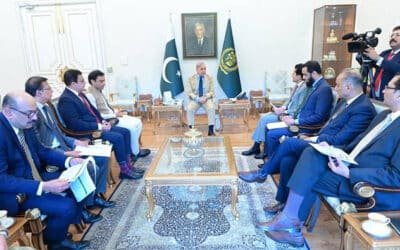
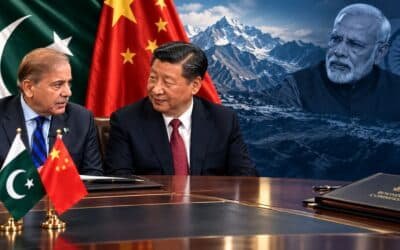


On Monday, March 30, 2026, the Foreign Ministers of Saudi Arabia (Prince Faisal bin Farhan), Turkey (Hakan Fidan), and Egypt (Badr Abdelatty) departed from Islamabad after completing the first formal round of high-level quadrilateral negotiations.
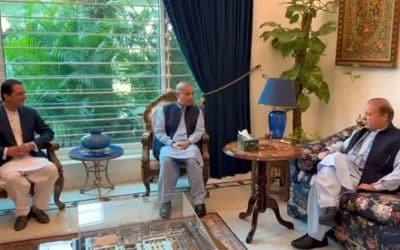
The meeting, hosted and chaired by Deputy Prime Minister and Foreign Minister Ishaq Dar, concluded with a consensus that dialogue is the “only viable path” to ending the month-long regional war. While the ministers have returned home to brief their respective leaderships, a second, “decisive” round of talks has already been scheduled to take place in Islamabad in the coming days.
A key quadrilateral meeting of the foreign ministers of Pakistan, Saudi Arabia, Türkiye and Egypt is now under way, chaired by Deputy Prime Minister and Foreign Minister Ishaq Dar. All eyes are on Islamabad as the high-level talks begin. pic.twitter.com/QKXKzwRd0p
— The Thursday Times (@thursday_times) March 29, 2026
Key Outcomes: The “Islamabad Proposals”
The first round of consultations focused on establishing a concrete “off-ramp” for the conflict:
- The 15-Point Peace Plan: The ministers reviewed the 15-point ceasefire proposal currently being mediated by Pakistan between Washington and Tehran.
- Maritime Security: A major focus was the reopening of the Strait of Hormuz. Proposals included the potential establishment of an international management consortium and a “Suez Canal-style” fee structure to guarantee safe passage for global energy shipments.
- Confidence-Building Measures (CBMs): As a direct result of these talks, Iran has already agreed to allow 20 Pakistani-flagged tankers to pass through the Strait—a move viewed as a significant “olive branch” toward the mediation effort.
Formal US-Iran Negotiations: Islamabad as the Venue
The most significant development from the summit is the formal confirmation of Islamabad as the host for potential direct talks:
- Mutual Trust: Ishaq Dar announced that both the United States and Iran have expressed “confidence and trust” in Pakistan’s facilitating role.
- Global Support: The initiative has received the full backing of China and the UN Secretary-General, who both praised Pakistan’s “principled and neutral” stance.
- Timing: While the Saudi, Turkish, and Egyptian FMs have left, technical teams are remaining in Islamabad to prepare the “Red Zone” for the expected arrival of U.S. and Iranian delegations later this week.
You May Like To Read: Pakistan Joins Global Movement to “Give an Hour for Earth”
Check out our latest video: