



For over half a century, the Pakistani “celebrity” was a creature of mystery and distance. They were the icons of the 80s PTV era, the cinematic legends of the 90s, and the “Satellite Royalty” of the 2000s. To be a star, you needed a director’s nod, a channel’s contract, and a PR team’s polish. But as the sun set over the pink-sandstone arches of the Mohatta Palace on the evening of December 14, 2025, that era officially entered the history books.
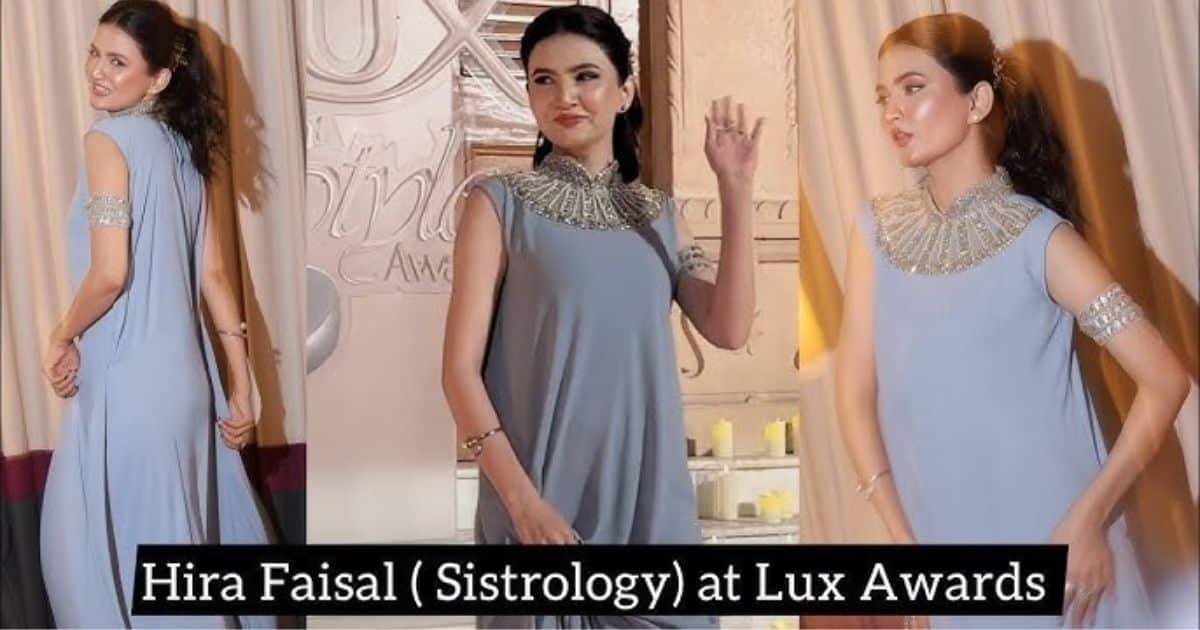
The 24th Lux Style Awards will be remembered as the moment the “Digital Sultan” — the influencer, was formally crowned. When the inaugural Digital Content Creator trophies were handed to real-life couple Rehan Nazim and Rabya Kulsoom (Ron & Coco) and beauty sensation Hira Faisal, it wasn’t just a new category; it was a formal surrender of the old guard.
View this post on Instagram
From Our Pockets to Our Prime-Time
The question hanging in the humid Karachi air today is simple: How did we get here? How did individuals who started by filming skits in their bedrooms end up on the most prestigious red carpet in the country, often sidelining actors with decades of training?
The answer lies in the Democratization of Fame. In a country where 65% of the population is under 30, the “screen” has migrated. It is no longer the 40-inch LED in the lounge; it is the 6-inch glass rectangle in our pockets.
Influencers are everywhere because they solved the one problem traditional television couldn’t: The Trust Gap. In 2025, Pakistani audiences, particularly Gen Z, no longer want “perfection.” They want “presence.” They don’t want a star who is unreachable; they want a friend who replies to their comments.
The Rise of the “No-Talent” Lead
Perhaps the most controversial aspect of this shift is the “Talent vs. Traffic” debate. We are seeing a surge of influencers being cast as leads in major dramas despite having zero formal acting training. To the purist, this is a tragedy. To the production house, it is a business necessity.
Casting an influencer isn’t about their “acting chops”; it’s about their guaranteed reach. When a producer casts a TikToker with 10 million followers, they aren’t just hiring an actor; they are buying an audience. In an era where traditional TV ratings are plummeting, an influencer brings their own marketing department. They “vlog” the behind-the-scenes, they “live-stream” the premieres, and they create a viral loop that traditional PR agencies can no longer replicate.
The result? A screen filled with “personalities” rather than “performers.” We see faces that are famous for being famous, delivering lines with the same cadence they use for a brand unboxing. It is the era of “Relatability over Range.”
View this post on Instagram
The Economic Engine: The Digital Presence Proceeds Tax
The importance of these creators is no longer just cultural; it is fiscal. Recently, the conversation in legal circles shifted toward the “Professionalization of Influence.” With high-profile cases directing major creators to disclose their social media earnings, the government has recognized that “vlogging” is now a top-tier industry.
The “Creative Class” is one of the few sectors showing double-digit growth in a struggling economy. Influencer marketing ROI is now reported to be 11 times higher than traditional TV spots. This economic reality is why the LSA, once the bastion of high-brow cinema and fashion, had to pivot. To ignore the influencer in 2025 would be to ignore the very engine that keeps the entertainment industry solvent.
The LSA Paradox: A Mirror to the Magic
The 24th LSA ceremony, themed “Mirror the Magic,” unintentionally held a mirror up to the industry’s identity crisis. While legacy stars like Fahad Mustafa and Hania Aamir (a hybrid star who is as much an influencer as she is an actress) took home the big trophies, the energy of the night was driven by the “Digital-First” talent.
The traditional stars are now moving into the influencers’ territory just to survive. We see veteran actors lip-syncing to trending TikTok audios and following “challenges” that would have been beneath them a decade ago. It is a desperate bid for relevance in a world where a 15-second “transition” video can get more views than a 40-episode drama serial.
View this post on Instagram
The Throne of the Scroll
The era of the “unreachable star” is dead. The “Real Celebrity” of today is the one who makes the audience feel like a co-pilot in their life. Whether they can act, sing, or dance is increasingly secondary to whether they can keep you from swiping up.
As we look at the landscape this morning, the gatekeepers have been fired. The cameras are everywhere. In the new Pakistan, the throne doesn’t belong to the one with the best script; it belongs to the one who can keep the world scrolling.
Check out our latest video: