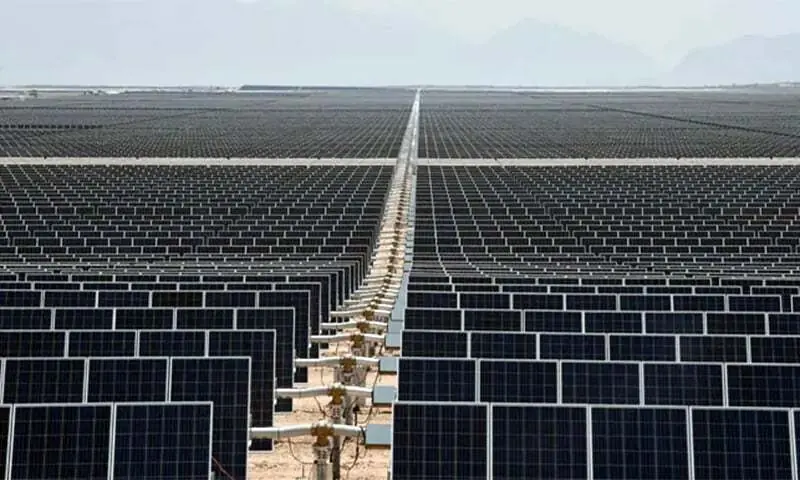



ISLAMABAD: In a significant shift in the ongoing debate over rooftop solar and net metering, the government on Tuesday acknowledged that rising solar adoption has not so far caused the negative impact on the national grid that some officials and distribution companies have frequently claimed.
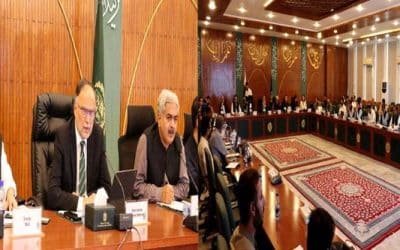
“Solar generation is increasing, but this does not have a significant impact on the grid,” Central Power Purchasing Agency (CPPA) CEO Rehan Akhtar told the National Electric Power Regulatory Authority (Nepra) during a public hearing. The CPPA, operating under the Power Division, manages energy procurement for all distribution companies (Discos) and handles their commercial operations.
Mr Akhtar said consumers shifting to solar had not reduced their dependence on the grid as sharply as assumed. “They are now consuming more due to solar availability, but their offtake from the national grid has not changed. Their withdrawal from the grid is almost stable,” he said, adding that it remained uncertain whether this pattern would continue in the long term.
Net metering surges 173pc
The regulator was told that power generated through net metering surged by 173 per cent, reaching 726 million units in 2024, up from 266 million units in 2023. Over the same period, Discos’ overall growth was a meagre 1pc. Conversely, K-Electric’s grid offtake rose 9.4pc as it began drawing its full allocation of 2,050MW.
Rebasing request and tariff projections
The remarks came as Nepra reviewed CPPA’s request to rebase the power purchase price (PPP) from January 2026 under policy directives issued by the government. CPPA presented five scenarios for tariff revision, projecting average PPP between Rs25.95 and Rs26.53 per unit, depending largely on the degree of future exchange rate depreciation.
The current PPP for FY26 is Rs25.98 per unit, signalling relative stability.
You May Also Like: Four envoys present credentials to President Zardari
Fuel prices are expected to remain broadly stable, with only a 5pc potential increase in a worst-case scenario. PKR depreciation was projected at Rs10 in each half of the upcoming calendar year under one assumption, while interest rates were estimated at 11pc in the first half and 10.5pc in the second.
“Solar generation is increasing, but this does not have a significant impact on the grid,” CPPA CEO Rehan Akhtar said.https://t.co/e0ft9Hz7JX
— Dawn Business (@dawn_business) November 19, 2025
Industry pushes back
Industrial representatives sharply criticised what they described as unsustainable power costs, arguing that high tariffs were rendering Pakistani products uncompetitive in global markets. They said industries continued to cross-subsidise other consumer categories by Rs131 billion, and any tariff relief announced by the government had already been eroded by other charges.
They also challenged CPPA’s projection of rising demand, saying the reality on the ground was the opposite: consumption was falling due to expensive electricity, closure of industrial units, and a rapid shift toward self-generation through solar power.
The solarisation debate has intensified in recent months as energy planners warn of potential revenue shortfalls for Discos, while consumers increasingly turn to rooftop systems to offset high electricity bills. The government’s latest admission is likely to reshape the narrative as Nepra reviews upcoming tariff adjustments and long-term energy planning.
Check out our latest video: