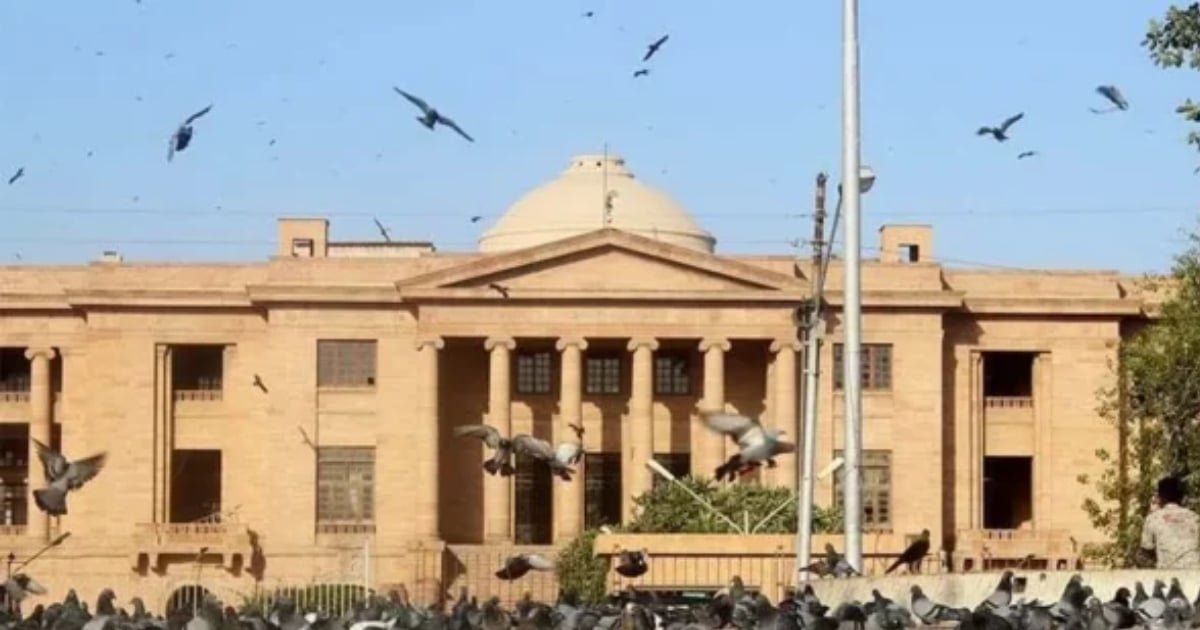


KARACHI: The Sindh High Court (SHC) has dismissed an appeal filed by the state against the acquittal of a juvenile accused in an explosives case, observing that the boy had been implicated solely because of his presence at his father’s house at the time of the alleged recovery.
In its detailed judgment, a two-judge bench comprising Justice Khadim Hussain Tunio and Justice Amjad Ali Sahito upheld the March 2025 decision of an anti-terrorism court, which had acquitted Muavia, who was 13 years old at the time of his arrest. The case dated back to 2013 and was registered under Sections 4 and 5 of the Explosive Substances Act read with Section 7 of the Anti-Terrorism Act, 1997, at the Surjani Town police station.
The bench noted that the first information report (FIR) was initially registered only against the boy’s father, Hafiz Bashir Ahmed Laghari, following an alleged raid on his house in July 2013 during which around 10 kilograms of explosive material was claimed to have been recovered. Hafiz Bashir was later killed in a police encounter, after which the case against him was cancelled.
However, the court observed that the minor son was subsequently implicated by a third investigating officer without any supporting evidence. “It is surprising to note under what circumstances the present minor accused was subsequently involved in the case without collecting or bringing on record any evidence whatsoever against him,” the bench remarked.
The judges pointed out that the juvenile was neither named in the FIR nor was any incriminating substance recovered from his personal possession. They added that the prosecution had failed to establish any credible link between the boy and the explosive material allegedly recovered from his father’s house.
The SHC further highlighted serious flaws in the prosecution’s case, including inconsistencies, contradictions, missing entries and substantial evidentiary gaps in the testimonies of material witnesses. It also noted that a previous investigating officer had recommended the disposal of the case under C-Class (cancellation) and had no knowledge regarding the involvement of the juvenile.
You May Also Like:
The bench also took note of the fact that the alleged explosive material was never produced before the court and was reportedly destroyed in a fire at the City Courts’ malkhana. The prosecution, the court said, failed to present any independent or corroborative evidence to establish a nexus between the juvenile and the offence.
In his statement before the trial court, the accused had maintained that he was a madrassah student at the time of his arrest and had remained incarcerated for nearly 12 years before his acquittal. He denied that any incriminating material was recovered from him and claimed he had been falsely implicated.
Bench rules no link was established between boy and the substance recovered from his father’s house in 2013. https://t.co/KowMWd3reo
— Dawn.com (@dawn_com) January 15, 2026
Concluding its judgment, the SHC ruled that the prosecution had failed to prove its case beyond reasonable doubt and found no justification to interfere with the trial court’s acquittal order, thereby dismissing the state’s appeal.
Check out our latest video: