


The Beach Luxury Hotel, with its salt-tinged air and sprawling gardens, once again served as the epicenter of Pakistan’s intellectual life from February 6 to 8, 2026. The 17th Karachi Literature Festival (KLF) arrived at a time of profound global instability, anchored by the sobering theme: “Literature in a Fragile World.” Spanning three days and featuring over 200 delegates from eight countries, KLF 2026 was more than a literary retreat; it was a 90-session marathon that interrogated our past, debated our digital future, and celebrated the stubborn resilience of the human voice.
The Opening Salvo: Voices of Resistance and Wisdom
The festival’s inauguration on Friday evening set a tone of gravity and grace. Keynote speakers Senator Sherry Rehman and Nasir Abbas Nayyar didn’t just offer pleasantries; they challenged the audience to view literature as a vital tool for survival in a “fragile” climate.
The first night’s centerpiece was a deeply moving tribute to the 150th birth anniversary of Quaid-e-Azam Muhammad Ali Jinnah. Javed Jabbar led a session on Jinnah’s vision for a plural Pakistan, followed by a rare screening of the 1998 film Jinnah, introduced by filmmaker Jamil Dehlavi. As the flickering screen brought the Quaid to life, it served as a reminder of the foundational values that literary festivals like KLF strive to protect.
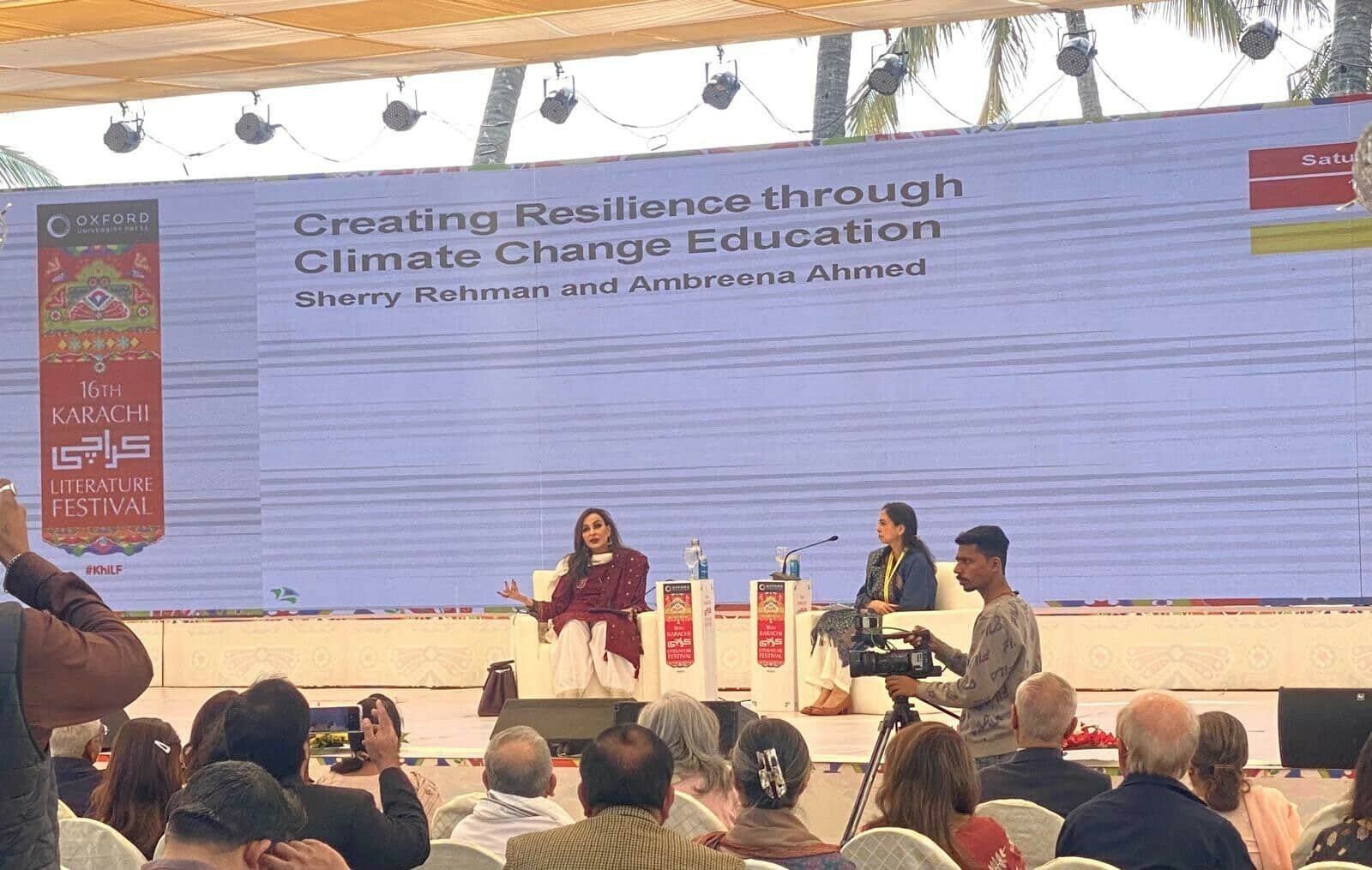
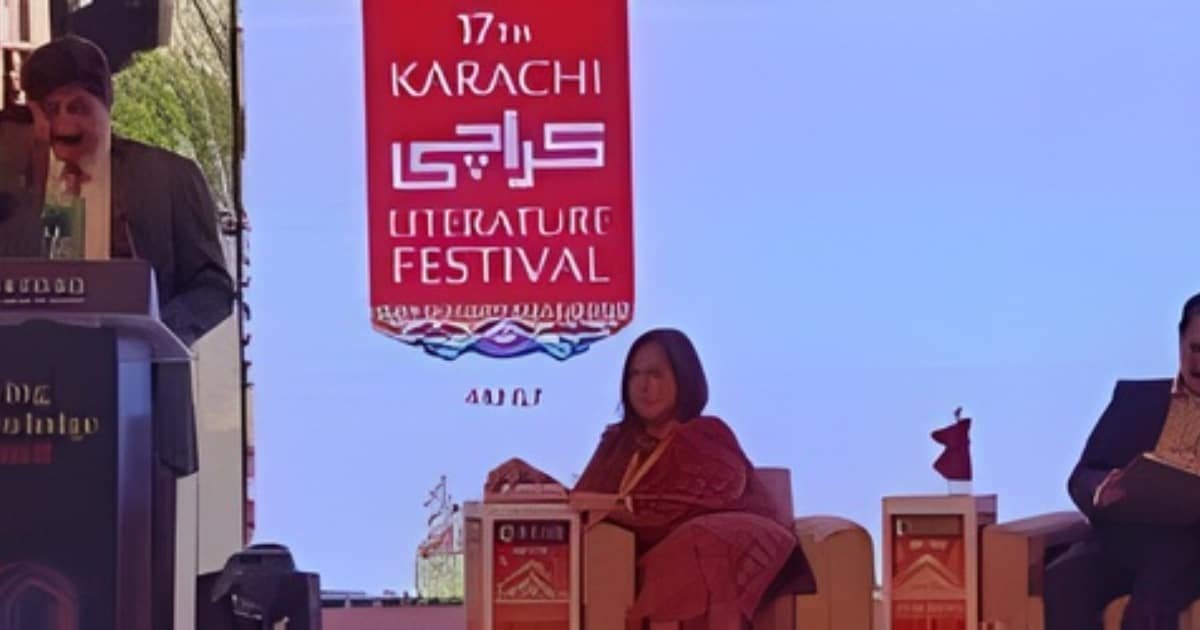
Senator Sherry Rehman speaking on a panel during KLF 2026.
Source: Business Recorder
The Schedule: A High-Wire Act of Intellectualism
Saturday and Sunday were a dizzying array of parallel sessions that forced attendees to make impossible choices.
In a packed Main Garden session titled “Fixing the Fundamentals,” former ministers Ishrat Husain and Miftah Ismail clashed with Asad Umar over the country’s economic path. The air was thick with the tension of a city grappling with inflation, yet the discourse remained civil, a hallmark of the KLF experience.
One of the most forward-looking sessions featured global legal tech expert Professor Richard Susskind. His talk, “How to Think About AI,” explored the existential dread and creative possibilities of artificial intelligence, sparking a debate on whether machines can ever replicate the soul of Urdu poetry.
A new addition for 2026, this high-energy session pitted veteran journalists against Gen-Z creators to argue whether literature today is an “elitist pastime or an essential tool for empathy.”
Delighted to have participated in a panel discussion on ‘Pakistani Fashion in the Age of Visibility’ alongside stellar panelists Mushk Kaleem, Erica Robin, Ziad Bashir and Rizwan Beyg, expertly moderated by Maliha Rehman at the 17th Karachi Literary Festival 2026 by Oxford… pic.twitter.com/8ourgIt1lQ
— Zahir Rahimtoola (@zahirrahimtoola) February 11, 2026
Celebrating the Diaspora and the Coastal Soul
A standout arc of the 2026 festival was the spotlight on Gulf Diaspora Literature. Authors like Mishal Husain and UAE-based academics explored “transnational stories,” moving beyond the economic data of migration to reveal the rich, messy layers of identity shared between the Arab world and Pakistan.
Closer to home, the Sindhi Mushairo (presided over by Madad Ali Sindhi) and a session on “Sufi Karachi” grounded the festival in the soil of Sindh. The room resonated with the verses of Adal Soomro and Attiya Dawood, proving that while the festival attracts global stars like Laline Paull and Sam Dalrymple, its heart beats in the local vernacular.
The Icons: From Jane Austen to Kishwar Naheed
The festival managed a rare feat of timing by celebrating the 250th anniversary of Jane Austen. The session explored Austen’s enduring popularity in Pakistan, where her themes of social mobility and marriage “sensibilities” remain eerily relevant.
However, the loudest applause was reserved for the living legends. When Kishwar Naheed took the stage for the session Umar Mujhay Likhti Hai, the atmosphere was electric. Her reading of the iconic poem “Hum Gunahgar Aurtein” earned a thunderous standing ovation, a powerful reminder of the festival’s theme: in a fragile world, the woman’s voice is often the strongest pillar.
Entertainment with an Edge
KLF 2026 wasn’t all heavy-lifting. The Youth Pavilion was a riot of storytelling and puppet shows, while the evenings transitioned into a celebration of the arts.
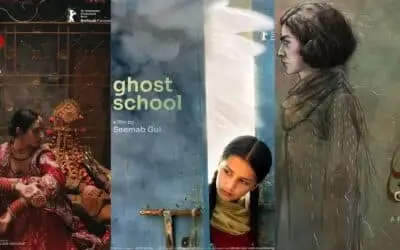
A documentary screening of W.R.A.P. (We Really Are Pakistan) was followed by a live performance from the rappers of Gizri, bridging the gap between classical diction and the raw rhythm of the streets.
View this post on Instagram
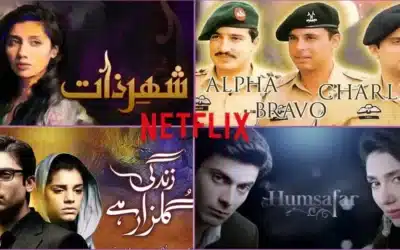
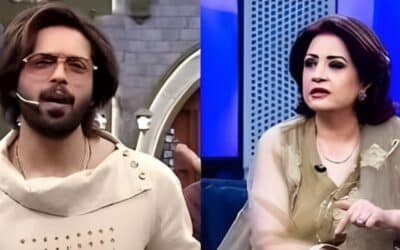
A heated panel featuring Ahmad Ali Akbar, Alyy Khan, and Sarwat Gilani debated whether Pakistani TV dramas are losing their “kahani” (story) to “adakari” (acting) and glamour.
You May Like To Read: The Voice of a Century: Umar Riaz’s The Colour of My Heart
Final Reflections
As the festival closed with a soul-stirring Qawwali on Sunday night, the 17th KLF felt like a victory for the “city of lights.” While the rest of the country looked on with a mix of envy and intrigue, Karachiites proved that even in a world that feels like it’s “spinning out of control,” the Beach Luxury Hotel remains a place where the human spirit can take a breath and find its reflection in a book.
An unforgettable Qawwali night with Hamza Akram Qawwal at the 17th Karachi Literature Festival ✨
With powerful vocals, he captivated the audience and brought the festival to a soulful high. A perfect ending to three days of ideas, dialogue and celebration.#KhiLF pic.twitter.com/E5NQhguTOw— Karachi & Islamabad Lit Fests (@KhiIsbLitFests) February 12, 2026
The KLF-Getz Pharma Book Prizes were awarded with Shandana Minhas taking the English Fiction prize, but the true success was the sight of 200 delegates and thousands of visitors proving that the word is still the most powerful weapon against fragility.
Check out our latest video: