


Legal Milestone: The Transgender Persons (Protection of Rights) Act, 2018
In 2018, Pakistan made global headlines by passing the Transgender Persons (Protection of Rights) Act, which granted transgender individuals legal recognition based on self-perceived gender identity and outlawed discrimination in education, employment, housing, and public services. The law also allowed for the issuance of identity documents and the recognition of inheritance rights based on an individual’s gender identity, marking a historic step forward. This legislative step, supported by civil society and state institutions, reflected commendable progress toward gender justice and inclusion.
The Federal Shariat Court, a key judicial body in Pakistan responsible for examining laws to ensure they comply with Islamic principles, made a Significant decision in the context of transgender rights in Pakistan.
However, in May 2023, the Federal Shariat Court struck down key sections of the Act—specifically, provisions allowing individuals to self-identify by gender, changes to official records, and inheritance rights, declaring them inconsistent with Islamic injunctions. The ruling caused immediate concern among advocates, as it revoked legal mechanisms for gender identity recognition previously enacted by Parliament.
While the court argued that gender identity must align with biological sex at birth, the government has emphasized the need to uphold constitutional rights and parliamentary sovereignty, indicating its intent to challenge or refine the ruling through legislative channels.
Institutional Safeguards and Policy Commitments
Despite judicial setbacks, both the Ministry of Human Rights and UNDP-led initiatives have reinforced state-level commitment to transgender inclusion. In 2023, the Shariat Court itself directed the Ministry to establish a protection centre for underage and elderly transgender individuals, providing a safe space and support services. This demonstrates institutional concern for vulnerable populations. Additionally, transgender individuals have been included in various welfare programs, ensuring their economic and social well-being.
A 2024 UNDP report highlights state collaboration with NADRA, the Election Commission of Pakistan, and civil society in the formulation of a National Strategic Framework on Transgender Inclusion. This report not only highlights the collaborative efforts in this area but also identifies areas that require further improvement, such as the low number of transgender individuals registered as beneficiaries and the need for more comprehensive policies.
Social Reality: Persistent Violence and Marginalisation
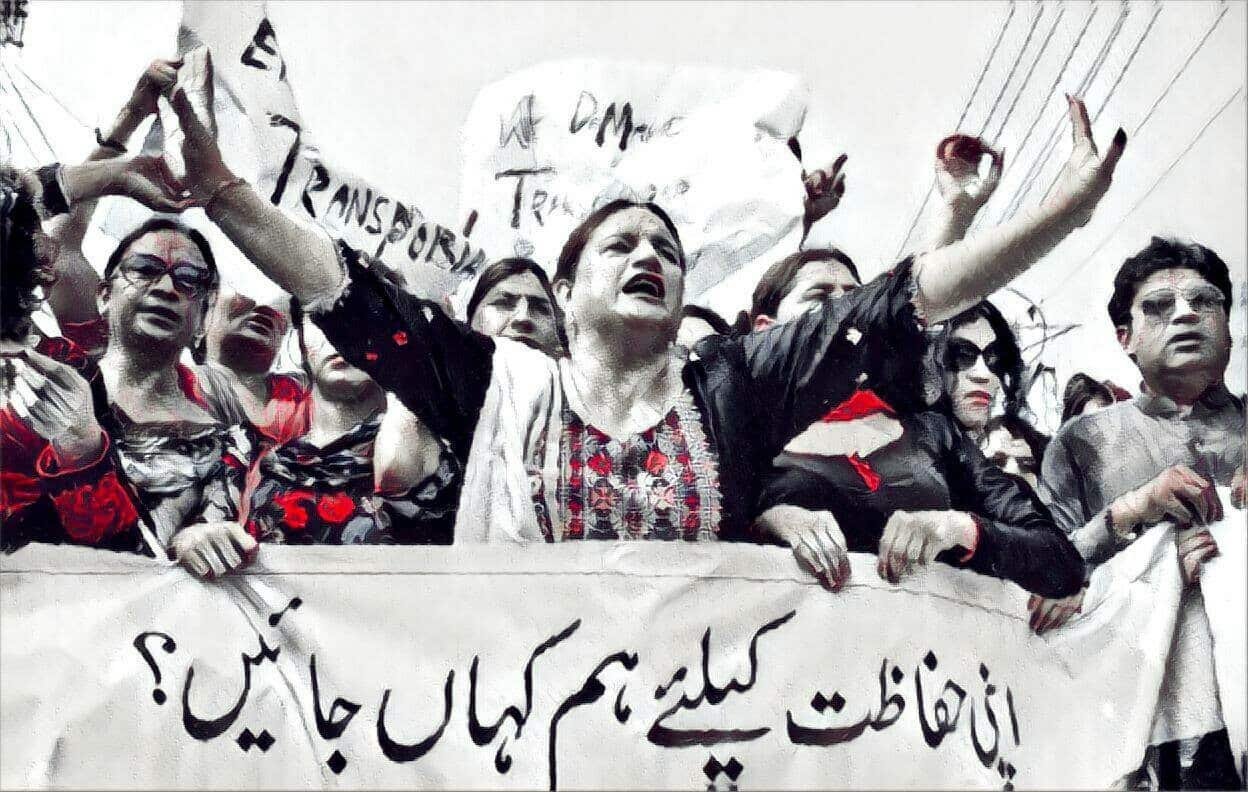
Despite legal frameworks, social acceptance remains fragile. In October 2024, two transgender women were stabbed to death in Mardan, Khyber Pakhtunkhwa, prompting protests and demands for justice by activists. Similar cases, 267 incidents of violence since 2019, with nearly no convictions, underscore the risk environment. These tragedies illustrate that legislation alone is insufficient; translating legal rights into safe societal conditions requires active enforcement and a shift in mindsets.
Policy Response: Supporting Employment and Dignity
In early 2025, Pakistan’s Culinary & Hotel Institute in Lahore launched a free six-month culinary training program for transgender students, equipping them with the skills, dignity, and employment potential they need. Over 25 participants were supported, including job placement assistance and visa facilitation for overseas positions.
This initiative is part of broader efforts, including trans-led enterprises and ride-share services, which aim to integrate transgender individuals through livelihood opportunities aligned with state-sponsored welfare goals.
From an education and gender perspective, transgender individuals face exclusion at multiple levels: limited school enrolment, workplace harassment, and exclusion from traditional support mechanisms like BISP, with only 221 transgender individuals registered as beneficiaries despite perhaps half a million eligible.
The UNDP and the HR Ministry’s Charter of Demands acknowledge the gap, and institutional mechanisms are underway to correct it. Still, human rights organisations stress that achieving substantive equality requires urgent policy expansion.
Is Legislation Enough? State View on Next Steps
From the government’s standpoint, Pakistan remains a pioneer in South Asia for recognizing transgender rights legally. Despite reversals, state bodies continue to explore pathways, including engaging Parliament to amend the law if necessary, ensuring the existence of protection centres, and expanding access to social welfare.
Additionally, provinces like Sindh extended benefits from the Benazir Income Support Program (BISP) to transgender persons and created reserved representation seats in local councils, demonstrating regional leadership in inclusion.
These reforms align with the state’s broader aim of harmonising Islamic values with progressive social inclusion, steering a middle course between conservative backlash and outright rejection.
Cultural Visibility: Media and Public Figures
Figures like Marvia Malik, Pakistan’s first transgender newsreader, who survived an assassination attempt, and Alina Khan, lead actress in films like Joyland, have publicly challenged stereotypes. Their visibility showcases Pakistan’s gradual, public-facing embrace of diversity through arts and media. These figures operate within the state’s moral ambit but illustrate evolving social narratives, reinforcing that visibility can reinforce national standing without undermining cultural identity.
Legislative Prospects and Community Dialogue
Ongoing debates about re-legislating gender recognition provisions reflect the state’s willingness to revisit policy in consultation with scholars, activists, and provincial governments. These proposed bills, which aim to preserve the rights to identity documentation while refining inheritance mechanisms and privacy safeguards, demonstrate the dynamism and progress in the field of transgender rights. They balance public and religious sentiments, showing that the state is not stagnant but actively working to uphold both spiritual values and constitutional ideals-a delicate balancing act. This process demonstrates the state’s effort to enforce both religious values and constitutional ideals as a delicate balancing act.
Transgender rights in Pakistan cannot be reduced to legislative success or social farce; they reflect a nuanced journey. The 2018 Act was undeniably progressive, but the Shariat Court’s intervention soberly reveals competing interpretations of Islamic doctrine. Yet, critical institutional responses, such as protection directives, inclusion in welfare programs, provincial support, and livelihood training, signal that the state remains engaged.
From a state-centric perspective, protecting transgender citizens requires more than statutes; it demands enforcement, dialogue, and respectful inclusion within Pakistan’s religious and cultural parameters. Institutional measures, such as protection centers, training opportunities, reserved seats in governance, and ongoing legal refinement, collectively mark progress.
To transform rights on paper into rights in practice, Pakistan must maintain its legislative intent while nurturing social acceptance. In doing so, it can model a contextually grounded form of inclusion, where constitutional citizenship, religious faith, and national cohesion coexist in harmony.