
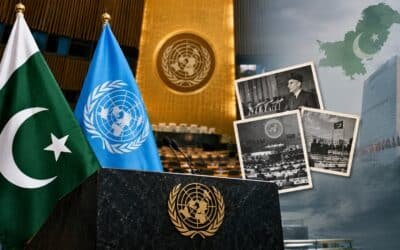




Every August 5, as flags line the streets of Islamabad, Muzaffarabad and Karachi, Pakistan pauses to ask a question that has outlived generations of its leaders: why does a valley hundreds of kilometers from the capital still occupy the center of the nation’s conscience? The answer lies not in a single treaty or border dispute, but in a tangle of history, faith, blood ties and unfinished promises that has defined Pakistan since its birth in 1947.
Key Highlights
- Kashmir dispute traces back to the 1947 partition and the unresolved Instrument of Accession
- Azad Jammu and Kashmir (AJK) remains constitutionally and emotionally central to Pakistan’s identity
- Deep cultural, linguistic and religious ties bind Kashmiris to Pakistan across generations
- Pakistan’s stance rests on relevant United Nations Security Council resolutions calling for a plebiscite
- August 5 marks India’s 2019 revocation of IIOJK’s special status under Article 370
On the occasion of Youm-e-Istehsal, Field Marshal Syed Asim Munir, NI (M), HJ, Chief of Army Staff & Chief of Defence Forces (COAS & CDF) reaffirms Pakistan’s unwavering solidarity with the resilient and courageous people of Indian illegally Occupied Jammu and Kashmir (IIOJK). pic.twitter.com/DrxNenpqYz
— Pakistan Armed Forces News 🇵🇰 (@PakistanFauj) August 5, 2026
A Dispute Born at Partition, Never Settled
When British India split into two independent states in August 1947, princely states were left to decide whether to join Pakistan or India. Jammu and Kashmir, with a Muslim-majority population but a Hindu ruler, became the flashpoint that neither newly formed nation could walk away from. What followed was a first war, a ceasefire line, and a promise, enshrined in United Nations Security Council resolutions passed in 1948 and the years after, that the people of Jammu and Kashmir would ultimately decide their own future through a free and fair plebiscite.
That plebiscite never happened. Seven decades on, the region remains divided, with Azad Jammu and Kashmir and Gilgit-Baltistan administered by Pakistan, and Indian Illegally Occupied Jammu and Kashmir (IIOJK) held by India. For Pakistan, this is not old history. It is an open file, one that successive governments, regardless of political stripe, have refused to close.
AJK: More Than a Border Territory
Azad Jammu and Kashmir occupies a peculiar but important place in Pakistan’s constitutional imagination. It is self-governing, with its own president, prime minister and legislative assembly, currently led by Prime Minister Faisal Mumtaz Rathore, who took office in November 2025. Yet it is deliberately kept distinct from Pakistan’s four provinces, a status meant to preserve the legal position that the final disposition of Jammu and Kashmir remains undecided pending the plebiscite promised under UNSC resolutions.
For ordinary Pakistanis, AJK is far more than a legal placeholder. It is home to communities bound to the rest of the country by kinship, migration and decades of shared struggle. Families in Rawalpindi, Lahore and beyond trace roots to Srinagar, Muzaffarabad and the valleys beyond the Line of Control. That intimacy, generations of intermarriage, shared dialects, and the simple fact that millions of Pakistanis count Kashmiris among their relatives, gives the dispute a texture that pure geopolitics cannot capture.
Pakistan’s leadership on Wednesday said lasting peace in South Asia remains tied to a peaceful resolution of the Kashmir dispute, as the country observed Youm-i-Istehsal to mark 07 years since India revoked the special status of Indian Occupied Jammu and Kashmir in August 2019.
— The Pakistan Brief (@thebriefPak) August 5, 2026
Faith, Culture and a Shared Sense of Belonging
Religion runs through the Kashmir question as a connecting thread rather than a footnote. The overwhelming Muslim-majority character of the Kashmir Valley was central to the original argument for its accession to Pakistan under the logic of the 1947 partition. Sufi traditions, shared festivals, a common Urdu-Punjabi-Kashmiri linguistic overlap in border districts, and generations of pilgrimage and trade across what is now a militarized frontier have kept cultural bonds alive even as political ones have hardened into confrontation.
Pakistan’s national consciousness has absorbed Kashmir into its own story in ways that go beyond foreign policy. It appears in the national anthem’s imagery of shared destiny, in decades of literature and film, and in the near-universal instinct among Pakistanis to describe Kashmir as unfinished business rather than a foreign cause.
A Principled Stance, Not a Passing Slogan
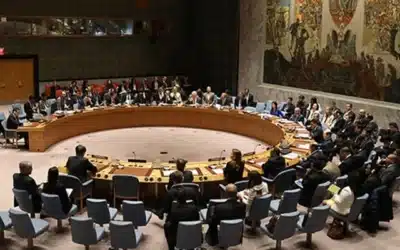
Islamabad’s official position has stayed remarkably consistent since 1947: Kashmir’s future must be decided by Kashmiris themselves, through a plebiscite conducted under UN auspices, not imposed by either government. Pakistan has repeated this position at the United Nations, the Organisation of Islamic Cooperation and virtually every bilateral and multilateral forum available to it, arguing that lasting peace in South Asia cannot be built on a disputed territory held down by force.
That argument gained new urgency on August 5, 2019, when India revoked the special autonomous status that IIOJK had held under Article 370 of the Indian constitution, splitting the region into two federally administered territories and, in Islamabad’s view, moving to alter its demographic character through new laws on land and residency. Pakistan marks that date annually as Youm-i-Istehsal, Exploitation Day, using it to renew calls for the international community to press India toward a political settlement rather than accept the changed status quo as permanent.
What a Genuine Resolution Would Require
For Pakistan, an acceptable outcome does not need to be complicated in principle, even if it has proven impossible in practice. It means implementation of the relevant UNSC resolutions: a demilitarized process, restoration of the political and civil freedoms curtailed since 2019, and ultimately a plebiscite that lets the people of Jammu and Kashmir choose their own future rather than have it decided for them in New Delhi or Islamabad.
Whether that moment arrives soon or remains generations away, Kashmir’s pull on Pakistan’s national identity shows no sign of fading. It persists in family histories, in the constitutional architecture built around AJK, and in a foreign policy that has refused, across seventy-plus years and a dozen changes of government, to treat the dispute as settled. That persistence is itself the answer to why Kashmir still matters.