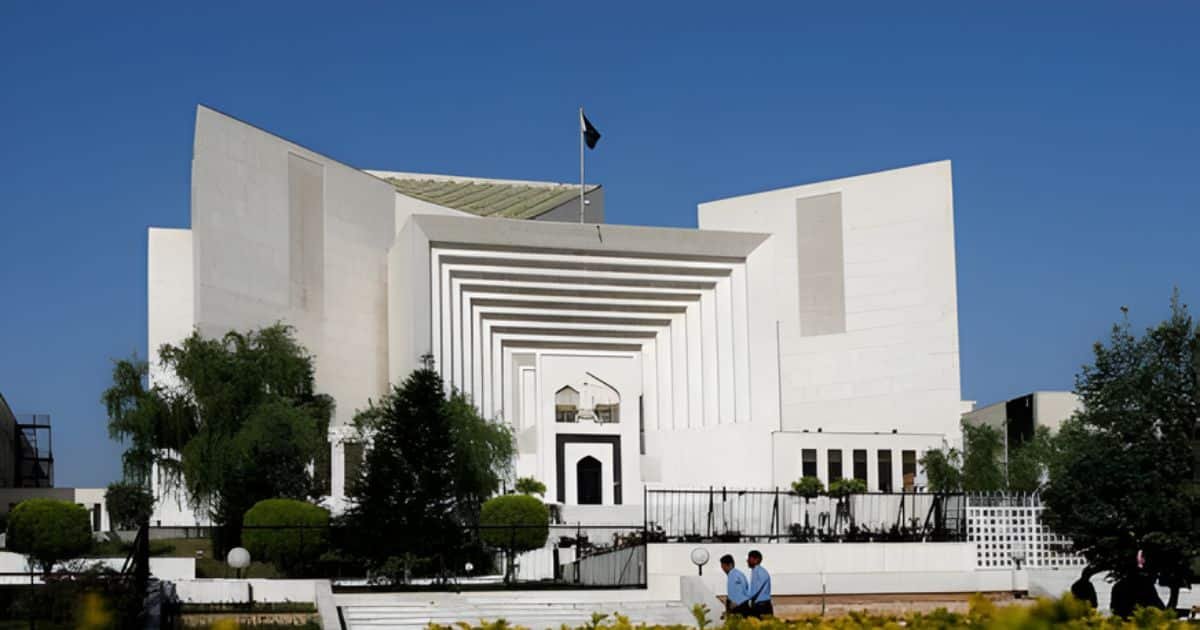





ISLAMABAD, Nov 11: Two sitting Supreme Court judges, along with senior lawyers and former judges, have urged Chief Justice of Pakistan (CJP) Yahya Afridi to take a clear institutional stance against the government’s proposed 27th Constitutional Amendment, which they say poses a threat to judicial independence.
In a six-page letter addressed to the CJP, Justice Syed Mansoor Ali Shah described the proposed amendment — which seeks, among other measures, to create a Federal Constitutional Court (FCC) — as a “political device to weaken the judiciary.” He urged Justice Afridi to call a full court meeting or a joint convention of judges from all constitutional courts, including the high courts and the Federal Shariat Court, to formulate a collective response.
The 27th un-constitutional Amendment takes away your power, your voice, and your rights. Don’t stay silent! Stand together to protect our democracy! #NoTo27thAmendment
Special thanks to @bhattiyy pic.twitter.com/nozr1BIwQt— Geet (@Peaceful248) November 7, 2025
“You act not merely as administrator but as guardian of the judiciary,” Justice Shah wrote, warning that inaction could be viewed as “acquiescence and abdication of institutional responsibility.”
Justice Athar Minallah also wrote a separate letter to the CJP along similar lines, while senior lawyer Faisal Siddiqui, supported by several former judges, including Mushir Alam, Nadeem Akhtar, Muneer A. Malik, and Muhammad Faisal Kamal Alam, issued a parallel appeal urging the chief justice to “stand firm” against executive interference.
Justice Shah’s letter questioned the rationale behind the proposed FCC, calling it “constitutionally incoherent” and unnecessary in Pakistan’s existing judicial framework. He argued that creating a parallel apex court would vest excessive power in the executive and undermine the Supreme Court’s authority.
Quoting data from the Law and Justice Commission of Pakistan (LJCP), the judge noted that of the 2.26 million pending cases nationwide, less than three per cent lie with the Supreme Court, suggesting that backlog concerns cited for the amendment are misplaced.
You May Also Like: Türkiye to Send Top Officials to Pakistan Amid Tensions with Afghanistan
Lawyer Faisal Siddiqui described the current situation as the “greatest threat to the Supreme Court since its establishment in 1956,” and warned that silence from the judiciary could mark “the demise of the Supreme Court of Pakistan as the highest court in the land.”
Check out our latest video: