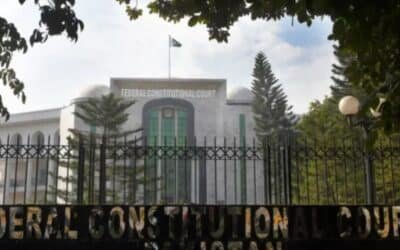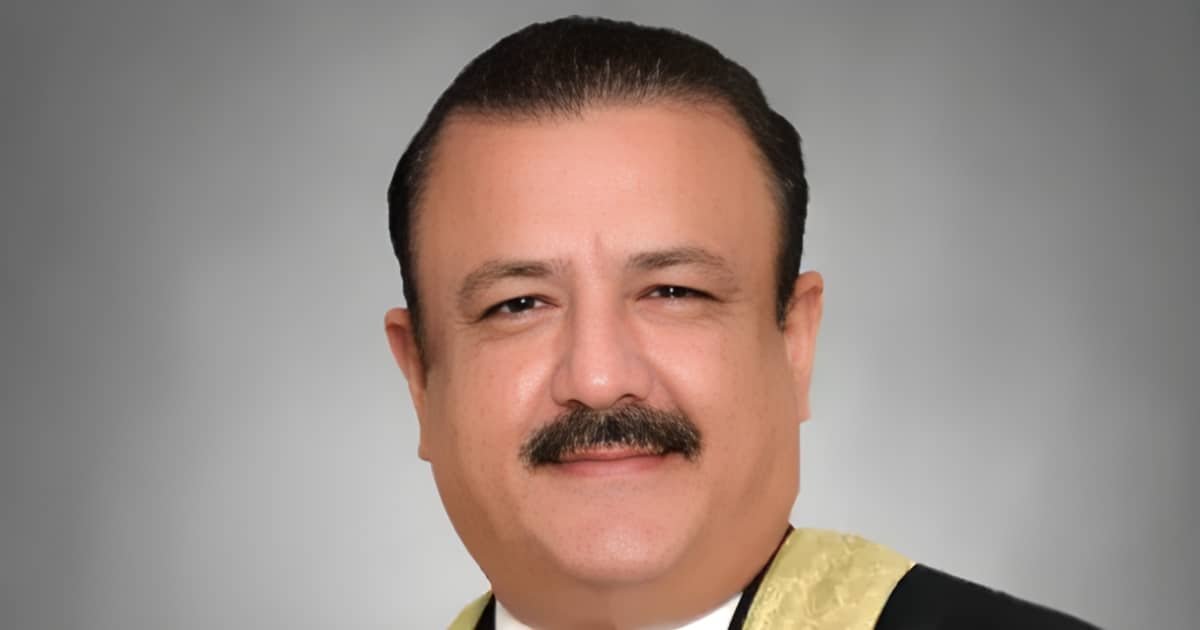




ISLAMABAD: Islamabad High Court (IHC) judge Justice Tariq Mehmood Jahangiri on Monday appeared before the court to contest allegations regarding the authenticity of his law degree and the legality of his appointment, while also objecting to the composition of the division bench hearing the matter.
The case was taken up by a two-member bench headed by IHC Chief Justice Sardar Muhammad Sarfraz Dogar, along with Justice Muhammad Azam Khan, in a courtroom packed with lawyers. The petition, filed by advocate Mian Dawood, challenges Justice Jahangiri’s appointment on the grounds of an allegedly fake law degree.
Justice Jahangiri criticised the earlier IHC directive barring him from work. “Never in the judicial history of Pakistan and India has such a thing happened […] Not even a patwari (revenue official) was ever stopped from work as I was,” he remarked.https://t.co/o2p5AloHFU
— Dawn.com (@dawn_com) December 15, 2025
The controversy stems from a letter that surfaced on social media last year, purportedly issued by the University of Karachi’s controller of examinations, raising questions about Justice Jahangiri’s academic credentials. Subsequently, a complaint was also filed with the Supreme Judicial Council (SJC) in July last year, seeking an inquiry into the matter.
At the outset of the hearing, Justice Jahangiri raised a preliminary objection, arguing that the current division bench was “inappropriate” to hear the case. He maintained that a separate petition challenging the appointment of Chief Justice Dogar was pending, and therefore the bench could not adjudicate the matter. “We have filed a petition against you. You cannot hear this case,” he told the bench.
Defending his credentials, Justice Jahangiri said the case was based on an educational record dating back more than three decades. He asserted that the University of Karachi had never declared his degree fake and stated that he was willing to take an oath on the Holy Quran affirming its authenticity.
You May Also Like: HEC Endorses KU Findings on Judge’s Degree Irregularities
The judge also criticised the pace of the proceedings, objecting to the three-day notice issued to him to respond to the allegations. He questioned the earlier order barring him from performing judicial work, remarking that such a step was unprecedented in the judicial history of Pakistan and India.
Justice Jahangiri requested an adjournment, saying he needed time to engage legal counsel and obtain the complete case record. In contrast, the petitioner urged the court to conduct daily hearings.
After hearing both sides, the bench adjourned proceedings until December 18, directing the University of Karachi registrar to appear in person along with the relevant academic record. Justice Jahangiri was also granted time to appoint a lawyer.
The case has followed a prolonged legal course since September, when the IHC initially restrained Justice Jahangiri from judicial functions through an interim order. That decision was later set aside by the Supreme Court, which ruled that a high court could not bar a sitting judge from performing judicial duties while hearing a quo warranto petition, while allowing the IHC to proceed with the case in accordance with law.
Check out our latest video: