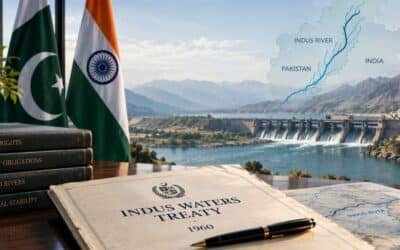
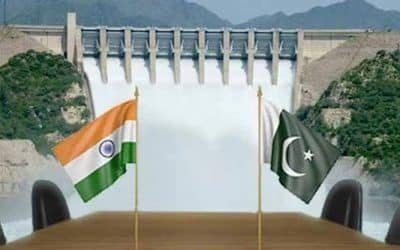
ISLAMABAD: Pakistan’s Commissioner for Indus Waters, Syed Muhammad Mehar Ali Shah, has rejected India’s claim of placing the Indus Waters Treaty (IWT) in “abeyance,” saying it has no legal standing and that the treaty remains fully in force under international law.
India announced the IWT in abeyance in April 2025 following an attack on tourists in Pahalgam, in Indian-administered Kashmir, which killed 26 people. Pakistan called the move an “act of war,” and in June 2025, the Permanent Court of Arbitration ruled that India cannot unilaterally suspend the treaty.
You May Also Like: Role of Rangers in Restoring Peace to Karachi Highlighted
Speaking on Geo News’ program Jirga, Shah said the term “abeyance” is not recognized in treaty law and is essentially “coined” by India, which he said understands it cannot suspend, breach, or terminate the treaty. He emphasized that the treaty’s dispute-resolution mechanism was carefully designed to prevent unilateral actions and withstand political tensions.
“There is no fixed amount of water allocated to Pakistan,” the water commissioner said, adding that the waters should be available to Pakistan based on the “natural pattern of the western rivers”.https://t.co/XjNIUNrQAw
— Dawn.com (@dawn_com) January 4, 2026
Key points from the water commissioner’s statement:
-
No unilateral suspension: Any attempt by India to reduce or stop Pakistan’s share of water would violate the treaty and be considered an “act of war.”
-
Western rivers’ flow: Pakistan’s share of the Indus, Jhelum, and Chenab rivers should continue according to their natural flow. Since April 24, 2025, India temporarily altered flows on three occasions, which Pakistan monitored closely.
-
Dispute-resolution mechanisms: The IWT provides for peaceful resolution through bilateral negotiation or referral to a neutral forum or the Court of Arbitration if disagreements persist.
-
Past conflicts: Pakistan has previously challenged India’s construction of the Baglihar Dam, which violated five treaty conditions, and later sought a general interpretation from the Court of Arbitration to prevent misuse of the ruling in future projects. Pakistan has also raised objections to India’s Ratle, Kiru, and Kwar hydroelectric projects on the western rivers.
-
Eastern rivers advantage: While Pakistan receives the western rivers, India retains a geographic advantage over the eastern rivers—Beas, Ravi, and Sutlej.
Shah stressed that the IWT was carefully negotiated to withstand disputes, and no party can unilaterally modify it. Pakistan continues to pursue a formal legal and diplomatic response to ensure adherence to the treaty, while monitoring India’s actions to safeguard its water rights.
In conclusion, Shah reaffirmed that the IWT is fully operational, and any attempt to alter Pakistan’s water share outside its provisions would be illegal under international law.
Check out our latest video: