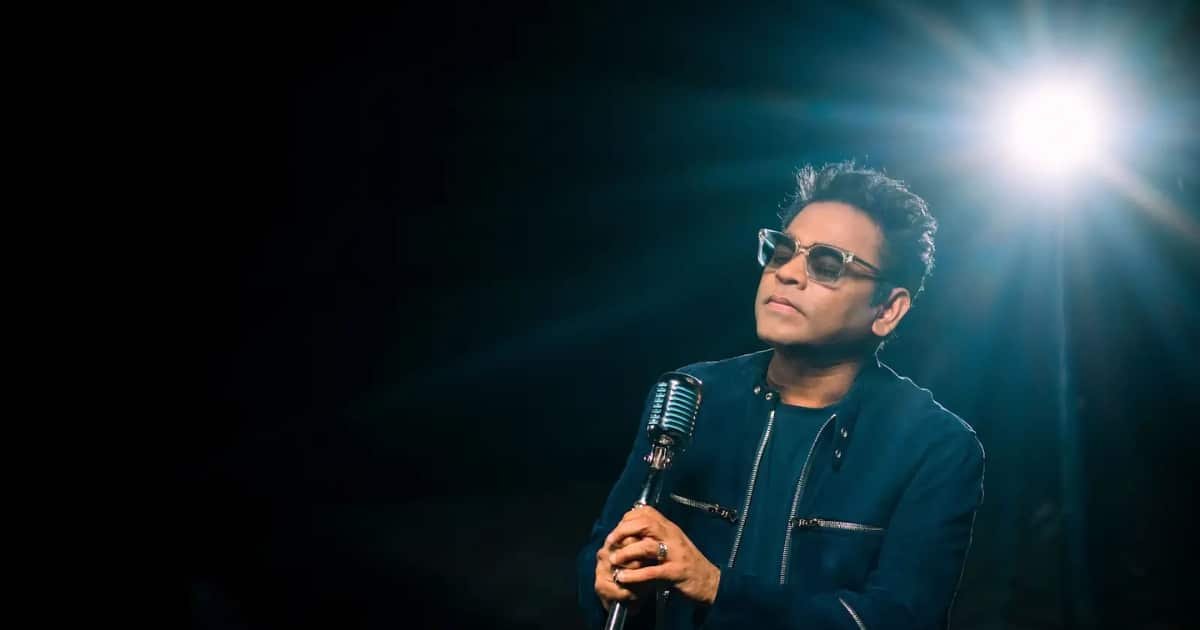





In a powerful cross-border moment that has deeply resonated with the Pakistani and Indian creative communities, music legend A.R. Rahman spoke out against the growing trend of “anti-Muslim tropes” in contemporary cinema. During a widely circulated interview, the Oscar-winning composer urged filmmakers to look beyond polarizing caricatures, reminding the industry that music and art have a duty to bind humanity rather than fracture it.
Challenging the Historical Narrative
Rahman’s comments come at a time when historical epics and modern thrillers have increasingly relied on “othering” South Asian Muslim identities. “People are smarter than that,” Rahman noted, pointing out that audiences can sense when a story is being manipulated for a specific political or social agenda. For the Pakistani diaspora, which often shares a cultural and linguistic heritage with the stories Rahman scores, his words were a refreshing defense of their shared identity.
The composer, who has spent his career blending Sufi spirituality with global electronic beats, emphasized that authentic storytelling requires empathy. He argued that when cinema relies on lazy stereotypes, particularly those that paint Muslims as perpetual antagonists, it doesn’t just damage the social fabric; it results in “hollow art.” His stance is being hailed by critics in both Karachi and Mumbai as a rare and necessary intervention by a superstar who usually prefers to let his music do the talking.
‘Bollywood has became a center of spreading islamophobia’
– A R Rahman breaks the silence 🔥 pic.twitter.com/hxxl6cPIOF
— Gabbar (@Gabbar0099) January 17, 2026
The Power of the Global “Sufi” Sound
Beyond the critique, Rahman’s address was a celebration of the “universal soul.” He highlighted how his own collaborations, frequently involving Pakistani vocalists and musicians, prove that the ‘Sufi heart’ of South Asian culture is too vast to be contained by borders or biases.
I think muslim musicians like
A.R. Rahman are the biggest ungrateful bigots out there. your entire musical knowledge, everything rides on hindu musical scales & knowledge.Islam considers it haram. the only reason you are musician today & got famous, was on the backs of hindus.
— Indian Aesthetics (@IndianAesthetik) January 17, 2026
Despite the moral weight of his message, Rahman’s comments sparked a fierce digital divide. While cultural critics and the diaspora lauded his bravery, he faced significant backlash from nationalist groups and segments of the Indian film industry who accused him of ‘playing politics’ with historical narratives. Online trolls targeted the composer’s personal background, leading to a heated debate over whether artists should remain neutral or act as the conscience of society. This polarizing reaction has only underscored the deep-seated tensions within South Asian cinema that Rahman sought to address.
Check out our latest video: