



Strategic Importance of Western Border Surveillance
The Pakistan Air Force (PAF) is key to protecting Pakistan’s western borders. It focuses on constant surveillance, early warnings, and deterrence. Military statements emphasize the need for territorial integrity. This is especially important given the growing tensions with India. PAF’s command systems spot threats early. These include unmanned aerial vehicles (UAVs), cruise missiles, and low-flying aircraft. They also respond effectively.
Integration through the National ISR and Air Operations Centre
The National ISR and Integrated Air Operations Centre (NIAOC) plays a key role in Pakistan’s surveillance system. It acts as a command center that brings together data from air, land, cyber, and space sensors to give a full operational picture.
The NIAOC supports real-time tracking, spots threats, and helps coordinate quick responses from the Air Force, Army, Navy, and civil aviation.
PAF leadership remains focused on boosting cyber and electronic warfare skills to strengthen both surveillance and air defense
Multi-Layered Radar Infrastructure
A multi-layered radar system assists the Pakistan Air Force (PAF) in monitoring the western airspace. Leading the efforts are the Airborne Early Warning & Control (AEW&C) systems, particularly the Saab 2000 Erieye aircraft, also known as “Horizon-7.” PAF operates seven to nine of these aircraft, each capable of detecting threats up to 450 kilometers away. They provide over-the-horizon (OTH) detection, enabling early identification of enemy missions. This allows quick responses from fighter jets and ground units.
Supporting these aircraft are advanced land-based radars that enhance the surveillance network. One important system is the AM-350S Active Electronically Scanned Array (AESA) radar. This Pakistani-developed unit, produced by NRTC with Blue Surge, was introduced in November 2024. It has a detection range of 350 kilometers, offers 360-degree coverage, and monitors altitudes up to 60,000 feet. This significantly improves Pakistan’s ground-based monitoring along its western border. The SR-3D radar, developed by the National Aerospace Science and Technology Park (NASTP), is crucial for low-altitude coverage. It operates in the S-band frequency with a range of 80 kilometers and detects low-radar-cross-section targets. Together, these radar systems form a strong defense architecture that provides real-time airspace awareness and rapid threat response.
Drone & UAV Surveillance Platforms
Drones improve the Pakistan Air Force’s intelligence, surveillance, and reconnaissance (ISR) skills. They work alongside ground and airborne radar networks. One such platform is the SATUMA Jasoos II Bravo+, a domestically produced UAV that was officially launched in 2003. With day and night vision cameras, it lasts over five hours. This allows for real-time awareness along Pakistan’s western border. Continuous monitoring helps with threat detection.
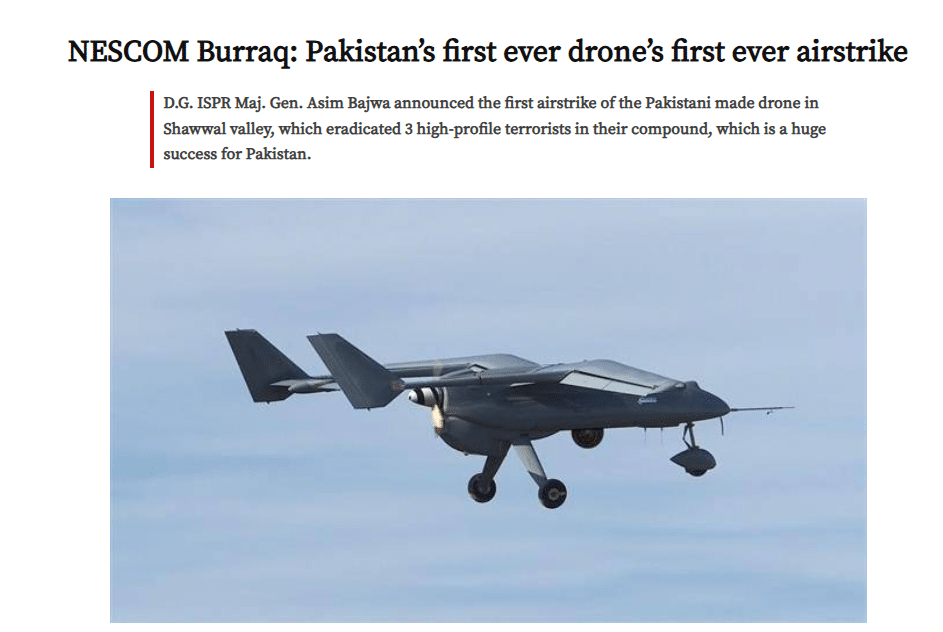
Another important asset is the NESCOM Burraq. The National Engineering and Scientific Commission (NESCOM) and the PAF developed this unmanned combat aerial vehicle (UCAV) together. Burraq is a dual-purpose system that performs both ISR and precision strike roles. Equipped with advanced imaging sensors and laser-guided Barq missiles, it boosts Pakistan’s ability to monitor contested areas. This system helps respond quickly to new threats. These UAV platforms boost Pakistan’s surveillance and defense. They extend reach, improve accuracy, and increase effectiveness along the western frontiers.
Electronic Warfare (EW) & Cyber Integration
Surveillance by the Pakistan Air Force (PAF) goes beyond just physical monitoring. It also covers key areas like cyber and electronic warfare, where the PAF has made strong progress.
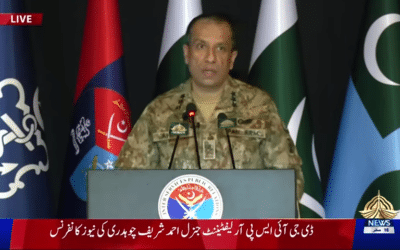
During the air battles on May 6–7, 2025, the PAF used its electronic warfare tools to jam and confuse enemy data links. This disrupted the communication systems of Indian Rafale jets and other aircraft.
Air Vice Marshal Aurangzeb Ahmed said that Pakistan’s locally made anti-drone systems took down all enemy drones spotted during the operation, before any could enter national airspace.
At the same time, PAF’s cyber warfare units, run by its Space and Cyber Commands, played a major role. These teams carried out planned digital attacks and shut down enemy communications, making it hard for them to respond or coordinate.
This smooth mix of cyber and electronic warfare into PAF’s surveillance shows how Pakistan is gaining control in the digital battle space. It also proves the country’s growing ability to protect its skies with strength across all domains.

Source: DAWN
Tactics & Exercises: Readiness in Practice
The Pakistan Air Force (PAF) regularly tests its surveillance and operational skills. They do this through realistic, large-scale exercises. Indus Shield 2024 is a key example. This multinational air exercise includes 24 countries. It showcased PAF’s skills in several areas: intelligence, surveillance, and reconnaissance (ISR), electronic warfare (EW), cyber operations, and advanced aerial tactics. The exercise highlighted PAF’s readiness. It also received praise from senior air force chiefs of participating nations for its effective execution and strategic planning.
Operation Swift Retort in 2019 highlights the PAF’s expertise in network-centric warfare. During this mission, Pakistani sensor networks tracked enemy movements. Meanwhile, electronic warfare units interfered with enemy communications and targeting systems. Airborne Early Warning and Control (AEW&C) aircraft coordinated the deployment of fighter jets, ensuring precise targeting. These exercises and operations reflect PAF’s commitment to maintaining a high state of preparedness and technological edge in defending national airspace.
Conclusion
PAF’s surveillance strategy shows a move toward self-reliance and local innovation. Local defense companies, such as NRTC, NASTP, NESCOM, and SATUMA, are providing advanced radars, UAVs, cyber tools, and data links. This ensures that Pakistan no longer depends solely on foreign systems, thereby enhancing its strategic autonomy.
PAF maintains robust surveillance along Pakistan’s western borders. It employs various airborne systems, including Erieye AEW&C and AESA ground radars. They also deploy TPS-77 systems and unmanned platforms, such as Jasoos and Burraq. These tools connect to the National ISR and Air Operations Centre. They help create a network-based, multi-domain response. The PAF has strong cyber and electronic warfare capabilities. This enables early detection and rapid response. These strengths enhance Pakistan’s national security and sovereignty. They demonstrate their technological strength and preparedness to act.