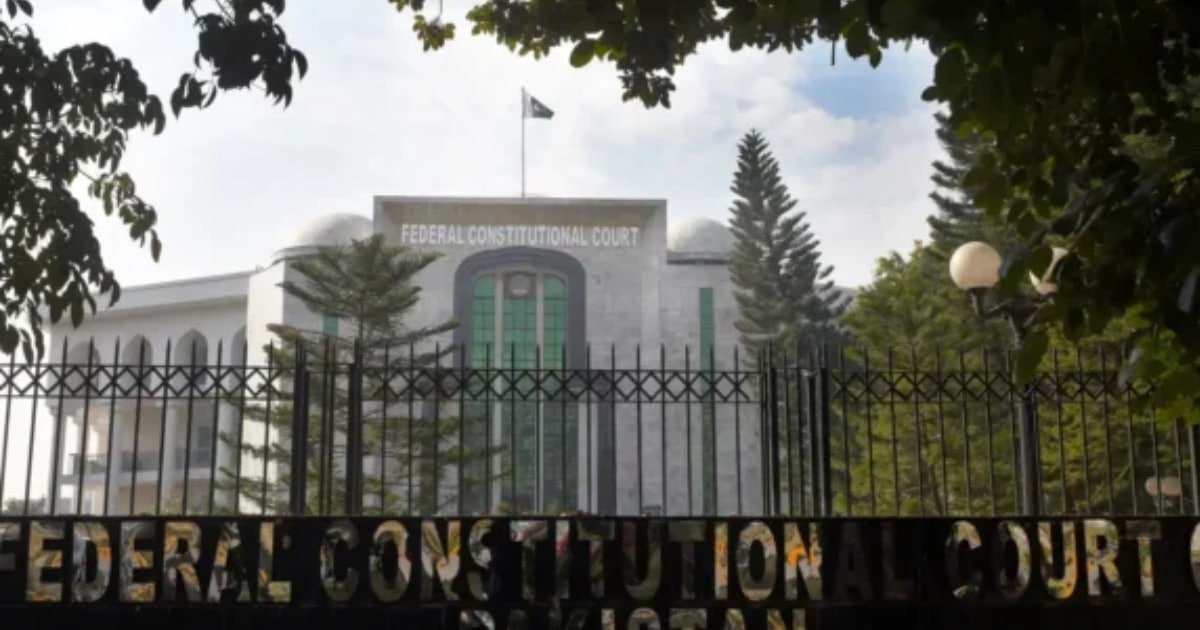



ISLAMABAD — In one of its most significant rulings since its establishment, the Federal Constitutional Court (FCC) on Tuesday upheld the constitutionality of the Super Tax, affirming Parliament’s exclusive authority to levy taxes. The landmark decision settles over 2,200 long-pending cases and protects an estimated Rs310 billion in public revenue that had been tied up in litigation.
The FCC Super Tax Ruling
- The Bench: Led by Chief Justice Aminuddin Khan, with Justice Syed Hasan Azhar Rizvi and Justice Syed Arshad Hussain Shah.
- The Verdict: Validated Sections 4-B and 4-C of the Income Tax Ordinance (ITO) 2001.
- Revenue Impact: Safeguarded Rs310 billion for the national exchequer.
- Primary Target: Wealthy individuals and companies earning over Rs500 million (for 4-B) and Rs150 million (for 4-C).
- Key Exemption: Limited relief granted to the Petroleum Sector based on specific concession agreements.
The End of Judicial Overreach in Fiscal Policy
The FCC’s short order set aside previous rulings from the Sindh, Lahore, and Islamabad High Courts that had “read down” or struck down the tax. Chief Justice Aminuddin Khan remarked that the courts’ role is limited to the interpretation of the law, not the re-determination of tax slabs, rates, or thresholds.
The court held that high courts had committed “judicial overreach” by interfering in fiscal policy, which falls strictly under the domain of the legislature. This ruling effectively ends the argument of “double taxation” raised by various banks, companies, and business associations.
You May Also Like: I Wouldn’t Let My Own Parents In, Sajid Javid Sparks Row Over New Memoir
Petroleum Sector
While the verdict was a sweep for the government, the oil and gas exploration companies secured a notable win.
- The Argument: Industry lawyers argued that imposing taxes beyond the caps set in Petroleum Concession Agreements (PCAs) signed by the President could trigger international arbitration (similar to the Reko Diq case).
- The Outcome: The FCC allowed these companies to approach tax commissioners individually. Relief will be assessed on a case-by-case basis under the 1948 concessions regime.
Inflation on the Horizon
Despite the legal victory for the state, senior economists and counsel, including Isaac Ali Qazi, warned of immediate fallout:
- Price Hikes: Companies are expected to pass the 10% tax burden onto consumers, potentially fueling inflation.
- Production Freezes: Firms near the income thresholds may “freeze” sales or production in the final quarter to avoid slipping into higher tax brackets.
Why was the Super Tax created?
The tax was originally introduced in 2015 as a “one-time” measure to fund the rehabilitation of Temporarily Displaced Persons (TDPs) following Operation Zarb-i-Azb. While initially intended as a temporary levy, subsequent governments extended and expanded it (specifically in 2022) to address broader fiscal deficits, leading to the decade-long legal battle that the FCC has now concluded.
Banks to pay super tax from tax year 2023 onwards, court rules
Read More: https://t.co/TIcBAruAUM#Pakistanbank #Bank #SuperTax pic.twitter.com/V2Y0YOdqsW
— PkRevenue (@pkrevenue) January 28, 2026