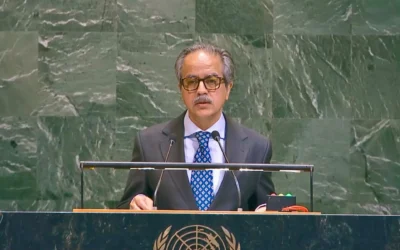



ISLAMABAD — Iran’s Ambassador to Pakistan, Dr. Reza Amiri Moghaddam, addressed the media on Thursday, January 29, 2026, providing a detailed official perspective on the domestic unrest that has gripped Iran since late December. The briefing highlighted the government’s narrative of “foreign infiltration” while underscoring the severe humanitarian toll of international sanctions.
The Official Timeline of Unrest
According to Ambassador Moghaddam, the current wave of instability began with legitimate economic concerns but was quickly subverted:
- The Spark (Dec 28, 2025): Sector-based protests began in Tehran’s Grand Bazaar following a sharp increase in foreign exchange rates and market volatility.
- The “Hijacking”: The envoy claimed that agents from the US and Israel infiltrated peaceful gatherings to incite arson and violence.
- The Counter-Demonstration (Jan 12, 2026): Millions of citizens reportedly took to the streets across Iran to show support for the government and denounce “foreign-backed sabotage.”
The Toll of “Foreign-Backed” Violence
The Iranian Embassy shared alarming statistics regarding the damage inflicted during the weeks of turmoil:
- Human Cost: More than 3,100 people, including a significant number of security forces, have lost their lives.
- Infrastructure Damage:
- 200 schools and 15 libraries destroyed.
- 350 mosques and 2 churches torched.
- Hundreds of ambulances, government buildings, and private properties burned.
“The Zionist regime seeks to exploit every opportunity to sow division… but the Iranian people are aware of the true intentions behind these acts of sabotage.” — Ambassador Moghaddam
🚨 #Milad_Ebrahimzadeh,Tehran,has been sentenced to Moharebeh
He was allowed to make a phone call to his family:I’m alive,I really don’t know where I am but I’m in a cell
He is currently being held in Tehran prison and is at serious risk of #execution#StopExecutionsInIran— Kuroo (@kuroosga) January 30, 2026
Sanctions as a “Coercive Measure”
A central theme of the briefing was the impact of unilateral sanctions, which the Ambassador argued have evolved into a direct violation of the economic, social, and cultural rights of 90 million Iranians.
- Economic Squeeze: The Ambassador linked the initial Bazaar protests directly to the economic pressure caused by external coercive measures.
- Open Country: In response to queries about foreign networks, a diplomat added that Iran’s status as an “open country” with a large diaspora makes it vulnerable to Western conspirators who “prey on individuals” living abroad.
Dialogue vs. Defiance
On the international stage, Tehran’s message remains a blend of diplomatic openness and military readiness:
- The Win-Win Condition: Iran is ready for dialogue if approached, but only if it leads to a “win-win outcome.”
- Self-Defense: The Ambassador warned that if war is “imposed,” Iran will respond “in the same coin” against any enemy.
- Gratitude to Pakistan: Moghaddam thanked the government and people of Pakistan for their “principled approach” and support during this difficult period.
Current Domestic Status
- Normalcy Restored: The Ambassador asserted that the situation across Iran is now “normal” and peace has been restored.
- Judicial Action: Those arrested for violence and abetted by foreign powers will be prosecuted according to Iranian law.
- Reform Measures: The government has reportedly begun implementing support packages for vulnerable groups and holding consultative meetings with business unions to stabilize the market.
You May Also Like: MQM-P Demands Federal Takeover of Karachi Post-Gul Plaza Tragedy
Check out our latest video: