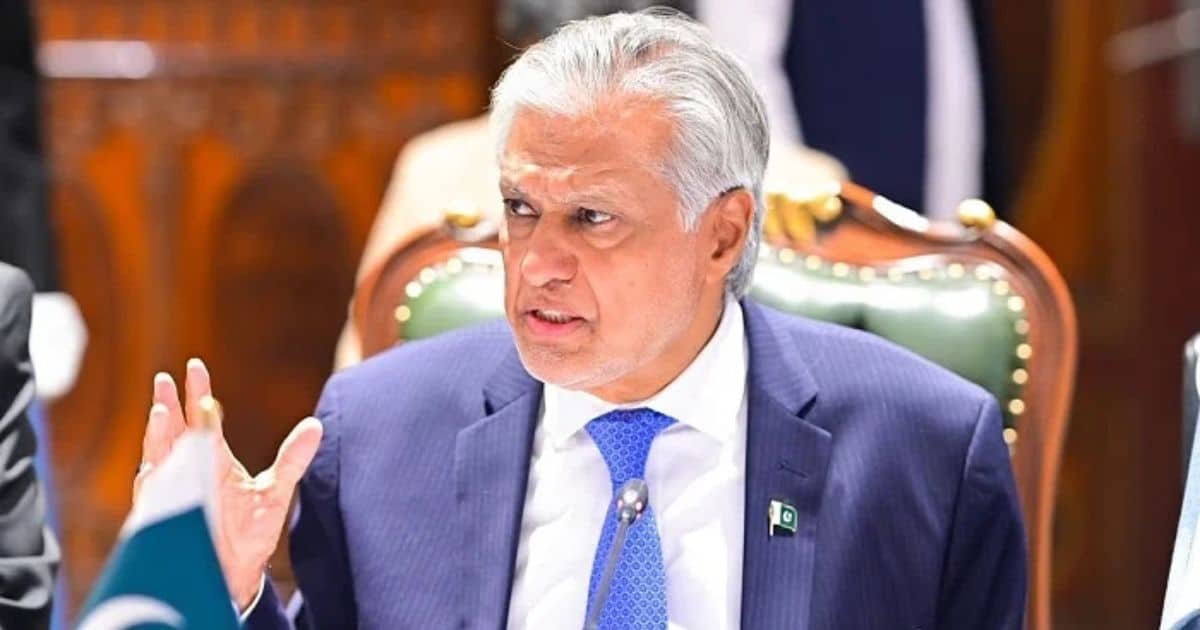





ISLAMABAD: Deputy Prime Minister and Foreign Minister Ishaq Dar on Wednesday warned that multilateralism was “under assault” at a time when South Asia faced a deeply complex and volatile security landscape, stressing that regional cooperation and diplomatic engagement had become more essential than ever.
Speaking at a policy event in Islamabad, Dar said global governance institutions were increasingly weakened by unilateral actions of “a few states”, undermining the principles of the UN Charter. He noted that the rapid escalation witnessed during the 92-hour conflict between Pakistan and India in May highlighted how close the region came to a potentially catastrophic confrontation.
“In 92 hours, the Indo-Pakistan war had the potential to escalate to far more dangerous levels,” he said, adding that an “uneasy and fragile peace persists”.
‘Net Security Provider Concept Is Buried’
Dar asserted that Pakistan had demonstrated “resolve and capability” during the May conflict, reinforcing deterrence at a time when states were increasingly resorting to force to settle disputes. He warned that emerging technologies, transnational terrorism, hybrid warfare and coordinated misinformation campaigns were further destabilising the region.
He added that major power competition — spanning military, technological and economic domains — had become a defining feature of global dynamics. Pakistan, however, “opposed bloc politics and zero-sum approaches”, instead advocating for dialogue, diplomacy and peaceful conflict resolution.
As an elected member of the UN Security Council for 2025–2026, Pakistan would remain at the forefront of global peace and security efforts, he said.
Dar asked: “We South Asians need to think really hard. Are we doomed to remain mired in confrontation and conflict while other regions progress and prosper?
“The answer should be a clear ‘no’.”https://t.co/AIaemEYSRQ
— Dawn.com (@dawn_com) December 3, 2025
South Asia’s Nuclear Realities and Escalating Disputes
Dar underscored that South Asia is home to three geographically contiguous nuclear powers with complex inter-state relations, large standing armies and a constant build-up of conventional and nuclear weaponry. Strategic stability, he said, was threatened by “dangerously ill-conceived war-fighting notions in a nuclearised environment”.
He pointed to India’s “illegal and unilateral” announcement regarding the Indus Waters Treaty in April, and to longstanding disputes such as Jammu and Kashmir, as key flashpoints undermining regional stability. The structured bilateral dialogue between India and Pakistan, he lamented, has remained suspended for more than 11 years.
You May Also Like: Parliament Passes Minorities’ Rights Commission Bill Amid Fierce Opposition
Regional Architecture Under Strain
The deputy PM highlighted that South Asia continues to suffer from poverty, inequality, malnutrition, illiteracy, energy shortages and the widening impacts of climate change. Regional integration remained dismal, with intra-regional trade stuck around 5 per cent and Saarc inactive for more than a decade.
“Are we doomed to remain mired in confrontation and conflict while other regions progress and prosper?” Dar asked. “The answer should be a clear ‘no’.”
He urged South Asian states to abandon zero-sum thinking and build an environment founded on dialogue, peaceful coexistence, economic interdependence and “win-win cooperation”.
Check out our latest video: