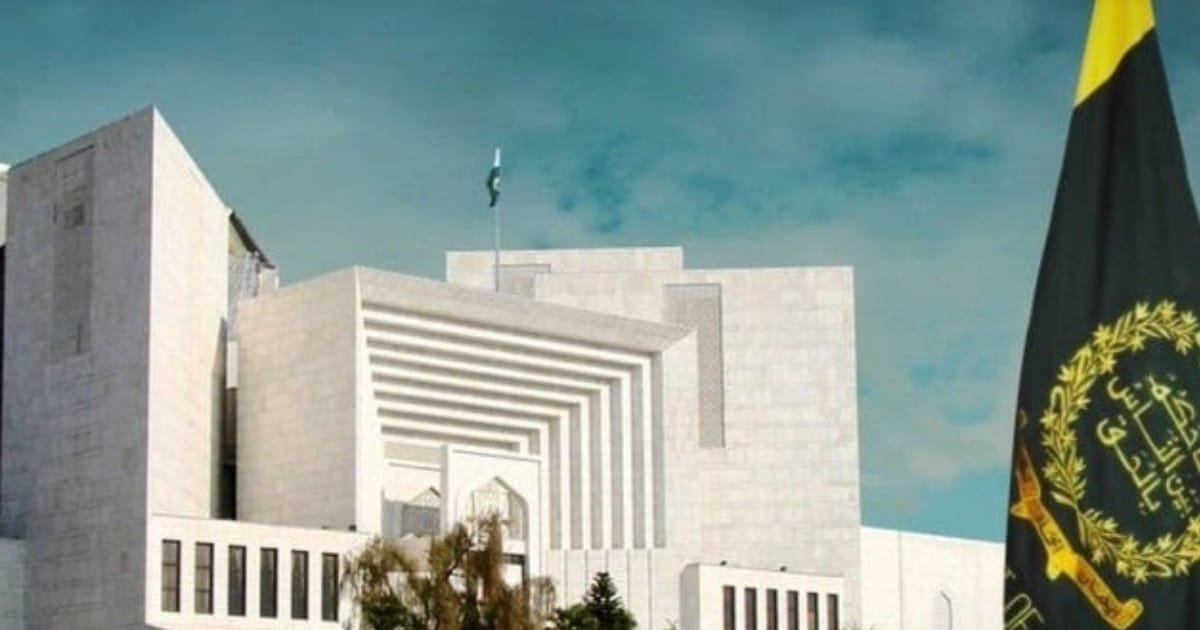





ISLAMABAD — Justice Miangul Hassan Aurangzeb of the Supreme Court on Tuesday emphasized that under the existing law, defamation cases must be decided within a six-month timeframe. The observation was made during the hearing of appeals filed by PTI founder Imran Khan concerning a high-profile Rs10 billion defamation suit initiated by Prime Minister Shehbaz Sharif. Despite the call for efficiency, the three-judge bench, led by Justice Muhammad Hashim Khan Kakar, postponed further proceedings pending a crucial review of a 2023 judgment.
Key Highlights
-
Judicial Observation: Justice Aurangzeb noted that defamation cases primarily involve two private parties and should not be subjected to indefinite delays.
-
Case Background: The suit stems from 2017 allegations by Imran Khan that he was offered a Rs10 billion bribe to withdraw from the Panama Papers case against Nawaz Sharif.
-
Legal Bottleneck: Proceedings are currently stalled awaiting a Supreme Court review of a February 2023 decision that closed Imran Khan’s right of defense due to “contumacious” conduct.
-
LHC Ruling Upheld: The Supreme Court discussed the Lahore High Court’s refusal to implead the Punjab government in the suit, maintaining it is a private matter between two individuals.
The Decade-Long Dispute
The legal battle traces back to July 2017, when Shehbaz Sharif sued Imran Khan for damages following televised claims regarding a bribery offer. Over the years, the case has moved through various judicial tiers. Most recently, the Lahore High Court (LHC) rejected Khan’s attempt to involve the Punjab Law Department in the revision petition, ruling that the provincial government has no stake in a private recovery suit between two individuals.
The Supreme Court bench echoed this sentiment, noting that the Punjab Law Secretary was neither a necessary nor a proper party to the litigation.
🚨 In the £190 million case, the Islamabad High Court has scheduled the hearing of Imran Khan and Bushra Bibi for March 31.
— Rushna Khan (@RushnaZamir25) March 27, 2026
Procedural Delays and the Right of Defense
A significant hurdle in the case is the “closed right of defense.” In February 2023, a Supreme Court majority verdict authored by Justice Syed Mansoor Ali Shah held that Imran Khan’s conduct during the trial was “wilfully disobedient.” This led to the forfeiture of his right to present a defense—a decision Khan is currently seeking to overturn via a review petition.
Advocate Muhammad Hussain Choutya informed the bench that the review petition is scheduled for a hearing on April 7, 2026. Consequently, the current bench has stayed further proceedings until that decision is reached.
Jurisdiction and Technical Pleas
In addition to the main suit, the court is addressing a separate application filed by the PTI founder under the Defamation Ordinance, 2002. This application challenges the jurisdiction of the Additional District Judge in Lahore, arguing that the case should be transferred to a District Judge for a de novo (fresh) trial. While previously rejected by lower courts, this plea remains part of the bundle of appeals currently before the apex court.
The Supreme Court’s reminder of the six-month statutory limit highlights a growing concern over the slow pace of civil litigation in Pakistan, especially in cases involving high-ranking public officials where prolonged trials can impact political narratives.
You May Like To Read: Gas Supply to Quetta and Multiple Balochistan Districts Suspended After Pipeline Sabotage