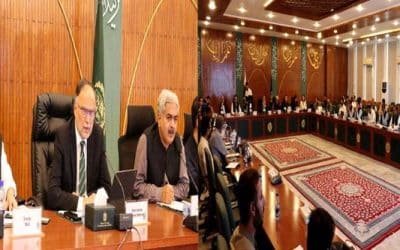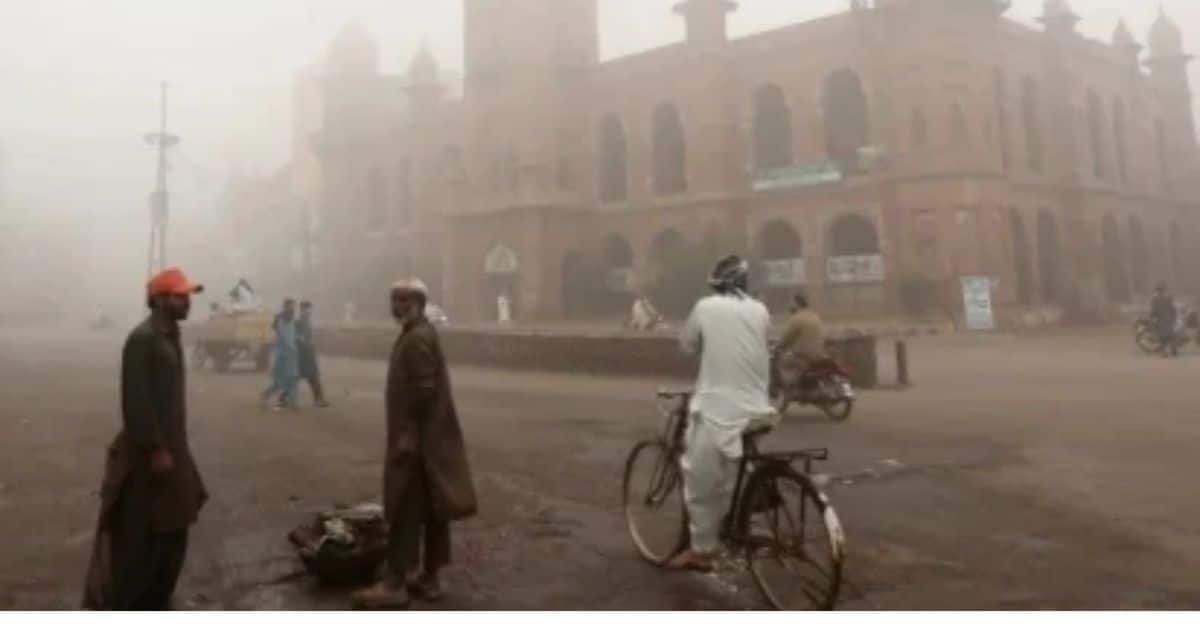





Lahore — Punjab Senior Provincial Minister Marriyum Aurangzeb announced on February 20, 2026, that the province has finalised and begun rapid implementation of 38 Annual Development Programme (ADP) schemes under Chief Minister Maryam Nawaz Sharif’s Climate Resilient Punjab Vision 2024 — a first in the province’s history for completing EPA and Climate Change ADP planning ahead of schedule.
Speaking at a briefing, she said the government has provided 5,000 super seeders at 60 per cent subsidy this year and added another 15,000 super seeders, 5,000 balers, and harvesters to curb crop residue burning, a major smog contributor.
Key Highlights
- 38 ADP schemes finalised and under implementation for climate resilience.
- 15 anti-smog guns covered 47,000+ km, reduced PM10 by 30–45 per cent.
- 30 modern fog cannons on electric trucks to be installed at Rs3 billion.
- Industries to be relocated from Lahore in phases before next smog season.
- Punjab Climate Observatory and related acts to be presented in six months.
- Lahore Air Improvement Framework launched with Rs2.25 billion allocation.
- 50+ modern air quality monitors installed across Punjab.
- Punjab Green School Programme expanded to 41 districts, 18,000+ schools registered.
- Rs5.05 billion for EPA lab upgrades, Rs1.4 billion for Environmental Reference Lab.
Marriyum Aurangzeb said 15 anti-smog guns have already covered more than 47,000 kilometres, recording a 30 to 45 per cent reduction in PM10 levels. To build on this, the government will install 30 modern fog cannons on electric trucks at a cost of Rs3 billion, targeting major urban and industrial areas to tackle dust and air pollution.
She confirmed that industries will be relocated from Lahore in phases before the next smog season. Plastic-free zonification across Punjab has been announced, along with identification of pollution hotspots. The government has decided to introduce an EV-one system to replace two- and three-wheelers.
The province’s first Punjab Climate Observatory will be established, with the Punjab Climate Change Act and Observatory Act to be presented to the cabinet within six months.
The Lahore Air Improvement Framework has been launched with Rs2.25 billion allocated. Under the “One City, One Policy” model and through a Super Station, real-time identification of pollution sources will be possible. With China’s cooperation, a modern air quality governance system will be introduced in Lahore, and a detailed inventory of pollution sources — dust, vehicles, industry, biomass burning — will be prepared.
More than 50 modern air quality monitors have been installed across Punjab, alongside an automated quality assurance system. 15 water-quality monitoring stations are operational on 5 rivers, tracking 15 parameters via telemetry. Punjab Climate Watch and a real-time dashboard have been launched, with staff from 10 to 15 departments trained to operate a central monitoring system.
On the anti-plastic campaign, more than 461,000 kilograms of banned plastic bags have been seized, and over 36,000 undertakings collected. Gulberg, Link Road, Packages Mall, and Dolmen Mall have been directed to operate as plastic-free zones.
The minister said 74 incinerators are now operational, and waste management systems in public and private hospitals have been tightened, with action to be taken against violations. The Environmental Protection Agency (EPA) has been fully digitised, with fines and case management shifted to an online portal. A digital audit system and IT-based unit have also been established for transparency.
Two modern training centres are operational, offering specialist programmes. The Punjab Green School Programme has been expanded to 41 districts, with more than 18,000 schools registered. Preparations are complete for a low-emission zone in Lahore and GIS-based emission hotspot mapping.
Progress is underway on an indigenous Emission Trading System and Green Credits Registry, alongside green entrepreneurship and a green banking ecosystem. Rs5.05 billion has been allocated for upgrading EPA laboratories, while Rs1.4 billion has been approved for the Punjab Environmental Reference Laboratory, including a modern forensic unit and vehicle emissions testing facilities.
Rs700 million has been allocated for an Environment and Climate Delivery Unit to monitor environmental projects through key performance indicators and a digital dashboard. A regulatory framework modelled on the European Union is being developed to ensure clearer responsibilities and updated environmental laws.
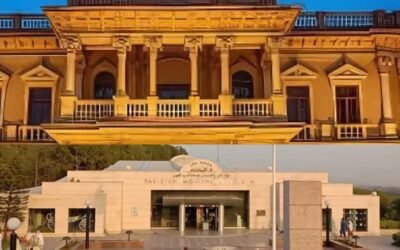
An Environmental Museum and Eco-Amusement Park will be set up in Lahore for Rs1.5 billion to promote awareness, eco-tourism, and green employment opportunities. A Rs500 million biomass circular economy project will also be launched to reduce crop burning, promote alternative energy, and help cut smog levels.
Marriyum Aurangzeb said these steps show the government’s serious intent to tackle climate change, improve air quality, and build a cleaner, greener Punjab. Implementation is already underway, with regular monitoring to ensure results reach the people who need them most. The province is moving steadily toward a more resilient and sustainable future.
You May Like To Read:
- Moon Sighting and Start Date Predictions, Ramazan 2026
- Nepra Faces Backlash Over Net Metering Policy Shift
- ADB in Advanced Talks for $2 Billion ML-1 Loan about Railway Modernization
Check out our latest video: