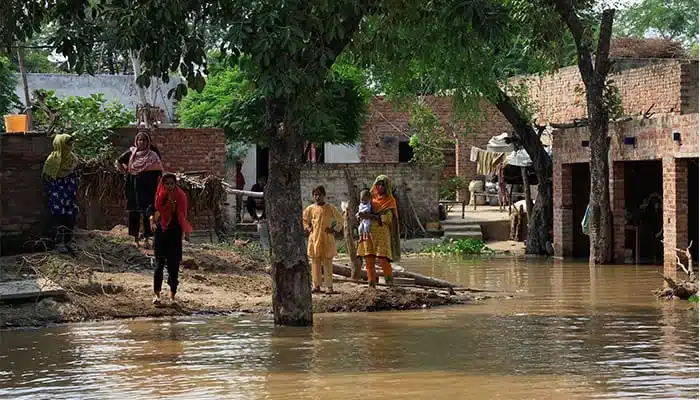





LAHORE— The Punjab government has placed its provincial departments and district administrations on high alert to combat potential monsoon flooding. Preparations are heavily complicated by a total absence of transboundary river-flow data from India, following New Delhi’s unilateral suspension of the Indus Waters Treaty (IWT) in April 2025.
With critical hydrological data-sharing in abeyance, provincial authorities are forced to rely on unofficial sources, including satellite tracking and social media updates, to gauge incoming water levels.
تربیلا ڈیم کے سپل ویز کھول دیے گئے، دریائے سندھ میں اونچے درجے کے بہاؤ کا خدشہ، این ڈی ایم اے کا الرٹ جاری#FloodAlert #IndusRiver #TarbelaDam #Pakistan #weather #Sindh #NDMA pic.twitter.com/EDPS723ahe
— The Frontier Voice (@thefrontiervoic) July 17, 2026
Over-Preparing to Mitigate Data Gaps
In a high-level meeting chaired by Lahore Commissioner Nauman Yousaf, officials finalized a defensive strategy designed to offset the intelligence gap. Lacking upstream discharge updates, the Commissioner instructed the Punjab Irrigation Department to prepare systematically for contingencies one level higher than expected:
- Elevated Protocols: If regional indications suggest normal flows, departments must deploy safety arrangements designed for medium-scale floods. If indicators point to a medium flood, they must immediately trigger high-flood emergency protocols.
- Targeting Encroachments: Deputy commissioners in Lahore and Sheikhupura have been ordered to rapidly launch operations to clear the Ravi riverbed of temporary encroachments and informal settlements blocking critical channels.
- Protecting Bridges: A strict ban has been imposed on illegal sand excavation near strategic bridges. High-intensity mining near critical piers and bay areas can weaken structural foundations before high-velocity water arrives.
The Threat Level: Present vs. Past
While current water flows in major rivers—including the Indus, Kabul, Jhelum, Chenab, Ravi, and Sutlej—remain entirely within normal bounds, authorities are highly cautious given last year’s severe disruptions.
Recent flood events underscore why local administrations are moving to a preventive footing:
| Year | Peak Discharge | Impact & Localities Damaged |
|---|---|---|
| 1988 | ~345,000 cusecs | Worst-ever flood event in Lahore; massive devastation in Shahdara and surrounding low-lying towns. |
| August 2025 | ~220,000 cusecs | Flooded residential sectors including Shahdara, Chuhng, Thokar Niaz Baig, and Mohlanwal; 82,952 residents affected across 31 villages. |
| July 2026 | Normal (current) | High-alert preparation active; administrative focus on clearing riverbeds and securing embankments. |
The provincial administration has requested that the general public ignore speculative social media panics regarding artificial rises in the Ravi’s water levels, assuring citizens that daily coordination between district emergency services and the Irrigation Department is being maintained to ensure timely alerts.