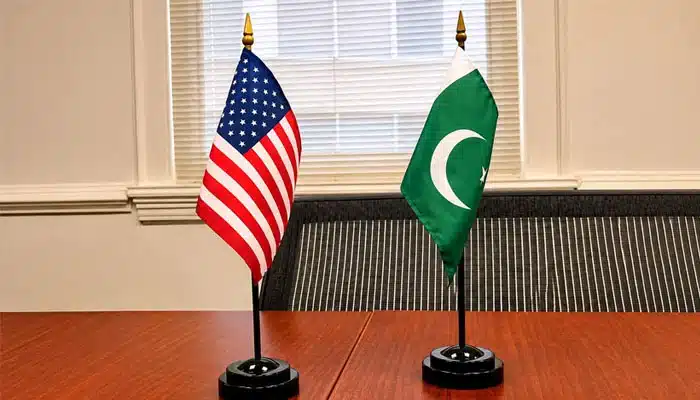



Pakistan is emerging as a fresh point of interest for American companies racing to secure critical mineral supplies, with US firms exploring both smaller mine acquisitions and larger investments in copper and antimony projects, a US Embassy official told journalists at a background briefing on Tuesday. The renewed interest comes as the Trump administration pushes to build more secure and transparent mineral supply chains, a drive that has increasingly turned toward Pakistan’s largely untapped mineral wealth.
Key Highlights
- US firms exploring smaller mine takeovers and larger copper, antimony projects in Pakistan
- US Exim Bank has committed $1.25 billion for the Reko Diq copper-gold project
- Reko Diq moving forward but slower than originally planned, official says
- Finance Minister Aurangzeb, USTR Greer review bilateral trade framework progress
- Pakistan’s mineral sector currently contributes about 3pc to national GDP
An embassy official says American investors are also eyeing small mines and offtake deals as the US targets 60 critical minerals globally, several of which are present in Pakistan, including copper, antimony and tungsten
Read: https://t.co/Zf3Go4F9Fn pic.twitter.com/IZtbOg8E0V— Profit (@Profitpk) August 6, 2026
A Broader Push Reaches Pakistan’s Mines
According to the US Embassy official, the Trump administration has been focusing on critical mineral supply chains worldwide, with Pakistan drawing particular attention through multilateral agencies, the US International Development Finance Corporation, and the Export-Import Bank of the United States. The Exim Bank has already committed $1.25 billion toward the Reko Diq copper-gold project in Balochistan, though the specific financing terms are still being worked out.
Beyond Reko Diq, American firms are looking at trade arrangements to buy offtakes from smaller Pakistani mines for processing back in the United States, with some products potentially feeding into supply chains as far afield as Germany and South Korea. The official said Pakistan holds meaningful concentrations of several of the roughly 60 minerals the US considers critical, including sizeable antimony deposits, materials used in aircraft manufacturing, semiconductors and defense equipment. While Pakistan may not have deposits on the scale of Reko Diq elsewhere, he said, the breadth of what’s available still makes the country worth serious attention from American industry.
Trade Talks Move in Parallel
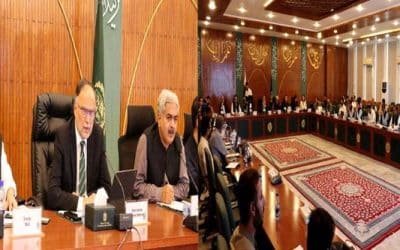
The mineral sector briefing coincided with a virtual meeting between Finance Minister Muhammad Aurangzeb and US Trade Representative Jamieson Greer, held to review progress on a proposed bilateral trade agreement. The finance ministry said the two sides noted that negotiations on the reciprocal trade framework had advanced significantly, and both reaffirmed a shared commitment to concluding the agreement soon, a signal that economic ties between the two countries are moving on more than one front at once.
Reko Diq’s Scale Comes With Its Own Timeline
Asked whether the multibillion-dollar Reko Diq project was currently stalled, the embassy official pushed back gently, saying it continues to move forward, just not at the pace originally envisioned. Financial institutions including the International Finance Corporation are still working through financing details. “The project is so large that it cannot be expected to move according to the original plan and not to change,” he said, framing the delay as a natural consequence of scale rather than a setback.
He added that Reko Diq alone could contribute another 0.5 percent to Pakistan’s GDP once fully operational, on top of the roughly 3 percent the broader mineral sector currently provides, numbers that point to real upside if the pace can be sustained.
What Washington Wants From Islamabad
The official said Washington has been encouraging Pakistan to offer American companies a level playing field and to strengthen institutions like the Geological Survey of Pakistan so feasibility studies can better guide US investment decisions. He credited Islamabad with doing what it can to support US and other international firms, while noting that investment ultimately depends on cutting through red tape.
As one concrete example of cooperation already underway, he pointed to US Strategic Metals, which exported a mineral consignment supplied by the Frontier Works Organisation for processing in the United States, with both sides now eyeing further trade and investment opportunities.
Room for Everyone, Official Says
Asked about US-China competition over mineral investments, the official was careful to frame Pakistan’s position as open rather than contested. He said Pakistan is seeking investment from around the world, creating room for firms from Australia, Canada and elsewhere alongside American and Chinese companies, an approach that could also help build up the local workforce through varied training and expertise.
On security concerns in Balochistan, he acknowledged the challenges are real but said they haven’t dimmed industry appetite, given the scale of returns on offer from rich deposits in areas like Chitral, where antimony operations look promising, and Waziristan, where copper concentrations have been identified. Similar potential, he said, exists in Gilgit-Baltistan, pointing to a mineral sector with room to grow well beyond its current contribution to the national economy.