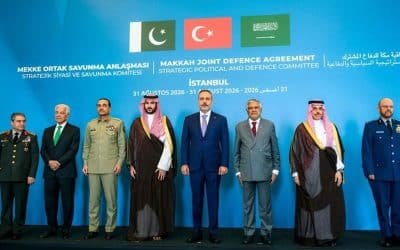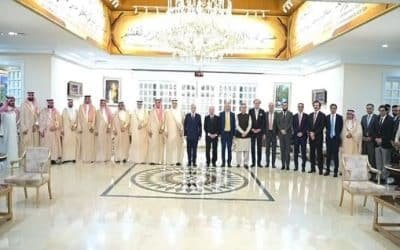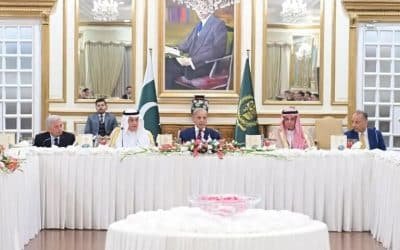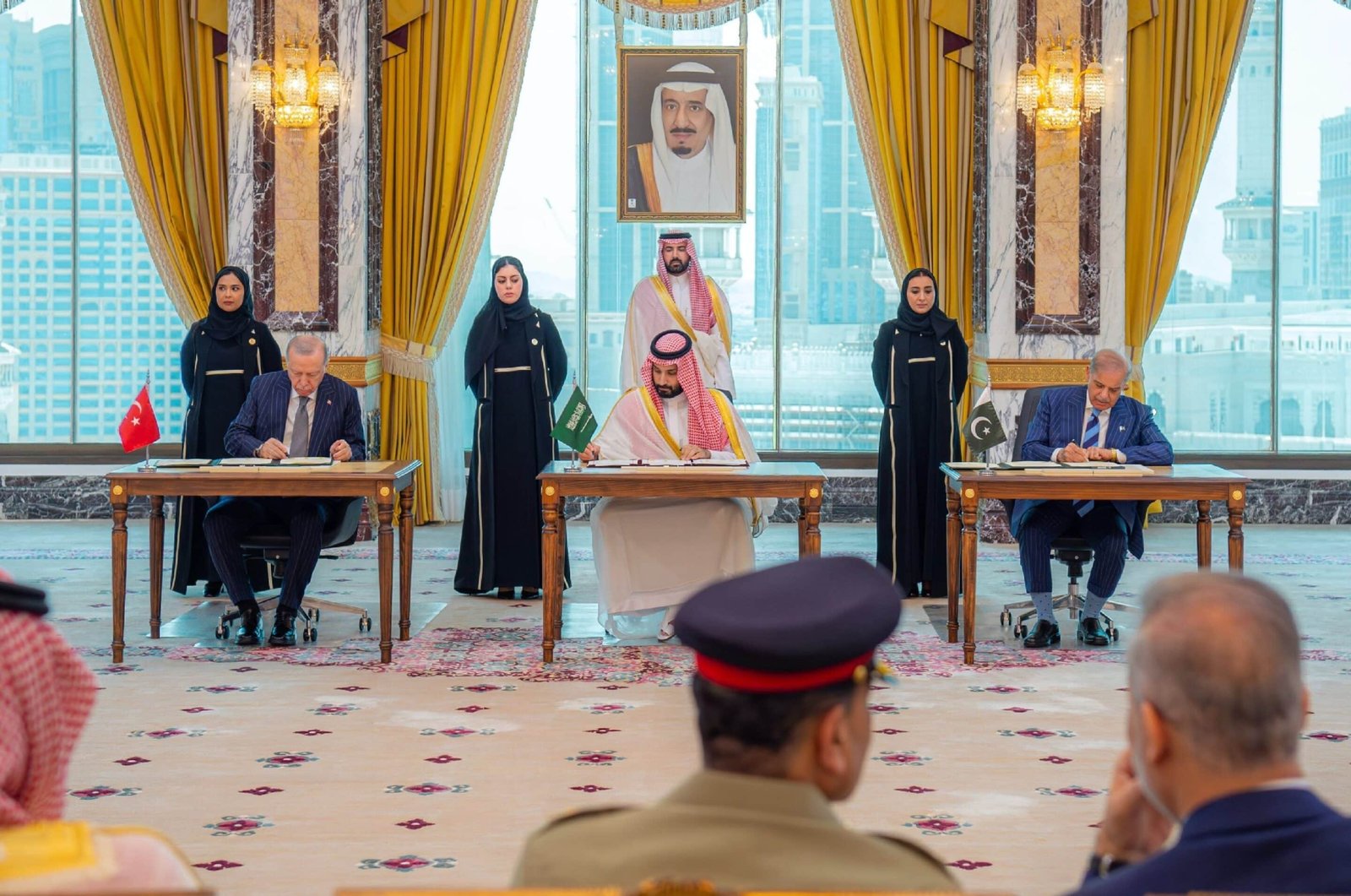





On August 7, 2026, Pakistan, Saudi Arabia, and Turkiye signed the Makkah Joint Defense Agreement. This pact establishes mutual defense among the three nations. Under the deal, an armed attack on any one member will be treated as an attack on all three. This agreement is actually an expansion of the earlier Pakistan Saudiarab agreement about defense. Now it includes Turkey, as its defense industry is rapidly growing. All three countries have described the agreement as primarily defensive in nature. Officials have also affirmed that this agreement is not aimed at any single country. Moreover, other countries may join the agreement, maintaining the consent from all three partners.
Key Highlights
- Pakistan, Saudi Arabia, and Turkiye sign the Makkah Joint Defense Agreement on August 7, 2026
- Pact declares an attack on one member an attack on all three
- India says it is “closely following” the development
- Iran’s National Security Commission questions the pact’s real impact
- Reports suggest India may be exploring closer defense ties with Israel in response
- Israel has not issued an official comment on the agreement
The recently signed Makkah Joint Defense Agreement among Türkiye, Saudi Arabia and Pakistan underscores a significant shift in Middle East security dynamics, analysts say, as regional powers seek greater autonomy over their security arrangements https://t.co/l6UKb13ilk pic.twitter.com/I7rAKWmmsq
— China Xinhua News (@XHNews) August 11, 2026
What the Agreement Says, and Who Signed It
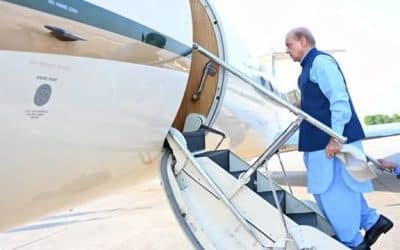
Saudi Crown Prince Mohammed bin Salman, Turkish President Recep Tayyip Erdogan, and Pakistani Prime Minister Shehbaz Sharif signed the pact at a summit in Makkah. Pakistan’s Foreign Minister Ishaq Dar said on Sunday that the agreement was “purely defensive in nature.” He added that it does not cancel or replace any other bilateral or multilateral agreements the three countries already hold with other nations. A Turkish official told Reuters that the pact does not target any specific country or actor. It also remains open to other regional states.
Landmarks in Islamabad and cities in Saudi Arabia lit up in the colors of the Saudi, Turkish, and Pakistani flags after the signing. This showed the festive spirit among the three governments. Analysts note that the three countries bring different strengths to the table. Pakistan offers battle-tested armed forces and the Muslim world’s only nuclear arsenal. Saudi Arabia brings deep financial resources and regional influence. Turkiye, a NATO member, contributes a large military and an increasingly capable domestic defense industry, including advanced drone systems.
India Says It Is Watching Closely
India’s Ministry of External Affairs (MEA) responded within hours of the signing. MEA spokesperson Randhir Jaiswal said New Delhi was “closely following” the development and would provide updates as needed. Days later, India’s tone shifted to something more pointed. A follow-up statement from the MEA indicated New Delhi was actively studying the pact’s strategic implications, a step beyond its initial, more neutral response.
Separate reports out of Turkish and Pakistani media suggested India had reached out to Israel to discuss a reciprocal defense arrangement in response to the new alignment. The reports indicate a phone call between Indian Prime Minister Narendra Modi and Israeli Prime Minister Benjamin Netanyahu just before the Makkah pact was signed. They talked about developments in West Asia during this call. Neither government has confirmed that the call was specifically tied to the Makkah agreement, and the claim of a reciprocal pact remains unconfirmed. Israel’s government has not issued any official statement on the Makkah pact itself.
A Shifting Regional Picture
Analysts say the pact shows changing security in the Middle East. Gulf states want to form broader partnerships. This comes after Iran-aligned groups, like Houthi forces, attacked Saudi infrastructure multiple times. Some commentators call the arrangement an “Islamic NATO,” but officials have steered clear of that term. It’s still unclear if the pact will include other countries. Also, we don’t know how India, Israel, and Iran will change their strategies in response. The three signatory countries still describe the agreement as a defensive move to boost regional stability. Meanwhile, nearby powers are figuring out what it means for them.