




India’s recent policies concerning citizenship, particularly the Citizenship Amendment Act (CAA) and the National Register of Citizens (NRC), have ignited a contentious national debate and drawn significant international scrutiny.
While the Indian government asserts these measures are essential for national security and to provide refuge to persecuted minorities, critics argue they fundamentally alter the country’s secular fabric and disproportionately impact certain communities, especially Bangladeshi Muslims.
The Legislative Landscape: CAA and NRC
The Citizenship Amendment Act (CAA), enacted in December 2019 and recently operationalized with new rules in March 2024, amends India’s 1955 Citizenship Act. It offers a fast-tracked path to Indian citizenship for Hindus, Sikhs, Buddhists, Jains, Parsis, and Christians who migrated to India from Afghanistan, Bangladesh, and Pakistan before December 31, 2014, due to religious persecution.
A crucial aspect of the CAA is the explicit exclusion of Muslims from this expedited process. The government’s stated rationale is that these three countries are Muslim-majority nations where non-Muslims face persecution, implying that Muslims cannot be similarly persecuted in those contexts.
Complementing the CAA is the proposed nationwide National Register of Citizens (NRC). The NRC is a process intended to identify and document all legal citizens of India. While a statewide NRC was implemented in Assam, resulting in the exclusion of 1.9 million people, the government has repeatedly indicated its intention to roll out a similar exercise nationwide.
The concern arises from the combination of the NRC and CAA; if individuals are unable to prove their citizenship through the NRC process, non-Muslims might find recourse through the CAA, while Muslims would not have such a pathway, potentially rendering them stateless.
Source: Amnesty International
The Stated Intent vs. Ground Realities
The Indian government, led by the Bharatiya Janata Party (BJP), maintains that the CAA is a humanitarian gesture designed to protect religious minorities fleeing persecution. Home Minister Amit Shah has frequently reiterated that the law is not aimed at Indian Muslims and is a domestic matter.
However, the selective religious criterion in the CAA has led to widespread apprehension. Critics argue that the law deviates from India’s secular constitutional principles, which guarantee equality before the law irrespective of religion.
On the ground, the implementation of these policies, particularly the NRC in Assam, has exposed significant challenges. Many individuals, including those with generations-long ties to India, have struggled to produce the required documentation due to poverty, illiteracy, displacement, or natural disasters.
The “Foreigners Tribunals” established to adjudicate citizenship claims have been criticized for their arbitrary functioning, often declaring individuals “foreigners” based on minor discrepancies in documents. Reports indicate that hundreds of Bengali-speaking Muslims, despite possessing Indian identity documents, have been “pushed back” into Bangladesh from states like Assam, raising serious questions about due process and legal protections.
Humanitarian Concerns and the Specter of Statelessness
The most significant humanitarian concern arising from these policies is the potential for large-scale statelessness. A stateless person is someone not considered a national by any state under the operation of its law, leaving them without fundamental rights such as access to education, healthcare, employment, and legal protection.
India is not a signatory to the 1954 UN Convention Relating to the Status of Stateless Persons or the 1961 Convention on the Reduction of Statelessness, and it lacks a comprehensive framework to address statelessness.
The NRC process, especially when coupled with the discriminatory provisions of the CAA, places a disproportionate burden on vulnerable communities, particularly Muslims, to prove their citizenship. Those excluded from the NRC who cannot avail themselves of the CAA’s provisions face an uncertain future, potentially languishing in detention centers or being deported to a country where they may have no ties or where their safety is not guaranteed.
This situation has led to fear and insecurity among millions, with anecdotal evidence of families being separated and individuals facing immense hardship.
International Scrutiny and Domestic Dissent
The CAA and the prospect of a nationwide NRC have drawn considerable criticism from international bodies, human rights organizations, and several countries. Organizations such as Amnesty International, Human Rights Watch, and the United States Commission on International Religious Freedom (USCIRF) have expressed grave concerns, labeling the CAA as discriminatory and a blow to India’s constitutional values and its international human rights obligations.
The United Nations has also expressed concern, urging India to reconsider measures that could result in large-scale disenfranchisement.
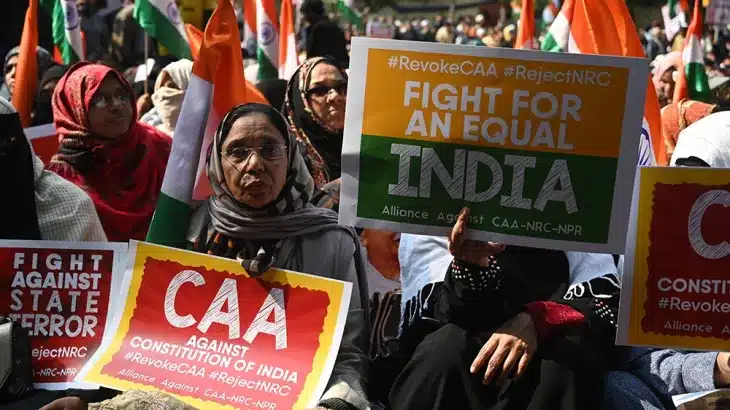
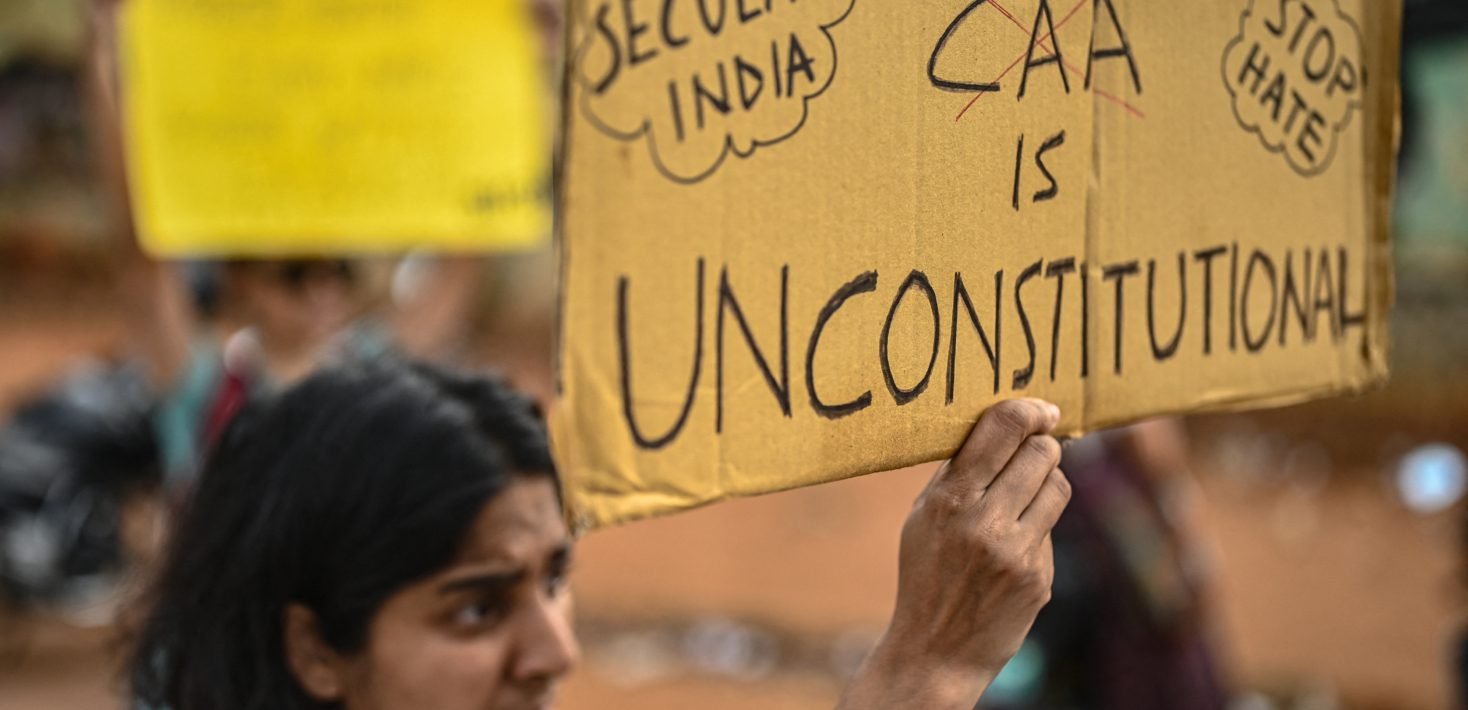
Domestically, the policies have sparked widespread protests across India, with civil society groups, opposition parties, and students arguing that the laws undermine the country’s secular foundations and discriminate against its Muslim minority. These protests have, at times, led to clashes and a clampdown on dissent, further intensifying concerns about democratic freedoms.
Epilogue
Examining India’s citizenship policies through a geopolitical and strategic lens reveals that the CAA and NRC can be viewed not only as internal security and humanitarian concerns, but also as a strategic tool in India’s complex relationship with Bangladesh.
The recent political upheaval in Bangladesh, leading to the ouster of Prime Minister Sheikh Hasina and her subsequent refuge in India, alongside the historically strained relationship with figures like Dr. Muhammad Yunus, adds another layer to this dynamic.
India’s close ties with the now-ousted Hasina government, which was generally perceived as pro-India, have been significantly disrupted. The presence of Hasina in India, reportedly fueling her followers through social media, creates a delicate diplomatic situation for the new interim government led by Dr. Yunus, whose relationship with India is not as firmly established or uniformly positive as Hasina’s was.
In this context, the citizenship drive could be interpreted by some as a means for India to assert its leverage, manage demographic shifts it perceives as strategic threats, and potentially influence the internal political landscape of Bangladesh, especially as new power dynamics emerge.
This perspective suggests that while humanitarian concerns are paramount, underlying strategic calculations and domestic political exigencies in both nations may also influence the implementation and perception of these controversial policies.