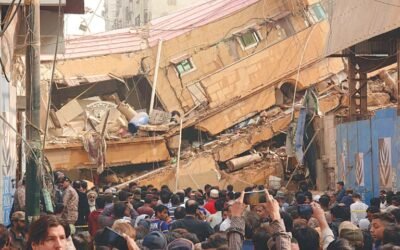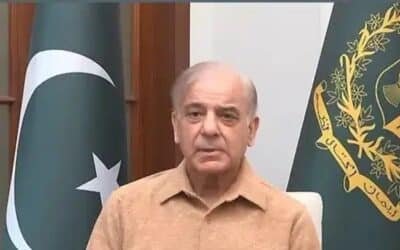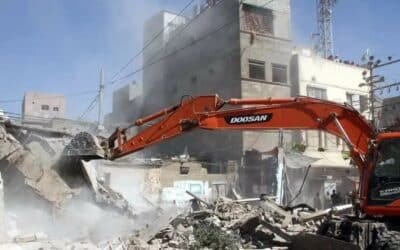
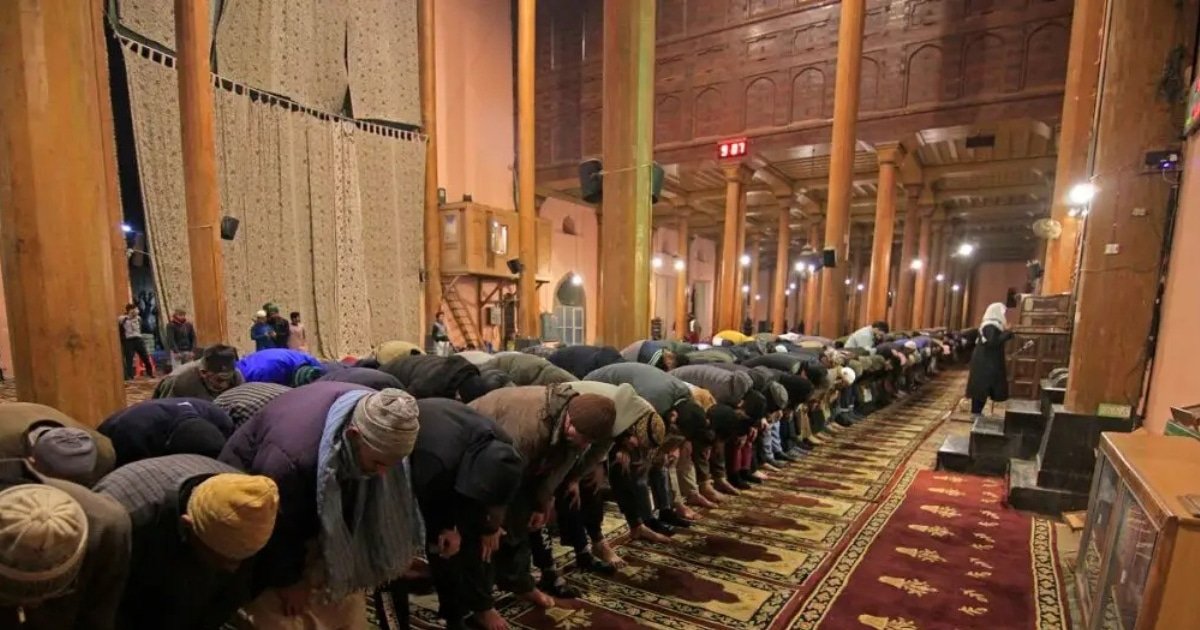



Al Quds / Srinagar — Mosques are far more than places of worship for Muslims; they are sacred spaces of identity, unity, and emotional belonging, and in times of oppression, they become powerful symbols of resilience and resistance. That’s why occupants are always trying to crush these holy places. Look at Jamia Masjid in Srinagar and Al-Aqsa Mosque in occupied Jerusalem—the pattern is painfully familiar: Friday congregations restricted, Ramadan nights locked down, religious leaders silenced under the pretext of “security.” Targeting mosques is not merely about control; it is an attempt to suppress religious freedom and weaken the spiritual and collective strength of a people deeply attached to these sacred spaces.
Israeli authorities announced increased security deployment around Al-Aqsa Mosque during Ramadan, with entry permits under specific conditions. Palestinian officials expressed concern over access restrictions.#AlAqsa #Jerusalem #Ramadan pic.twitter.com/kufJYqflGD
— SUNO FM RADIO (@SUNOFM894) February 18, 2026
For Kashmiris, Jamia Masjid is not merely a place of worship. It is the historic pulpit of the Mirwaiz family, a space where generations have gathered to pray and, when necessary, to speak truth to power. For Palestinians, Al-Aqsa is Islam’s third-holiest site, the spiritual anchor of Jerusalem, a symbol no one can erase from the collective memory. Yet in both cities the faithful face the same reality: the right to pray freely is tied directly to the political temperature of the day.
Friday — The Day They Fear Most
Jumu’ah is the largest weekly gathering at any mosque, and both Jamia Masjid and Al-Aqsa have repeatedly seen their Friday doors shut or half-shut.In Srinagar, the authorities have sealed Jamia Masjid for long stretches during unrest. After Burhan Wani’s killing in 2016, it stayed locked for 30 straight Fridays. When Article 370 was abrogated in 2019, the gates remained closed for nearly four months. The usual explanation is that sermons might turn into protests — so better to keep the pulpit empty.
In Jerusalem, Israeli forces rarely padlock Al-Aqsa for months, but they frequently impose age bans on Fridays: men under 40, 50, or even 60 are turned away at the gates. The result is the same — the courtyard stays half-empty, the congregation reduced to older men and women, the energy of youth deliberately kept outside.
Hamas condemned the arrest of al-Abbasi in a statement on Tuesday, saying he had been “served with an order banning him from the mosque”.https://t.co/Ah4eycMQT5
— Dawn.com (@dawn_com) February 18, 2026
Ramadan Nights: Sacred and Restricted
Ramadan is when restrictions bite hardest. Both administrations act to prevent large crowds on the most blessed nights.
At Jamia Masjid, it has become almost expected that Jumat-ul-Vida (the last Friday of Ramadan) and Shab-e-Qadr will be off-limits. In 2023 and 2024 the gates were locked on those nights even when the city was calm. The Mirwaiz is often placed under house arrest so no sermon can be delivered.
At Al-Aqsa, Ramadan brings police raids (2021 and 2023 stand out in memory), electronic gates, and barricades that choke entry from the West Bank. Hundreds of thousands of Palestinians try to reach the compound during the month; the authorities respond by thinning the crowds.
As mosques across the region light up in devotion on this sacred night, Jama Masjid Srinagar stays shut under watch. Yet another closure, and I remain detained at home. Shab-e-Baraat joins a long list since 2019 when prayers at the Valley’s largest mosque have been stopped by… pic.twitter.com/A5VNIOAyQ6
— Mirwaiz Umar Farooq (@MirwaizKashmir) February 3, 2026
Silencing the Voices That Lead PrayerIn both places the men who stand at the pulpit are targeted first.In Srinagar, Mirwaiz Umar Farooq, the chief cleric of Jamia Masjid, has spent years under house arrest or travel bans. Without him at the pulpit, the mosque loses its traditional religious and political voice.
In Jerusalem, Israeli orders regularly ban the Grand Mufti or prominent Waqf members from the compound. Many Palestinian religious figures and activists are barred for months at a time.
A Long History of Control
The pattern stretches back centuries. Jamia Masjid Srinagar was once closed for 24 years (1819–1843) under the Sikh Empire to prevent rebellion. Al-Aqsa saw repeated closures during the Crusades and briefly after the 1967 war when keys were taken.
In recent decades, Jamia Masjid endured its longest modern closure of 19 weeks in 2016 and 18 weeks in 2019, while Al-Aqsa has lived under near-continuous access restrictions since 1967, with shorter but frequent total shutdowns during escalations.
The reasons given are almost word-for-word: “preventing anti-national slogans” in Srinagar, “security threats and incitement” in Jerusalem. Heavy security surrounds both — CRPF and J&K Police in Srinagar, Israeli Border Police and cameras in Jerusalem.
You May Like To Read: Al-Aqsa Imam Arrested, Tensions Mount Ahead of Ramazan
One Legal Frame, One Shared Lived Reality
The main difference is how the occupation is framed. In Jerusalem, the dispute involves the site’s status under the old “Status Quo” agreement with Jordan. In Srinagar, India treats it as an internal security matter. But for the people who want to pray, the experience is identical: the mosque becomes a living barometer of tension. Freedom to enter is granted or taken depending on the mood of the authorities.
For Muslims in both places, these restrictions cut deeper than logistics. When the Friday sermon is silenced or the night of Shab-e-Qadr is blocked, it is not only about access — it is about weakening the communal spirit that gathers around these sacred spaces.
Two mosques, thousands of miles apart, facing the same methods of control. In both Srinagar and Jerusalem, the faithful keep coming back, insisting that prayer is not a favour to be given or withheld, but a right that cannot be negotiated away.
Check out our latest video: