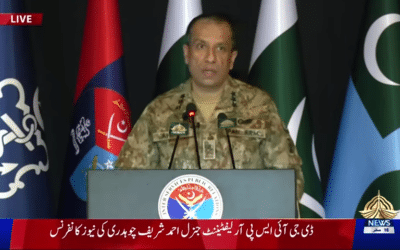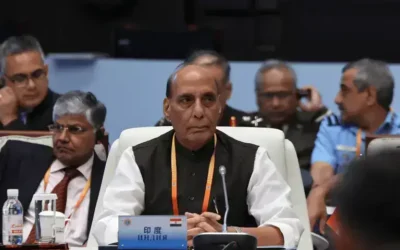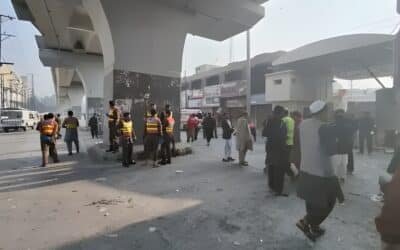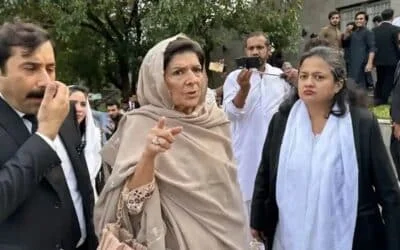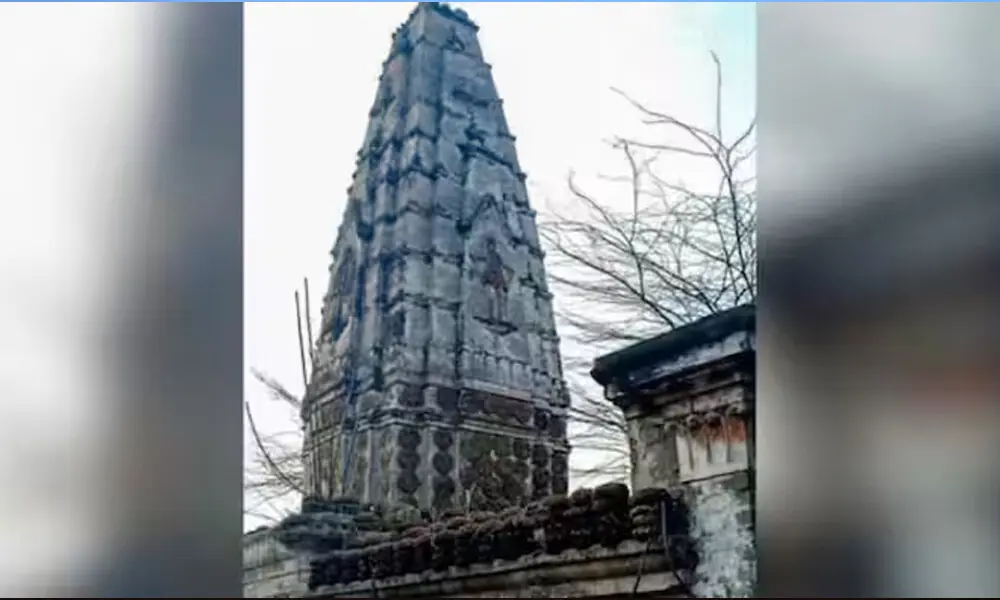





The Foreign Office on Friday dismissed the claims of Indian Ministry of External Affairs over a Hindu temple in Narowal, describing the statements as false and politically motivated. India was distorting facts and resorting to cheap gimmicks, FO Spokesperson Sajjad Haider Khan said.
Highlights
- FO calls Indian claims on Narowal temple ‘false, politically motivated’
- Government says temple collapsed due to heavy rains on July 21
- Minority rights group says seminary expansion led to intentional demolition
- FO says India’s track record on minorities undermines its credibility on the issue
What occurred in the temple
Torrential rains have apparently led to the collapse of a century-old temple in the village of Siraj, according to the Pakistani government. A minority rights group has disputed this version, saying that the building was deliberately destroyed to make way for the expansion of a neighbouring seminary. In the wake of rival narratives, India’s Ministry of External Affairs issued a statement calling on Pakistan to conduct a swift and transparent inquiry into the incident, calling the act a despicable vandalism.
Responding on X, Khan said Pakistan has categorically rejected India’s false and politically motivated claims regarding the Narowal temple. The structure was damaged on July 21 by torrential rains, not deliberate action as India’s statement implied, he said. Local authorities have already surveyed the rain damage and taken steps toward restoration of the building, he said.
“So it is shameful that India is distorting facts and resorting to cheap gimmicks,” said Khan. Such intentional distortion could not deflect from what he termed as India’s own track record of persecuting minorities and facilitating attacks on their places of worship,” he said. “The world knows about the weaponisation of Hindutva ideology against minorities and the world must hold Indian leadership accountable for the persecution of Muslim, Sikh and Christian communities,” Khan said.
🔊PR No.2️⃣3️⃣3️⃣/2️⃣0️⃣2️⃣6️⃣
Statement by the Spokesperson
🔗⬇️ pic.twitter.com/Czt2W3Au5t
— Ministry of Foreign Affairs – Pakistan (@ForeignOfficePk) September 4, 2026
A Documented Record: Demolitions of Mosques and Muslim Properties in India
Khan’s remarks are part of a wider pattern of behaviour that has been the focus of sustained attention by international human rights groups and independent journalists in recent years. Here’s a timeline of some of the most documented incidents, confirmed by reporting from Amnesty International, Al Jazeera and other credible outlets.
April-June 2022: Amnesty records 128 demolitions in five states During this period, Amnesty International’s probe found at least 128 Muslim-owned homes, shops and mosques were razed across states ruled by the Bharatiya Janata Party as part of what officials termed punishment following incidents of sectarian violence or protests. The report has rendered at least 617 persons homeless or deprived of livelihoods.
April 2022, Khargone, Madhya Pradesh: Authorities bulldozed 16 homes and 29 stores belonging to Muslim residents after communal violence erupted during a Hindu festival. “I got no warning,” said 56-year-old widow Hasina Bi, who spoke to Amnesty researchers after her house was razed.
Jahangirpuri, Delhi April 2022: Days after clashes broke out during a religious procession, bulldozers razed some 25 Muslim-owned shops and homes in the neighbourhood. Reports on the incident said demolitions went ahead even after the Supreme Court ordered a stay of the action.
December 2023: Uttarakhand In the northern state, a local high court ordered the destruction of over 4,000 homes, most of them belonging to Muslim families, and ruled that they were illegal.
January, 2024: Masjid Akhonji, Delhi The Delhi Development Authority demolished the mosque, around 700 years old, in Mehrauli, one of the more historically significant structures to be affected by this wider pattern of demolitions.
February 2024: Haldwani, Uttarakhand Indian authorities tore down a mosque and religious school in Haldwani, triggering deadly protests by residents who said Muslims were being targeted on purpose.
July 2024: Kolhapur, Maharashtra A mob vandalised and partially destroyed a city mosque.
November 2024: Supreme Court ruling, bulldozer justice continues Supreme Court of India declares bulldozer justice unconstitutional. But authorities in Kushinagar went ahead to demolish part of the Madni mosque soon after the ruling, a move observers said was an open defiance of the court’s own order.
August 2025: Haryana’s Nuh district After clashes over a religious procession, a mob attacked the Anjuman Jama Masjid in Gurugram, killing the mosque’s 19-year-old deputy imam, Mohammad Saad. The administration then carried out a demolition drive targeting Muslim-owned properties in the surrounding area in the entire district.
October 2025: Sambhal, Uttar Pradesh A mosque in the village of Raya Buzurg was demolished by authorities after the Allahabad High Court rejected a petition for a stay order. The court said the mosque was built on a pond which was government-owned and not to be built upon.
Nationwide pattern continues for January-June 2025 The Polis Project, a research group that tracks such incidents, recorded 15 cases of mosque demolition or attempted demolition across India in the first six months of the year alone.
June 2024 – February 2026: 20 documented assaults against Muslim establishments Regional outlets quoted research that showed 20 separate demolition actions against Muslim establishments during the period, and 69 Islamic religious sites reported bulldozed or declared illegal over the broader period tracked by researchers.
A Pattern That Rights Groups Say Follows a Clear Trend
Amnesty International has been quite blunt about this pattern, characterising the demolitions as a punitive campaign that has been overwhelmingly concentrated in BJP-ruled states. British-made JCB bulldozers are so prevalent in these operations that some Indian politicians have resorted to mocking the company with a bad nickname referring to the practice, the organization noted.
For a long time, researchers and human rights monitors have been asking the same basic question: Are India’s demolition laws, ostensibly intended to target illegal construction, enforced evenly across religious communities, or do they in practice operate as a tool disproportionately aimed at Muslim neighbourhoods and religious sites? Independent investigations of the pattern, including detailed reporting from Amnesty International, The Polis Project and Al Jazeera, have consistently found that demolitions cluster heavily in BJP-ruled states and often follow episodes of communal tension, a pattern that has continued even after India’s own Supreme Court explicitly ruled the practice unconstitutional in late 2024.