


ISLAMABAD (April 10, 2026) — While the eyes of the world are fixated on the “Islamabad Venue” to monitor every gram of Iran’s uranium enrichment, a concerning development across the eastern border has largely escaped international scrutiny. India has officially moved closer to nuclear fuel self-reliance after its domestically designed Prototype Fast Breeder Reactor (PFBR) at Kalpakkam attained “criticality,” a step that has raised eyebrows among regional strategic analysts.
Today, India takes a defining step in its civil nuclear journey, advancing the second stage of its nuclear programme.
The indigenously designed and built Prototype Fast Breeder Reactor at Kalpakkam has attained criticality.
This advanced reactor, capable of producing more fuel…
— Narendra Modi (@narendramodi) April 6, 2026
At a Glance: India’s Nuclear Leap
-
The Milestone: The PFBR at Kalpakkam has started a self-sustaining nuclear chain reaction, a move Prime Minister Narendra Modi calls a “defining step.”
-
Advanced Technology: This breeder reactor is designed to produce more fuel than it consumes, ostensibly for civil energy but with clear strategic implications.
-
Thorium Ambitions: The project aims to harness India’s vast thorium reserves, potentially freeing its nuclear program from international fuel supply constraints.
-
The Silent World: Unlike the intense “maximum pressure” and sanctions faced by Middle Eastern nations, India’s expansion toward a 100-gigawatt capacity by 2047 is being met with global indifference.
Strategic Concerns and the Iranian Parallel
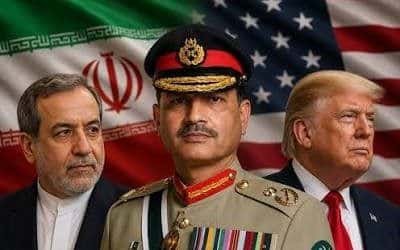
The timing of this “scientific breakthrough” has not gone unnoticed in Islamabad. As Pakistan hosts U.S. and Iranian delegations to settle disputes over nuclear transparency and regional security, India is moving toward a “closed fuel cycle.” Strategic experts point out the inherent irony: while Iran is demanded to provide intrusive access and limit its enrichment capabilities, India is actively advancing a “breeder” technology that, by its very nature, produces plutonium—a key ingredient in nuclear weapons.
“The global community remains obsessed with the ‘Iranian threat’ while providing a virtual carte blanche to New Delhi’s nuclear expansion,” noted a senior defense analyst in Islamabad. “A reactor that produces more fuel than it consumes isn’t just an energy solution; it’s a structural shift in regional strategic stability.”
Thorium: A Path to Unchecked Expansion?
Prime Minister Modi’s statement late Monday highlighted the use of thorium, a potential fuel that would allow India to bypass the restrictive oversight of global nuclear fuel suppliers. While framed as a “net-zero” climate initiative to reduce coal dependency, the dual-use nature of such advanced scientific capabilities remains a point of deep concern for Pakistan’s security establishment.
The Looming Shadow over Islamabad Talks
As Pakistan facilitates a two-week ceasefire and peace negotiations to prevent a regional war, the advancement at Kalpakkam serves as a reminder of the “double standards” in global nuclear diplomacy. Analysts argue that the world’s silence on India’s latest nuclear milestone risks emboldening New Delhi to further expand its strategic assets under the guise of “civil nuclear” progress.
With the Strait of Hormuz crisis exposing the fragility of global energy lines, India’s push for nuclear self-reliance is being sold as an economic necessity. However, for those monitoring the balance of power in South Asia, the Kalpakkam reactor represents a “hidden crack” in the global non-proliferation regime—one that is being ignored while the world demands absolute “perfection” from others.
You May Like To Read: Pakistan Intervenes to Save Ceasefire as Israeli Strikes on Lebanon Intensify
Check out our latest video: