



Money laundering is a global issue. Across the world, it poses threats to the stability and security of every nation. Means and methods for money laundering are vast and diverse. These methods impede the socio-economic progress of the country. Pakistan is still a developing country. This means that many areas are overlooked or neglected. To address these issues, NGOs have sprung up. NGOs are involved in everything from women’s empowerment, education, and disaster relief. Given Pakistan’s circumstances and population, NGOs often play an important role. However, there is a dark side to some of these organizations. Many fake NGOs also operate in Pakistan to make dirty money. The focus of this article is to explore how fake NGOs in Pakistan are engaged in money laundering crimes.
What is Money Laundering?
Money laundering is a way of transferring funds gained through illegal means. This movement is done from one country to another without paying the required taxes on the funds. While money laundering can be considered an ancient practice, it was not recognized as a crime until much later. It began with the move to convert money obtained illegally into lawful assets. This was a tactic employed initially by the Mafia. The term money laundering was coined in the U.S. for this reason. Since then, it has come to be seen as a crime all over the world due to its negative economic implications. It is also interlinked with a myriad of other offences. This is because terrorist organizations often use untraceable funds. According to the figure by the United Nations (UN), money laundering generates around $2 trillion in terror financing. Trading, Wire transfers, smuggling, credit card payments, and drug trafficking are some other examples of money laundering. This article will specifically examine how fake NGOs are used to launder money.
Terror isn’t just fueled by hate — it runs on money.
From fake charities to bank heists, hawala to narco-trade—a secret economy powers the bloodshed. How terror groups sustain themselves — and why it matters more than ever.Explained.
1/25 pic.twitter.com/AWdiM7zEIz
— The Paperclip (@Paperclip_In) April 28, 2025
How NGOs launder money
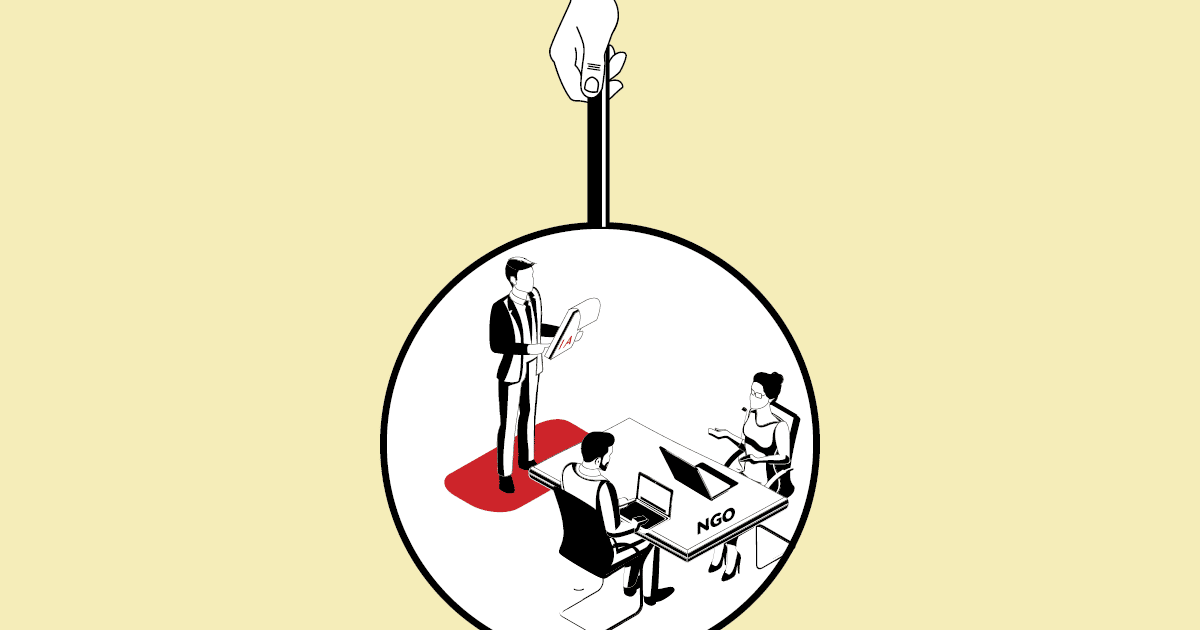
NGOs or non-governmental organizations can be used as tools for the transfer of illicit funds. If an NGO is founded and registered in another country and provides funding to it, it can be considered money laundering. But only if the NGO is not making use of the money for the claimed noble causes. Some businessmen create trust organizations and give their money to them as a charitable donation. This way, this amount is not taxed, and they get away with tax evasion. If such an NGO is working in another country and funds are allocated to it in a foreign land illegally, then it constitutes money laundering. Thus, many NGOs have been found to have links to terror groups or anti-state organizations. The funds generated through the NGOs had been used to finance terrorism in the country.

Source: Ghana Talks Business
Fake NGO/NPOs and Money Laundering in Pakistan
Perhaps the most notable case of NGOs involved in terror financing is linked to the APS School Tragedy in 2014. After the attack, many NGOs in Pakistan were forcefully shut down by the government. This was because the Interior Ministry suspected their involvement in anti-state activities. They were also diverting their funds to finance terrorism. Home Minister Col (r) Shuja Khanzada also revealed that terrorists are working in some NGOs. He stated that swift action will be taken once sufficient proof is obtained.
Non-profit organizations (NPOs) or charities are also attractive vehicles for terrorist financiers. Funds are raised legitimately, and these organizations also have public trust. Due to this, money is moved across borders with ease to deliver aid quickly. The 2019 APG report found that Pakistan is still in the process of identifying which NPOs are most vulnerable to terrorist-financing (TF) abuse. This has been a long-standing challenge under the FATF as well. The country’s National Risk Assessment treats NPOs as a high-risk sector for TF. This underscores both the sector’s social value and its exposure to abuse.
The most visible pattern of abuse has been through “front” charities linked to proscribed groups. The U.S., as well as open-source reporting, details how entities such as Jamaat-ud-Dawa (JuD) solicit donations. Particularly after natural disasters. These resources are channeled to designated networks. The U.S. Treasury has designated multiple JuD-linked entities and facilitators. This illustrates how social-welfare and political branding can mask TF risk. Pakistan’s courts have also pursued domestic prosecutions. In December 2020, a Pakistani anti-terrorism court convicted several JuD leaders on TF charges. Such measures signal a willingness to disrupt such networks.
Beyond front groups, TF risks arise from common NPO vulnerabilities. Cash-intensive fundraising (zakat) and weak governance in some associations make regulations more difficult. However, these issues are not specific to Pakistan. FATF’s global updates to Recommendation 8 in 2023 emphasized proportionate, risk-based safeguards. Only then can genuine civil society function while abusers are deterred.
You May Like To Read: Protecting Your Identity: FIA’s New Anti-Theft Apps Secure Citizens Online
Measures Taken by Pakistan to Prevent Money Laundering

Source: The News International
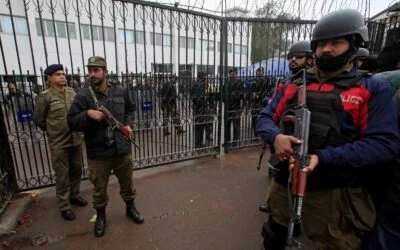
Under the NACTA plan, Pakistan has adhered to stricter regulation of seminaries. Following the APS tragedy, NGOs are also being strictly monitored. In March 2025, the Punjab government released a list of 84 banned organizations. They stated that, “Providing any kind of assistance to banned organizations is a crime under the Anti-Terrorism Act, 1997”. Anyone funding these banned organizations will be punishable by law. In addition, all operating charities must be registered with the Punjab Charity Commission. Citizens are advised to only give charity or Zakat to those affiliated with the Charity Commission. On the other hand, law enforcement is on alert to apprehend those funding proscribed and unregistered organizations.
Pakistan was officially removed from the FATF grey list in October 2022, despite disproportionate scrutiny on Pakistan.
Money laundering and terror financing is not just a compliance issue, it is a development risk.
Chair Economic Security, Dr. Aneel Salman @SalmanAneel… pic.twitter.com/OiDbPMgRWw— Islamabad Policy Research Institute (@IPRI_Pak) July 2, 2025
Pakistan was subject to increased monitoring by the FATF from 2018-2019. Hence, the country’s regulatory response was intensified. NPO-specific AML/CFT guidelines were released. This established standards for risk assessments, governance controls, and record-keeping. The State Bank’s Financial Monitoring Unit’s financial intelligence capabilities have gotten more extensive under the Anti-Terrorism Act as well. The FATF has recognized Pakistan’s efforts in reducing money laundering and terror financing. It has been acknowledged that the country has made significant progress in reducing TF abuses. These measures have contributed to the removal of Pakistan from the FATF’s grey list in 2022.
You May Like To Read: Rescued from Slavery: Pakistan’s Fight Against Human Trafficking
Conclusion
Some NGO/ charities have been misused for terrorist funding in Pakistan. The most well-known case is that of Jamaat-ud-Dawa (JuD). This proscribed charity has been suspected of using charity for illicit means. Under the cover of humanitarian aid, they were found to be backing militant groups. In response, Pakistan has taken steps to tighten its laws and regulations. Courts have convicted leaders of such organizations. The government has improved its monitoring systems to reduce the risk of misuse. Because of these reforms, Pakistan was eventually removed from the FATF “grey list.”
Even with this progress, the system needs constant attention. Authorities must continue to supervise NGOs based on risk. At the same time, enforcement must remain fair and transparent. This is so genuine that NGO/NPOs can continue their humanitarian work. A balanced approach is necessary. TF abuse must be prevented, and legitimate NGOs must further their cause.