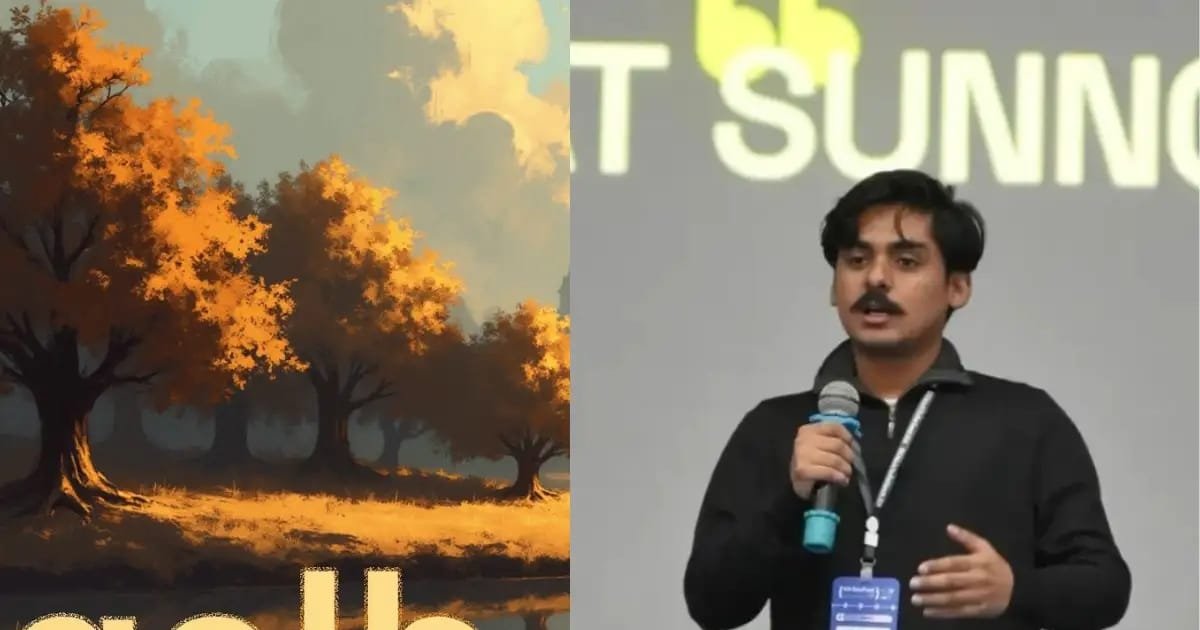



In the third week of January, the digital frontier of Pakistan witnessed a significant milestone with the official unveiling of “Qalb” (meaning Heart), the world’s largest Large Language Model (LLM) built exclusively for the Urdu language. Developed by Taimoor Hassan, a young Pakistani entrepreneur and researcher currently studying at Auburn University, alongside his teammates Jawad Ahmed and Muhammad Awais, the model is being hailed as the “Urdu ChatGPT,” which is misleading, as an LLM is like a brain, wherein something like ChatGPT is a software built on top of it. Nevertheless, it’s no less inspiring.
Breaking the Language Barrier
So far, speakers of low-resource languages like Urdu, which has over 230 million speakers globally, have struggled with mainstream AI tools that often produce grammatically flawed or culturally tone-deaf results. Qalb seeks to bridge this technological divide. Trained on a massive bilingual corpus of 1.97 billion tokens, the model includes 1.84 billion tokens of high-quality Urdu text spanning news archives, classical and contemporary literature, and government documents.
In technical benchmarks, Qalb has already established itself as a leader in its field. It achieved a state-of-the-art score of 90.34, significantly outperforming previous Urdu-focused models and even surpassing the base LLaMA-3.1 model by over 44 points. Its strengths lie in its nuanced understanding of Urdu’s complex morphology and the right-to-left Nastaliq script, making it particularly effective for sentiment analysis, reasoning, and high-fidelity translation.
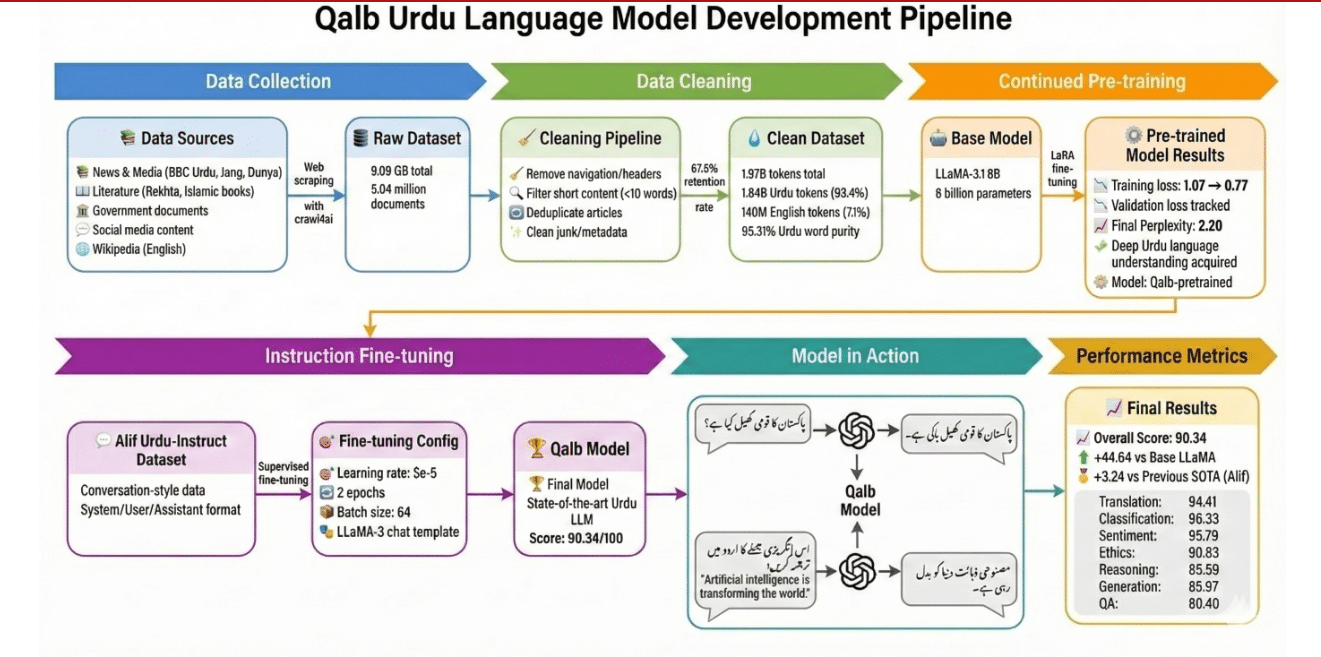
‘Qalb’s’ Development Pipeline.
Source: arxiv.org
A Tool for the People
The vision for Qalb goes beyond academic achievement. The development team has designed the model to support a wide array of real-world applications within Pakistan, like providing native-language tutoring and curriculum support. It can also help in enabling local startups to deploy voice-based AI agents and customer service tools in Urdu. Furthermore, its application can be found in assisting with form processing and localized FAQs for government benefits.
You May Like To Read: Sacred Echoes: Mustafa Abu Muhammad Qawal Enchants the Capital
Taimoor Hassan emphasized that this project is about reclaiming the digital future. “Technology is no longer locked behind big budgets or big teams,” he stated. By making sophisticated AI accessible in Pakistan’s national language, Qalb is not just a technical breakthrough; it is an act of cultural preservation, ensuring that the “heart” of Urdu remains vibrant in the age of automation.
Check out our latest video: