




We live in a world full of sights, sounds, and signals. Our brains constantly filter these inputs to make sense of what’s important. But sometimes this filter works against us. We fail to notice what is obvious. This is called inattentional blindness, a powerful reminder that our minds are not perfect recording machines.
Inattentional blindness happens when we focus so hard on one thing that we miss something else, even when it’s right before our eyes. This idea has huge importance for driving, workplace safety, eyewitness testimony, and even daily life. Let’s dive deeper into why it happens, how it affects us, and what we can do about it.
The Famous Invisible Gorilla Experiment
Perhaps the most famous example is the “Invisible Gorilla” study. Conducted by psychologists Daniel Simons and Christopher Chabris in 1999, the test asked viewers to watch a video of two basketball teams and count how many times the white-shirted players passed the ball.
Midway through the video, a person in a gorilla suit walked right through the players, stopped in the middle, beat its chest, and walked off. Surprisingly, nearly half the participants never saw the gorilla.
The study shocked the world because it proved how attention can blind us. If people can miss a gorilla in plain sight, what else are we missing in everyday life?
Why Does It Happen?
At the heart of inattentional blindness is the fact that attention is limited. Our brains cannot process every detail in a complex scene. Instead, they prioritize. When we focus narrowly, such as counting basketball passes, we filter out anything that seems “irrelevant.”
This is not a flaw. It’s a survival feature. Imagine walking through a busy street. If your brain gave equal importance to every moving car, noise, or billboard, you’d be overwhelmed. Focus allows us to function. But this same ability also creates blind spots.
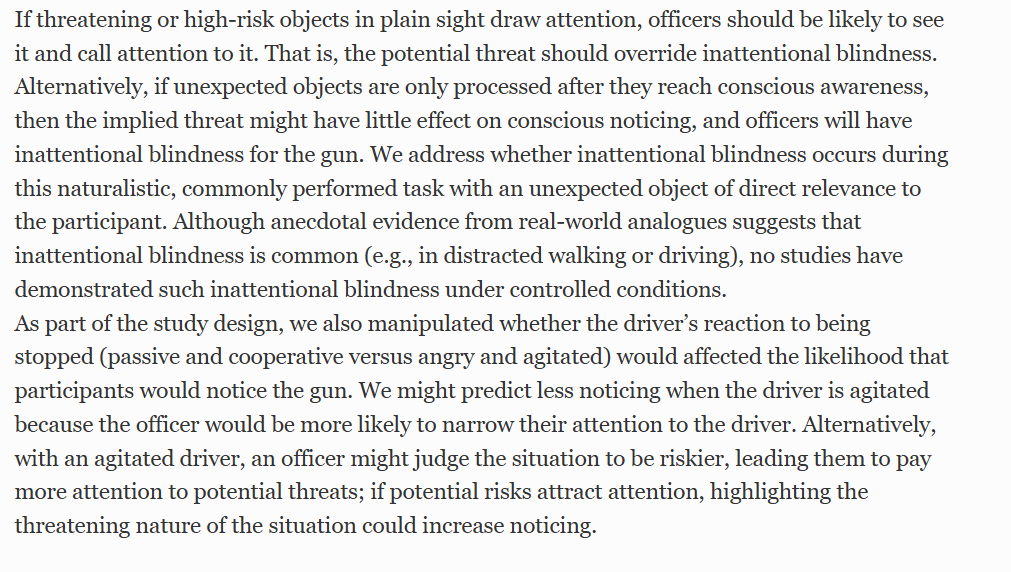
Source: CRJ
Everyday Examples
Inattentional blindness shows up everywhere, not just in labs.
- Walking and Talking on the Phone: In a famous field study, psychologist Ira Hyman placed a clown riding a unicycle in a town square. Only 25% of people talking on their phones noticed him.
- Driving Distractions: Drivers miss stop signs, pedestrians, or even trains when distracted by phones or other tasks. In fact, inattentional blindness is a major contributor to road accidents worldwide.
- Airline Safety: Pilots sometimes miss warning lights or signals in the cockpit during emergencies because their attention is on other tasks. This has been linked to several aviation accidents.
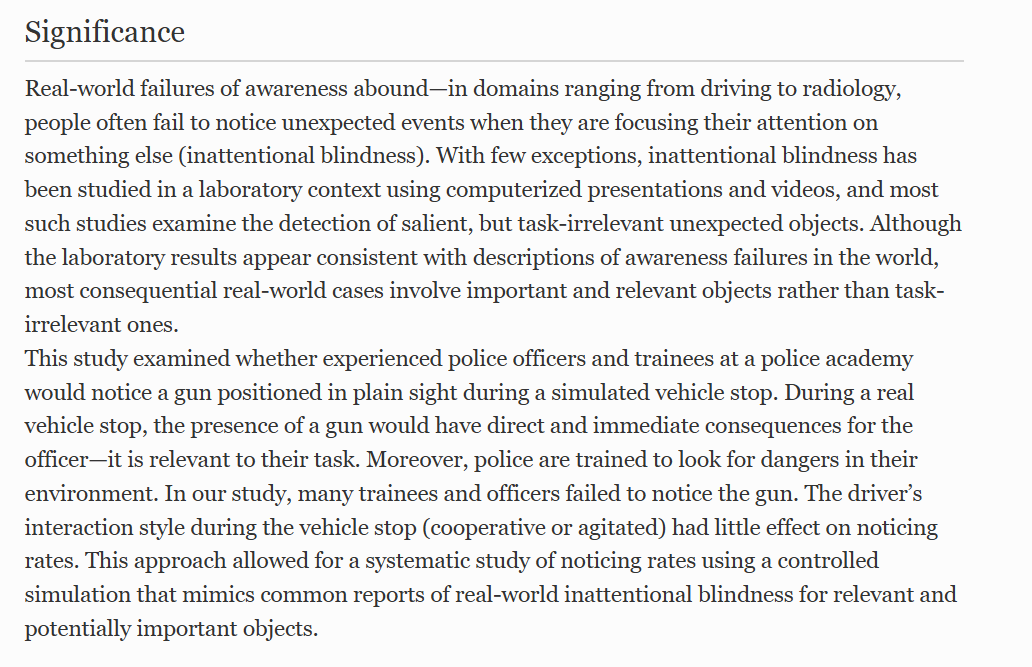
Source: Cognitive Research Journal
- Medical Errors: Radiologists scanning for tumors sometimes fail to notice unrelated anomalies because they are so focused on specific details. (NIH)
When Blindness Becomes Dangerous
The problem with inattentional blindness is not just that we miss funny gorillas or clowns; it can cost lives.
- On the Roads: Distracted driving is a deadly global issue. According to the World Health Organization (WHO), over 1.3 million people die each year from road crashes, and many involve distraction or inattention.
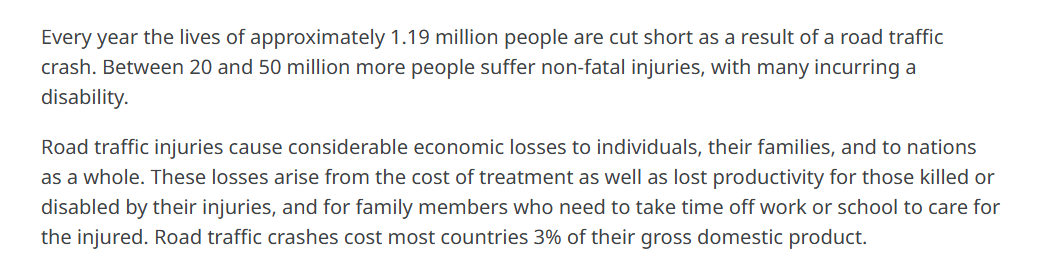
Source: WHO
- In Security: CCTV operators or military personnel may miss critical threats if they are too focused on specific tasks. This has implications for national security and crime prevention.
- In Witness Testimony: Eyewitnesses may sincerely believe they saw everything during a crime, but later miss key details because their attention was elsewhere. This has led to wrongful convictions.
Can Training Reduce It?
Many researchers ask: Can we fix inattentional blindness? The short answer is: not fully, but awareness and training help.
- Mindful Observation: By training ourselves to look broadly at scenes instead of focusing too narrowly, we can reduce blind spots.
- Technology Cues: Bright colors, alarms, and flashing lights help capture attention when our minds drift. That’s why stop signs are red and sirens are loud.
- Teamwork: In workplaces like hospitals, aviation, or military operations, multiple observers reduce risks because one person may catch what another misses.
- Digital Tools: AI is now being tested to help detect things humans might overlook, such as unusual patterns in medical scans.
You May Like To Read: Effects of Climate Change on Education in Pakistan
Why It Matters in Modern Life?
Inattentional blindness is not just a curiosity; it affects how we live and make decisions:
- At Work: Office workers focusing too hard on one project may miss key errors or opportunities.
- In Parenting: Parents scrolling on phones may miss what children are doing right in front of them.
- In Technology Use: Social media and games are designed to capture our attention, leaving us blind to other real-world signals.
Knowing this, we can train ourselves to look up, broaden our attention, and live more mindfully.
Seeing Beyond the Gorilla
Inattentional blindness teaches us a humbling truth: seeing is not the same as noticing. We think we see everything in front of us, but in reality, our attention filters shape our perception.
This is not weakness; it’s how our minds manage complexity. But in a world of distractions, this blindness can carry risks. From missed road signs to skipped medical warnings, the cost can be high.
The solution is not to eliminate inattentional blindness, because we can’t. The solution is to understand it. When we know our minds can miss things, we slow down, double-check, and stay open. We train our awareness, build safety nets, and rely on teamwork and technology where needed.
The next time you’re certain you’ve seen everything, remember the gorilla. Awareness of our limits is the first step to seeing more clearly.
You May Like To Read: Industrial Challenges Amidst Rising Temperatures in Pakistan