




This article brings to you major news events happening in Asia, particularly South Asia, as reported by Al Jazeera. The following report succinctly covers everything you need to know in one article, keeping you informed and up-to-date. Here is everything important that happened from 1st July to 12th July 2025.
BRICS Summit
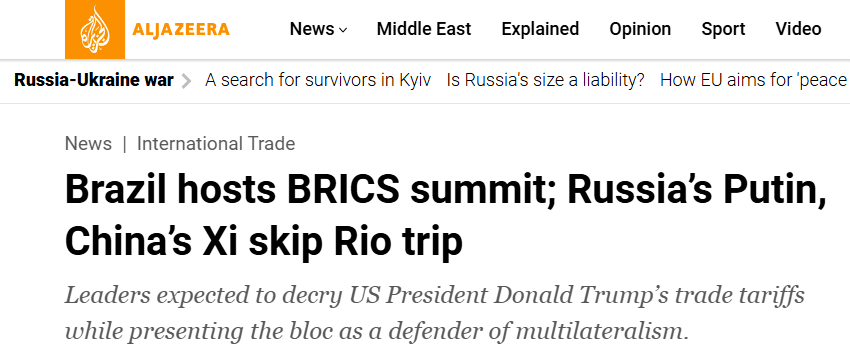
The BRICS Summit, which was held July 7th and 8th in Brazil, missed notable key figures, including Russian President and Chinese President Xi Jinping. For the latter, this was the first summit he missed since taking power in 2012. On the other hand, President Putin’s absence was to be expected as he is wanted by the International Criminal Court (ICC) for his 2022 invasion of Ukraine. Brazil, which is a signatory to the Rome Statute, is forced by law to arrest him if he lands on its soil. This raises questions about the group’s cohesion and loyalty to one another.
Source: Al Jazeera
In the previous year, the summit had made significant decisions in extending membership to Argentina, Egypt, Ethiopia, Iran, and Saudi Arabia. However, contrary to the fears of anti-Western rhetoric that were expected from this year’s meeting, the outcomes were largely symbolic. This Summit’s points of discussion included Trump’s tariffs and their potential negative impact on the Global economy. Additional points included the risks and future of AI and climate change. Al Jazeera reported from Rio that the group’s focus remained the same: “The BRICS goal is to exert pressure for a multipolar world with inclusive global governance to give a meaningful voice to the Global South, especially in the trading system”.
Despite this claim of solidarity, there are internal divisions beneath the surface. The move to de-dollarize was deferred, and some countries asked for the Summit to take a firmer stance against Israel’s continued genocide in Gaza and its attacks on Iran. Only criticism of starvation as a tactic of war was raised, and Israel was condemned, but no move was made to take any action to relieve the sufferings of Palestinians. The Pahalgam incident was also condemned with the assertion that BRICS would not tolerate any form of terrorism, while conveniently overlooking the acts employed by Israel against Gazans are exactly that. Perhaps the only progress that was made was the continued Saudi-Iranian normalization talks. Overall, the bloc failed to deliver any solid outcomes and revealed fragmentation from within.
Iranian Deportation of Afghan Refugees
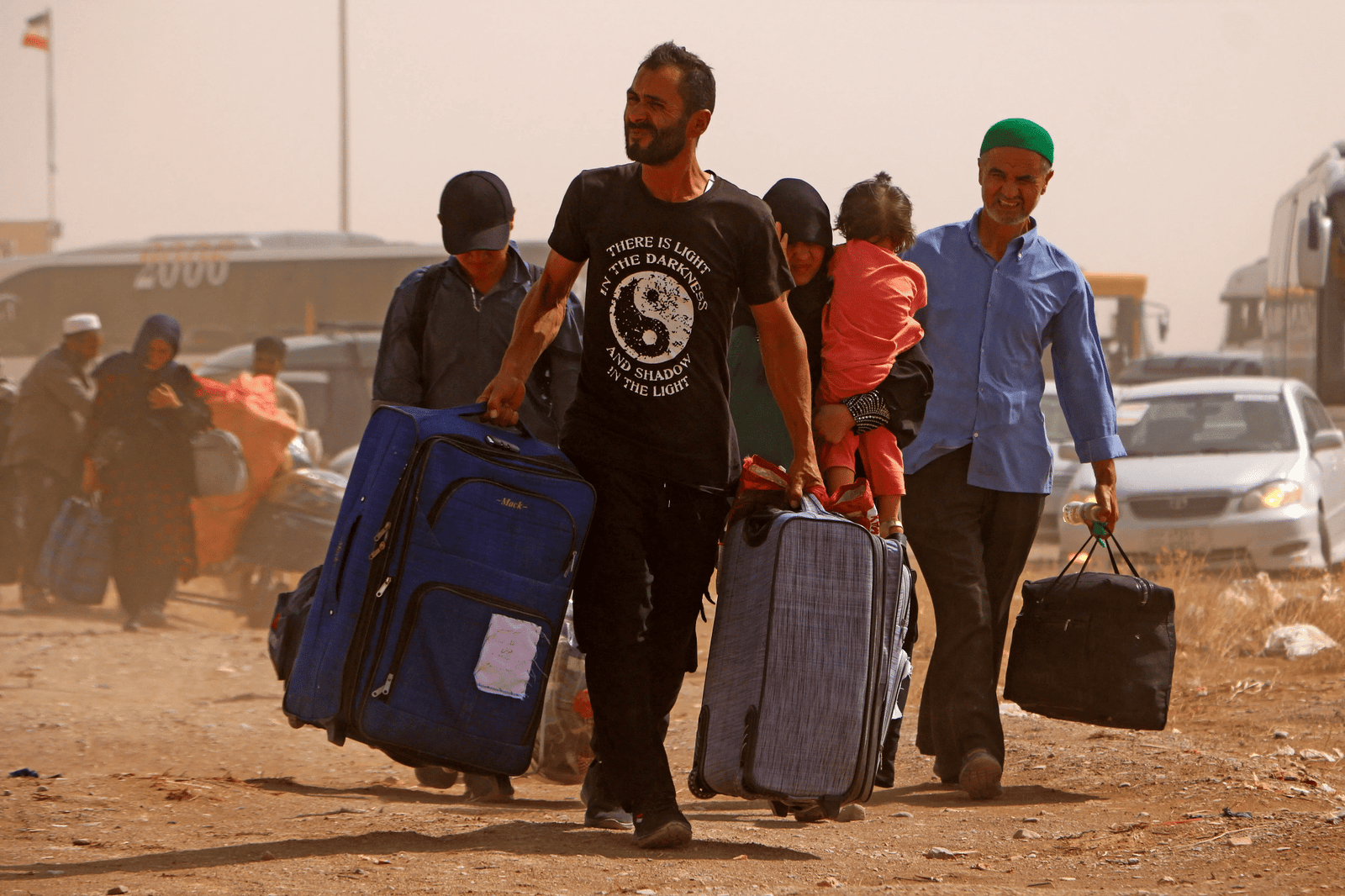
After Iran’s 12-day conflict with Israel, in which it also faced attacks from the US, new security concerns have arisen for the nation. Now the Iranian government believes Afghans may have worked for Israel as spies. Al Jazeera’s reporter Resul Serdar reports, “These accusations have been fuelled by political rhetoric and social media campaigns following 12 days of conflict between Iran and Israel and claims that Israel has recruited Afghans as spies”. In times of crisis, Afghans have often been blamed for economic hardships and shortages. Now, the Iranian Government has given them the deadline of July 6th to leave.
Previously, in 2023, Iran had launched a campaign to deport any foreigners who were living on their land “illegally”. Since then, over 700,000 Afghans have left, with over 230,000 leaving Iran in the past month. This “Anti-Afghan” narrative deeply hurts the Afghans living in Iran, who feel that they are being forced to leave the only home they have ever known. Afghanistan’s government is trying to advocate for a “dignified” return process, and although the Iranian government agrees, the media reports mass arrests of “illegal” immigrants. While it is possible to understand where Iran’s stance comes from, there is no denying that this is a great tragedy for Afghans. Not only are they to leave their homeland, but they will have to acclimate to the strict rules and regulations of the Taliban government in Afghanistan. Many had fled to escape this very possibility. However, Iran’s fears are not completely unwarranted either.
Reference: Al Jazeera
Russia Recognizes the Taliban Government
In April of 2025, the Supreme Court lifted the “terrorist” designation given to the Taliban. Now, Russia has become the first country to recognize the Taliban government officially. In July 2024, Russian President Vladimir Putin called the Taliban “allies in the fight against terrorism,” especially against ISIS-K, a group which was responsible for carrying out terror attacks in Afghanistan and Russia. The Taliban officials have termed this acceptance by Russia a “brave move”.
Source: Al Jazeera
This news comes at the same time the ICC issues warrants against the Taliban for the alleged persecution of women. The judges ruled on 8th July that there were reasonable grounds to assume that women in Afghanistan were being oppressed and persecuted. They accused the Taliban of gender-based discrimination that denied women their fundamental rights to education, freedom of movement and thought, and religion. In response, the Afghan government called this a “baseless rhetoric” and accused the ICC of ignoring the plight of women, girls, and children in Gaza. While the treatment of women in Afghanistan is indeed a point of concern, the ICC’s hypocrisy in holding the Taliban guilty but excusing Israel’s crimes in Palestine has been revealed for all to see.
Major Developments in South Asia
Bangladesh’s International Crime Tribunal (ICT) has sentenced the self-exiled ex-Prime Minister, Sheikh Hasina, to six months in prison for contempt of court. The three-person tribunal has stated that the sentence will take effect on the event of arrest or voluntary surrender. Last year, PM Hasina fled to India after a student-led uprising. Several charges have been leveled against her, and this marks the first time a sentencing has been delivered.
Source: Al Jazeera
The charges of contempt come from an audio recording in which the ex-PM can be heard saying, “There are 227 cases against me, so I now have a licence to kill 227 people”. Her own government established the ICT for the prosecution of crimes committed during the 1971 War. Hasina’s supporters call this move by the ICT politically motivated and an attempt to silence the opposition. However, the court claims that justice must prevail.
On Pakistan’s side, the issue of India’s suspension of water is still grave. After the Pahalgam attack, India announced that it was walking out of the Indus Water Treaty (IWT). A four-day war ensued in which Pakistan emerged victorious; however, India has not released the water back into Pakistan’s rivers. For the latter country, this is a serious situation as a low riparian country, its population is heavily dependent on river water for agricultural and other needs. India states that although International treaties cannot be violated completely, they can temporarily be suspended if the peace of the involved countries has been threatened. Pakistan has proclaimed any diversion of water to be taken as an act of war. Federal Minister of Energy Awais Leghari shared on X: “India’s reckless suspension of the Indus Waters Treaty is an act of water warfare; a cowardly, illegal move. Every drop is ours by right, and we will defend it with full force — legally, politically, and globally”.
Source: Al Jazeera
Thus, the question is: could this lead to another war? It is not out of the realm of possibility, but it must be understood that India cannot fully stop the flow of water in Pakistani rivers. It simply does not have the infrastructure to do so. The problem is that even a restricted flow of water would greatly impact Pakistan as it lacks reservoirs to store water, and this situation is likely to get worse during winters. For Pakistan, the urgency is clear with its 230 million people being dependent on water. There are only two solutions it could go for: diplomatic or military. At present, Pakistani officials maintain hope that a new Indus Water Treaty could be reached.
An overview of the article summarizes that world politics are in a turbulent position. While some countries are trying to build relations, the tensions between some other countries are growing more severe. Al-Jazeera Weekly Wrap-Up will keep you updated with major changes and shifts in the world.