
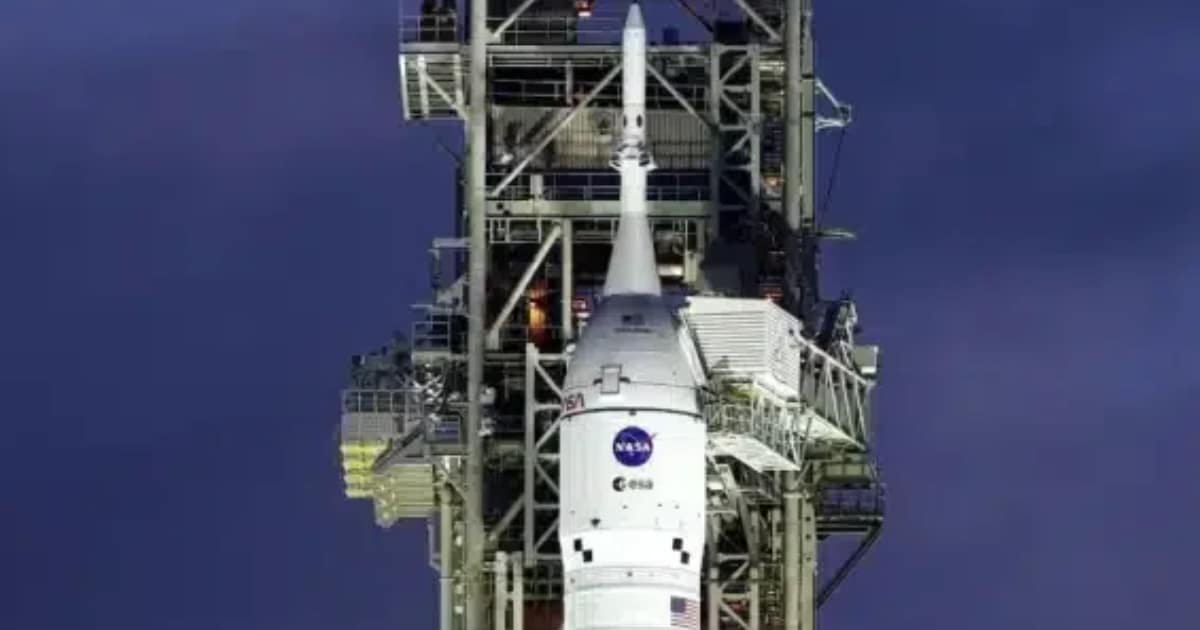





On Thursday, April 2, 2026, NASA marked a monumental milestone in space exploration with the successful launch of the Artemis II mission from the Kennedy Space Center in Florida. This historic flight marks the first time since the Apollo 17 mission in 1972 that humans have ventured beyond Low Earth Orbit toward the Moon.
The Journey of 685,000 Miles
Artemis II is a 10-day flight test designed to prove the life-support systems of the Orion spacecraft with a human crew aboard:
- The Route: The four-person crew will travel approximately 685,000 miles, performing a “free-return trajectory” around the Moon.
- Lunar Orbit: While the mission will bring the astronauts closer to the lunar surface than any human in half a century, it does not include a landing. The crew will orbit the Moon and use its gravity to “slingshot” back toward Earth.
- Duration: The mission is expected to last roughly 10 days, culminating in a splashdown in the Pacific Ocean.
We’re going around the Moon. Come watch with us. Artemis II’s four-astronaut crew is lifting off from @NASAKennedy on an approximately 10-day mission that will bring us closer to living on the Moon and Mars. The launch window opens at 6:24pm ET (2224 UTC). https://t.co/X27QJejNDt
— NASA (@NASA) April 1, 2026
Meet the Crew: The New Pioneers
The mission is notable for its diverse crew, representing a new era of international and inclusive space exploration:
- Reid Wiseman (Commander): US Navy captain and veteran of the International Space Station.
- Victor Glover (Pilot): The first person of color to participate in a lunar mission.
- Christina Koch (Mission Specialist): Holder of the record for the longest single spaceflight by a woman; she will be the first woman to fly to the Moon.
- Jeremy Hansen (Mission Specialist): A Canadian Space Agency astronaut, marking the first time a non-American has traveled to the Moon.
Strategic Importance: Gateway to Mars
NASA’s Artemis program is not merely about “visiting” the Moon but establishing a long-term presence:
- Lunar Gateway: Artemis II is the final precursor to Artemis III, which aims to land the first woman and next man on the lunar South Pole (tentatively scheduled for late 2027).
- Permanent Presence: The goal is to build a lunar base camp and an orbiting station (The Gateway) to test technologies for the eventual human mission to Mars.
- Global Cooperation: Unlike the Cold War-era “Space Race,” Artemis is a collaborative effort involving the ESA (Europe), CSA (Canada), and JAXA (Japan).
You May Like To Read: Hafiz Naeem-ur-Rehman Slams Record Petrol Hike, Protest Movement Launched
Check out our latest video: