

A Tale of Two Narratives
In war, truth is often the first casualty—but in Gaza, it is not just the truth that suffers; it is also the people, and disturbingly, even the way their suffering is reported. Recent Israeli strikes on Gaza’s only Catholic church, the Holy Family Church, have sparked not just outrage but also highlighted glaring differences in how leading international media outlets report on tragedy.
Church leaders from Jerusalem made a rare visit to Gaza this month after Israeli tank fire hit the church, killing three civilians and injuring others, including the parish priest. What followed was a chorus of moral condemnation from religious leaders, along with a split among media platforms on how to tell the story. BBC and Al Jazeera both covered the incident—but with very different tones and priorities.
Let us take a closer look—not just at what happened, but how it was framed for the world to see.
What Happened: The Facts on Ground
According to multiple sources, including BBC and Al Jazeera, two senior Christian leaders—the Latin Patriarch of Jerusalem, Cardinal Pierbattista Pizzaballa, and Greek Orthodox Patriarch Theophilos III—visited Gaza after the Israeli shelling of the Holy Family Church. They described “children not batting an eyelid at the sound of bombing” and people “totally starved” amid collapsed buildings and tents.
Cardinal Pizzaballa remarked in a press conference:
“This is humiliation that is hard to bear when you see it with your own eyes. It is morally unacceptable and unjustifiable.” (BBC, Yolande Knell)
BBC’s Two Voices: One Report, Two Tones
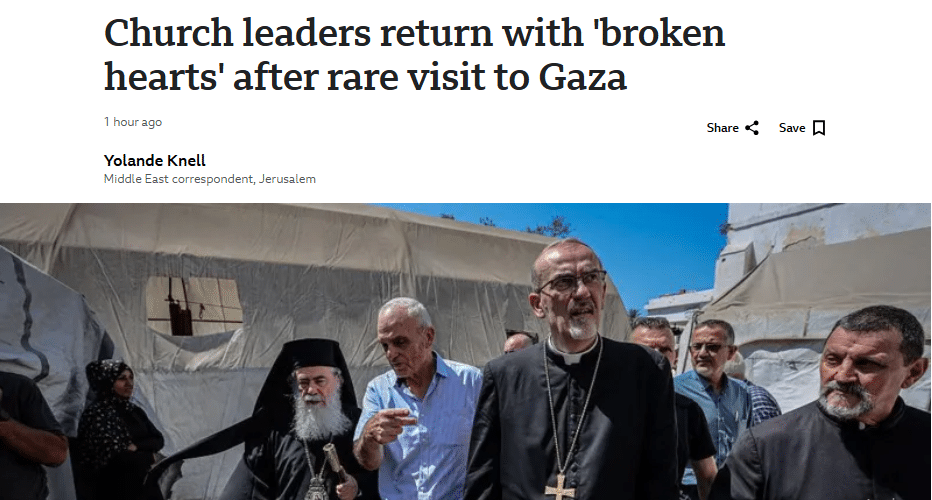
Source: BBC
The BBC ran two articles on this event—one by Yolande Knell and another by Danai Nesta Kupemba. The contrast between the two was striking.
- Knell’s piece was emotionally grounded, giving space to the sorrow of the clergy and the suffering of Palestinians.
- Kupemba’s report, however, centered more on Israel’s apology and regret, making it sound like a technical error rather than a tragic consequence of war.
Compare this line from Knell’s article:
“We walked through the dust of ruins… tents that have become homes for those who have lost everything.”
To this from Kupemba:
“Israeli Prime Minister Benjamin Netanyahu has said his country ‘deeply regrets that a stray ammunition’ hit Gaza’s only Catholic Church…”
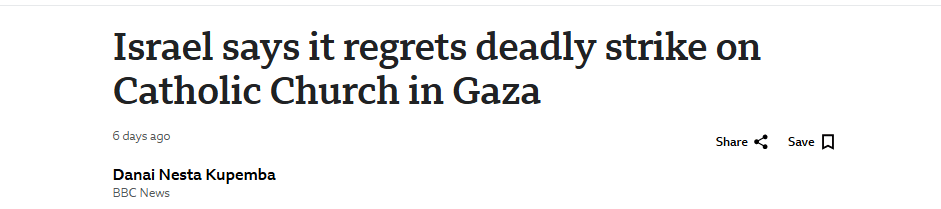
Source: BBC
While both articles mention the same event, the focus shifts from human tragedy to political optics, depending on the writer.
Al Jazeera: A Clearer Lens
Now enter Al Jazeera, which summed it up with one simple but strong headline:
“Holy Land clerics ‘stand in solidarity’ with people of Gaza after visit.”
Al Jazeera chose to keep the spotlight on the victims, their suffering, and the moral accountability of the Israeli bombardment. It quoted the Church leaders as “condemning Israel’s bombardment and blockade of Gaza as ‘morally unacceptable’.”
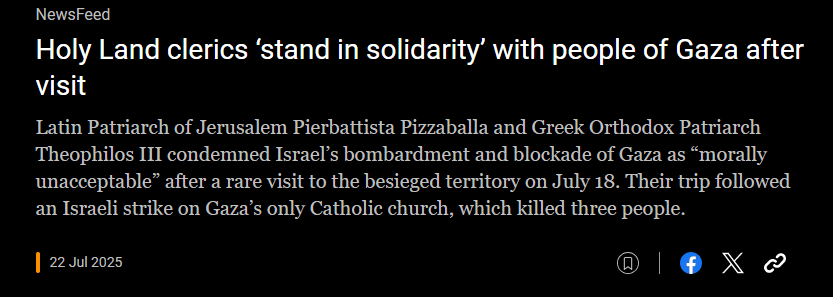
Source: Al Jazeera
In just a few lines, Al Jazeera managed to express what took the BBC paragraphs—and even then, with softened language.
Comparison Table: How the Same Tragedy Was Framed Differently
| Element | BBC (Knell) | BBC (Kupemba) | Al Jazeera |
| Headline Focus | Emotional quote, vague framing | Israel’s regret front and center | Church solidarity, direct reference to Israeli bombing |
| Tone | Sympathetic, cautiously emotional | Neutral, bureaucratic | Moral, emotionally clear |
| Victim Perspective | Mentioned, but shared space with official statements | Acknowledged, but downplayed | Centered in story |
| Israeli Responsibility | Quoted as possible, not asserted | Downplayed as “mistake” | Clearly attributed as bombardment |
| Quote Use | “Children not batting an eyelid… totally starved.” | “Stray ammunition… regrets any unintentional damage.” | “Morally unacceptable… stand in solidarity with Gaza.” |
Why This Matters
The problem is not just who reports what—it is how they do it.
In a world where millions rely on mainstream international media for information, how a story is framed can shape global opinion. When one outlet says “stray ammunition” and another says “deadly Israeli shelling”, the impact is very different.
Even Pope Leo and the US Ambassador to Israel, Mike Huckabee, have issued strong statements. Huckabee called the strike “an act of terror” and demanded “harsh consequences” for those responsible. Yet many outlets, especially in the West, stop short of clearly labeling the act for what it is—a war crime, or at least a deliberate targeting of civilian infrastructure.
This silence—or hesitancy—becomes dangerous. When the destruction of a church is reported as a minor error or unfortunate consequence, it strips the victims of their dignity and excuses the aggressor.
A Lesson for Pakistani Media—and the World
What we need today is media that doesn’t just balance narratives, but prioritizes truth. Journalists must not become mouthpieces for the powerful at the cost of the powerless.
As Pakistan continues to face its own challenges with misinformation, narrative manipulation, and biased coverage, especially on international platforms, this case serves as a reminder: we must build our own narrative frameworks, train journalists with moral clarity, and hold the media, both foreign and domestic, accountable.
Conclusion: Gaza is being Bombed. The Story Too.
When religious leaders cry, “This is morally unacceptable,” and international media respond with, “Israel says it regrets…”, something has gone terribly wrong.
The tragedy in Gaza is not just the destruction of buildings or the loss of lives—it’s the loss of moral urgency in reporting. If even the burning of churches and starving of civilians cannot move headlines beyond political statements, then perhaps we need new voices to tell the story.
Let those voices come from the oppressed, the forgotten—and yes, from the journalists who still dare to call injustice by its name.
Written in solidarity with the people of Gaza and all those who still believe journalism must serve truth, not power.