



ISLAMABAD — October 7, 2025: The federal government has intensified its pressure on provincial administrations to urgently clear outstanding matters linked to the International Monetary Fund (IMF) commitments. The push aims to ensure the smooth completion of the second review of the $7 billion Extended Fund Facility (EFF) by the end of this week, a crucial step for Pakistan’s ongoing economic stabilization programme.
The International Monetary Fund and Pakistani authorities on Monday deliberated on revising downward the GDP projection to 3.5 % for the current fiscal year against the government target of 4.2 %, as recent floods caused damage to infrastructure, agriculture, and livestock,… pic.twitter.com/g2jhCK4gVm
— Business Recorder (@brecordernews) October 7, 2025
Key Highlights
- PM Office urges provinces to meet IMF cash surplus and reform commitments
- Sindh, Punjab flagged for lapses in fiscal targets and backlogs
- Provinces asked to submit implementation updates within 24 hours
- IMF firm on maintaining cash surplus despite flood-related challenges
- Growth projection revised downward amid talks on macroeconomic adjustments
Centre Mobilises Bureaucracy to Resolve IMF Backlogs
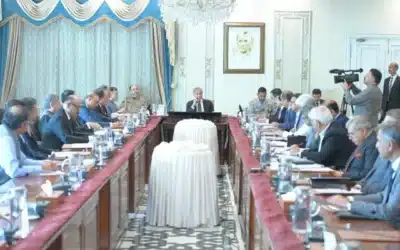
Sources revealed that the Prime Minister’s Office (PMO) reached out on Sunday night to senior federal officers stationed in provincial capitals. They were tasked with fast-tracking pending fiscal actions and ensuring that upcoming IMF targets are achieved in line with both the EFF and the $1.4 billion Resilience and Sustainability Facility (RSF).
Provincial chief secretaries and finance secretaries were directed to submit progress reports within 24 hours, including explanations for missed deadlines. According to officials, the Ministry of Finance had informed the PMO that larger provinces, particularly Sindh and Punjab, had shown inadequate cooperation on several IMF-related commitments.
Provinces Lag on Fiscal Targets
Under the national fiscal pact, provinces are required to contribute substantial cash surpluses to help maintain a primary budget surplus. For FY26, Punjab is expected to provide Rs740 billion, followed by Rs370bn from Sindh, Rs220bn from KP, and Rs185bn from Balochistan.
However, Sindh has already presented a budget with a Rs40bn deficit, while Punjab has expressed discomfort with the IMF’s stringent conditions, even in matters related to flood assistance. This lack of alignment threatens to derail the ongoing IMF review, which is tied to strict timelines and fiscal discipline.
IMF Firm on Fiscal Prudence Despite Flood Challenges
The IMF has instructed Pakistani authorities to halt development disbursements in flood-hit regions until credible loss assessments are completed. The Fund remains firm that flood support cannot come at the expense of fiscal surpluses agreed under the programme.
Ongoing talks with the IMF also include revisions to macroeconomic indicators, with GDP growth projections expected to be revised down to 3.5% from 4.2%, while inflation is now anticipated to exceed 8%, above the earlier 7% budgeted figure. These adjustments could cascade across sectors — affecting revenue collection, trade flows, and fiscal balances.
Slow Reform Progress Adds Pressure
Beyond fiscal targets, provinces are lagging behind on several structural reform measures tied to the IMF programme and RSF. These include:
- Aligning agriculture income tax regimes with federal rules
- Transitioning GST on services to a negative list starting FY26
- Shifting towards a capital-based property tax
- Enhancing water system resilience and digitizing land and tax records, particularly in Sindh and Punjab
The September 30 deadline for agricultural tax collection reforms was missed, raising concerns over compliance with the end-October structural benchmark.
All provinces have previously assured the IMF that they would avoid policy actions contradicting the national commitments outlined in the Memorandum of Economic and Financial Policies (MEFP). The Centre has reiterated that provinces must consult the IMF through the Finance Ministry before adopting any measures that could undermine the agreed targets.
A High-Stakes Week for IMF Review
With the second review’s weekend deadline fast approaching, federal authorities are racing to align provincial performance with IMF expectations. The outcome of these efforts will determine not only the release of critical funding tranches but also shape the country’s fiscal path for the remainder of FY26.
You May Like To Read: