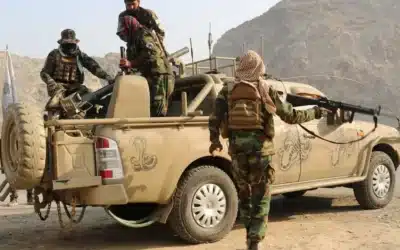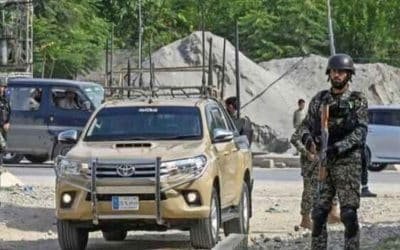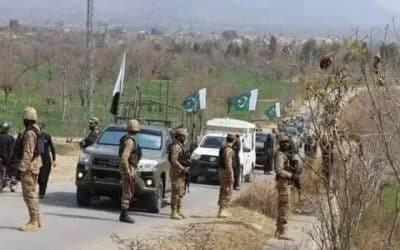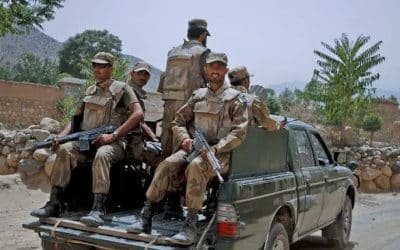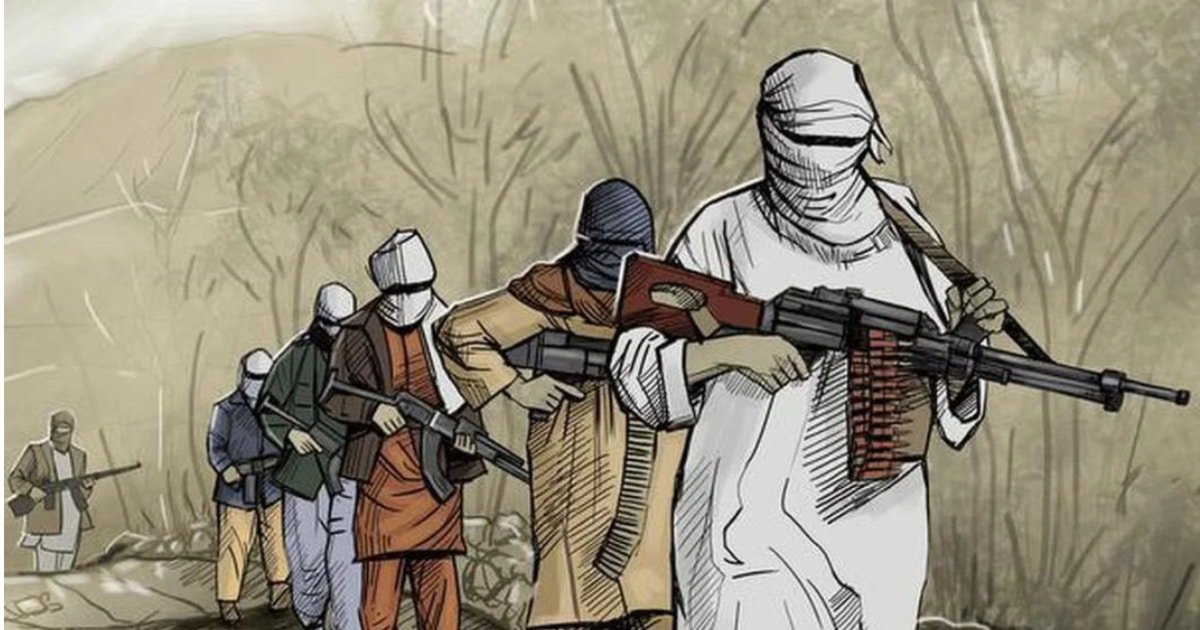





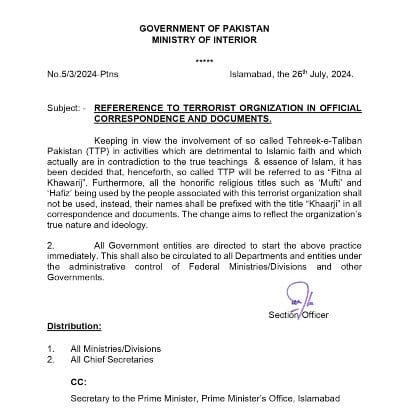
In the middle of 2024, Pakistan officially declared Tehreek-e-Taliban (TTP) as “Fitna al-Khawarij,” a term referring to religious outcasts or rebels, to highlight their radical ideology and dislegitimize their abuse of religious titles such as “Mufti” or “Hafiz.” Any official mention of the group or its followers now is prefaced with “khariji” to underscore their positioning outside approved religious and national boundaries:
Source: The Express Tribune
This shift was not only semantical but a description of FAK/TTP’s evolving nature as a terrorist entity. Following the Afghan Taliban’s return to power in 2021, Pakistan saw a marked increase in FAK violence. Militants who took shelter across the Durand line intensified attacks across Khyber Pakhtunkhwa (KP), Balochistan, and even urban areas like Karachi. By 2024, Pakistan had reported more than 1,612 terror fatalities, of which more than half were security personnel. This was one of the most violent periods of terrorist activity in almost a decade. Field Marshal General Asim Munir cautioned that Fitna al-Khawarij had turned into a central point for global terrorist outfits and proxies, posing dangers not only for Pakistan but to the region as a whole.
“India has already lost the Battle of Truth. Its proxy terror groups will meet the same humiliating fate.”
Field Marshal COAS Gen. Asim Munir
The mask is off. Indian state-sponsored terror stands exposed.#Pakistan #COAS pic.twitter.com/OGUmGdCR1S
— Pakistan Strategic Prism (@PakStratprism) July 30, 2025
Primary Reasons for Resurgence of TTP:
Sanctuary and Reintegration After 2021
With the capture of Kabul by the Afghan Taliban in August 2021, various FAK/TTP factions sought refuge in neighbouring areas. Inadequate action by Afghan authorities to check their activities is what infuriated Pakistani leadership, since militant attacks on Pakistani territory increased even after Islamabad had extended its help in stabilizing Afghanistan under the Taliban.
You May Like To Read: Pakistan’s War on Terror: A Ground Reality Check
Alliance-Building and Expansion
Under the leadership of FAK leader Mufti Noor Wali, the militant organization unified hundreds of previously unorganized groups, including LeJ and other smaller jihadi factions, thereby strengthening its network, especially in Karachi, where these smaller elements are now part of its larger umbrella.
Increased Lethality and Targeting
Fitna al-Khawarij(FAK) has, in recent times, carried out organized attacks against civilians, security organs, and foreign nationals. A recent Karachi raid resulted in targeting militants who had participated in an attack on Chinese laborers working on the Belt and Road Initiative last year. This incident highlights the economic as well as strategic risks of letting the disease of Fitna al-Khawarij spread.
🚨🇨🇳🇵🇰5 CHINESE NATIONALS KILLED IN PAKISTAN
They were traveling from a hydroelectric dam construction site towards the capital Islamabad when they were killed by a suicide bomber near Besham city.
Source: AFP pic.twitter.com/Y3anE6J3bw
— Mario Nawfal (@MarioNawfal) March 26, 2024
Pakistan Army’s Counter-Terror Strategy:
Symbolic and Policy Measures
The renaming to “Fitna al-Khawarij” was one aspect of a more comprehensive ideological campaign focused on highlighting the group’s religious illegitimacy and isolating it from public sympathy. Prime Minister Shehbaz Sharif and the National Action Plan (NAP) Apex Committee repeated their commitment to eradicating Fitna al-Khawarij completely. The government demanded collective civil–military action and also exposed the network of external support that these groups supposedly enjoy.
Intelligence-Led Operations Across the Country
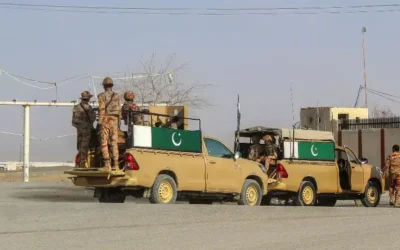
As FAK gained momentum in 2024, the security forces in Pakistan conducted tens of thousands of intelligence-based operations (IBOs). In 2024 alone, ISPR has reported that around 22,409 operations were conducted that resulted in the death and takedown of more than 398 Khawarij that included key ring-leaders.
DG ISPR emphasised that the #Pakistan Army has carried out 22409 Intelligence Based Operations (IBOs) in a period of 12 months, killing 398 Khawarij and 137 🇵🇰 soldiers martyred.#DGISPR #PakistanArmy #ISPR
However, Counter-Terrorism Departments remain critically short on… pic.twitter.com/z04b4xsMon
— Pakistan Armed Forces News 🇵🇰 (@PakistanFauj) July 30, 2025
In August 2024, IBOs in Khyber district eliminated 25 militants, including a ring-leader named Abuzar alias Saddam, at the expense of four martyred soldiers. Similarly, separate operations in Pishin and Zhob districts in Balochistan resulted in two dead and five apprehended militants, along with three suicide vests and arms caches.
Border Clashes and Pre-emptive Strikes
Pakistani troops were involved in a major operation on April 25–28, 2025, when they turned back an attempt to infiltrate close to Hassan Khel in North Waziristan. The militants lost 71 men, of whom 54 died in one day. This was one of the bloodiest battles against the Khawarij in recent times. A similar operation in April 2025 resulted in the death of 54 militants who were attempting to cross into Pakistan from Afghanistan. Officials described this as the foiling of a major, planned high-profile attack by foreign-backed Khawarij.
You May Like To Read: Internally Displaced Persons and Conflict Zones
Longstanding Dedication: Leadership Messages and Civilians’ Support
The Army Chief Asim Munir has time and again reiterated that Pakistan would never let the Fitna al-Khawarij ideology spread. He has reasserted that any effort to separate the army from the people would be ineffective by reassuring that the army would keep going till “the death of the last khariji” and has also called for the Afghan government’s assistance in preventing sanctuaries to terrorist outfits across the border. The civilian support also came in the form of a Grand Peace Jirga in Bannu, with tribal elders vowing to back the army’s cause and appreciating its efforts in health and education reconstruction. Religious leaders also reiterated national unity against extremist forces.
On 27 June 2025, General Officer Commanding Miranshah alongwith DC North Waziristan held a jirga with Mashars and Tribal Elders of North Waziristan Agency. #Pakistan #PakArmy #ISPR
🔳GOC reiterated Tribal elders to play positive role for peace & Stability of NWD and Bannu.… pic.twitter.com/ONcJik5Nro
— Pakistan Armed Forces News 🇵🇰 (@PakistanFauj) June 27, 2025
Conclusion
Fitna al-Khawarij’s resurgence is a reflection of TTP becoming an active and significant extremist threat in Pakistan that is reinforced by regional instability and realignment in ideology. The government’s strategic decision to rebrand and openly denounce the group is an intentional collective attempt to deprive them of ideological and civic legitimacy. Pakistan Army, backed by the support of civilian institutions and local communities, has initiated large-scale intelligence-based operations, involving roadside and border encounters. They have also conducted raids in urban areas to uproot the Khawarij. As General Asim Munir and Prime Minister Shehbaz Sharif have repeated time and again, the state is determined to continue such operations until the last militant is eliminated.