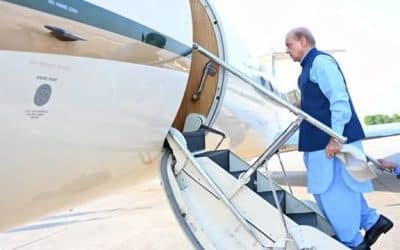
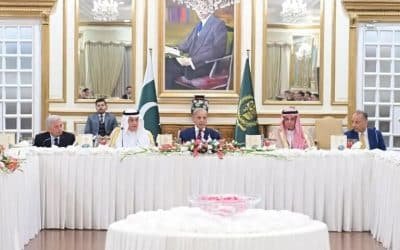
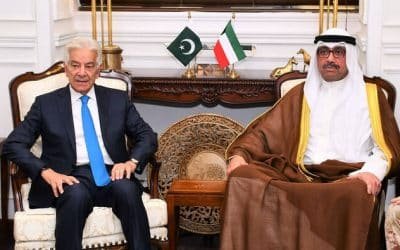
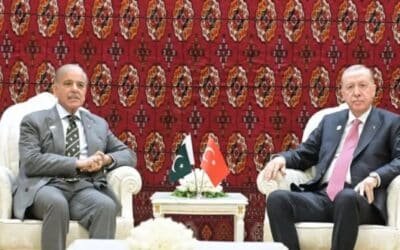
Iran on Monday told Pakistan that the United States must take the first step toward de-escalating the ongoing conflict by honoring its commitments under the Islamabad Memorandum of Understanding. The message comes amid a one-day visit to Tehran by Chief of Defense Forces and Chief of Army Staff Field Marshal Asim Munir, who held meetings with senior Iranian leaders as Pakistan sought to revive the June diplomatic framework.
Main Highlights
- Iran says committed to Islamabad MoU, US must act first
- CDF Munir meets Iranian President Pezeshkian, Speaker Ghalibaf, security chief Rezaei
- Discussions focus on de-escalation, reopening the Strait of Hormuz and ending the conflict
- Omani FM in Tehran Tuesday for separate talks on Hormuz
- A Pakistani Push to Revive the June Framework
- Visit comes after Munir-Trump phone call last week
US offer conveyed by Pakistan’s army chief Asim Munir to Iran.Washington proposed lifting the blockade & sanctions in exchange for reopening the Strait of Hormuz and ending attacks by Iran’s proxies.Munir met Mohsen Rezaei (SNSC secretary & Khamenei’s representative). Meeting…
— Ali K.Chishti Official (@thewirepak) August 25, 2026
Field Marshal Munir held talks with Iranian President Dr Masoud Pezeshkian, chief negotiator and Parliament Speaker Bagher Ghalibaf, and Secretary of the Supreme National Security Council Gen. Mohsen Rezaei during his visit. The aim was to test Tehran’s willingness to return to the understanding reached in June. An Iranian account of the meeting said that Iran remains committed to implementing the terms of the MoU, but stressed that the obligation to act now falls on Washington, with Ghalibaf telling Munir that the Islamic Republic’s position has not changed. Gen. Rezaei echoed this sentiment, telling IRNA that Iran distrusts America and Washington needs to change its behavior.
For his part, Field Marshal Munir said Pakistan will continue working to help restore stability in the region, according to Press TV. Munir was accompanied on the visit by Interior Minister Mohsin Naqvi, and held separate meetings with Iranian Interior Minister Eskandar Momeni and Foreign Minister Abbas Araghchi.
What Pakistan and Iran Really Discussed
The talks discussed steps to prevent further escalation, re-opening the Strait of Hormuz, and measures to help bring the conflict to a quicker end, the ISPR said. The two sides also discussed regional peace and possible ways toward a negotiated settlement. “We welcome the positive role of Pakistan and its sincere efforts for facilitation of dialogue and peaceful resolution,” Iranian leaders said in a statement, quoted by ISPR.
The timing of this visit is significant. It comes at a time when the US and Iran have resumed active hostilities after the expiry of the 60-day ceasefire brokered by the Islamabad MoU. Islamabad considers that agreement the best available framework for resuming dialogue; Tehran insists Washington must first deal with what it considers violations of the original understanding.
Direct Line to Washington, New U.S. Pressure Campaign
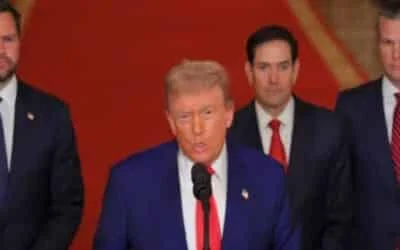
This trip carries extra weight as Field Marshal Munir spoke on the phone with US President Donald Trump just last week, before traveling to Tehran. The details of that call have been kept under wraps but it gave Islamabad a direct line to pass on Washington’s position to Iran, and test the waters to see if Tehran would be willing to talk again.
It comes at the same time as another development. Munir’s visit came just before Washington is set to announce a new round of economic pressure on Iran, expected to include sanctions and curbs on Iran’s oil exports. Tehran has warned that piling on more pressure will only deepen the standoff, not create room for negotiations. Ghalibaf, in a post on X after meeting with Munir, said frankly: “Washington’s approach is undermining regional stability and further eroding trust in the United States. “American bluster convinces no one,” he said, adding that the US is not in a position economically to continue to restrict its relations with other countries.
Strait of Hormuz Still the Central Sticking Point
Much of this stand-off is about one place, the Strait of Hormuz. Iran insists the US must first meet its commitments on the waterway before Tehran will consider a broader reopening or move to the next phase of talks. Here, the meeting between Munir and Gen. Rezaei was particularly significant, as Rezaei has recently taken over as Secretary of the Supreme National Security Council and is thus at the center of attention for Iran’s national security decisions at a crucial time. During their conversation, Rezaei specifically highlighted Iran’s security interests in the strait, stating that any future settlement must take into account the military and economic pressures currently being put on Tehran.
The Hormuz question is not being handled through Pakistan’s channel alone. A separate diplomatic track is also underway between Iran and Oman, focused on the strait’s navigation arrangements. Omani Foreign Minister Badr Al Busaidi is due to visit Tehran on Tuesday, adding another dimension of diplomatic activity around the waterway as Pakistan looks to re-establish its position in the wider US-Iran process.