


In the past week, The Associated Press, known as AP News, has been focusing on Pakistan in a way that emphasizes shocking stories over important background information. This coverage has a hidden agenda and misrepresents the country. A closer look shows that the media are often picking and choosing what to report, leaving out crucial details about Pakistan’s role in the world. This kind of biased reporting can mislead people and hurt Pakistan’s reputation. By addressing these issues, we can empower ourselves with a more balanced and accurate understanding of Pakistan’s international image.
Sensationalizing Domestic Tragedies Without Context
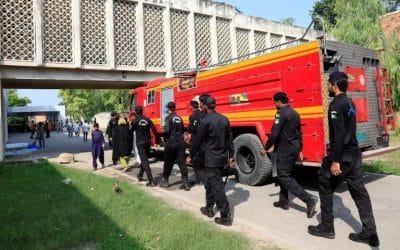
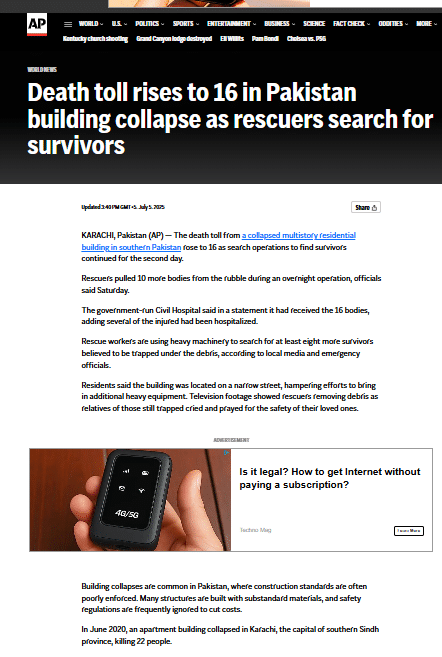
On July 4, a five-story residential building collapsed in Lyari, Karachi, killing 27 people and leaving over 10 injured. The tragedy, later traced to structural failure and illegal modifications, triggered an extended rescue operation and arrests of 9 officials, including SBCA inspectors.
AP framed it merely as a consequence of “decline and poor governance,” ignoring on‑ground complexities such as recent municipal reforms and immediate government action. Vital details like Sindh’s provincial collaboration in rescue, swift judicial orders, and formation of an inquiry commission were practically sidelined.
Building collapses are common in Pakistan, where construction standards are often poorly enforced. Many structures are built with substandard materials, and safety regulations are frequently ignored to cut costs.
Source: AP News

Source: apnews
Meanwhile, AP ran a parallel narrative emphasizing chaos, failing to credit the federal government’s coordination and swift financial relief. By highlighting only the failure, AP projected Pakistan as a failing state, clearly undermining national humility and effective response mechanisms.
Monsoon Floods and Media Misrepresentation
From June 26 through mid-July, intense monsoon rains devastated large swathes of Pakistan, leaving at least 72 dead and over 130 injured across Khyber Pakhtunkhwa, Punjab, Sindh, and Balochistan. Cities like Lahore, Quetta, and Peshawar experienced flash flooding, damaged infrastructure, and disruptions to transport and electricity. In response, the National Disaster Management Authority (NDMA) issued alerts, launched joint rescue missions with provincial authorities, and coordinated the distribution of emergency supplies.
AP News framed the flooding disaster with a focus on state failure and chaos, attributing it to “neglect and poor urban planning” while ignoring the extraordinary rainfall and the broader impacts of climate change. The article selectively quoted angry citizens and omitted mentions of the swift deployment of army helicopters, rescue teams, and relief camps established within 48 hours.
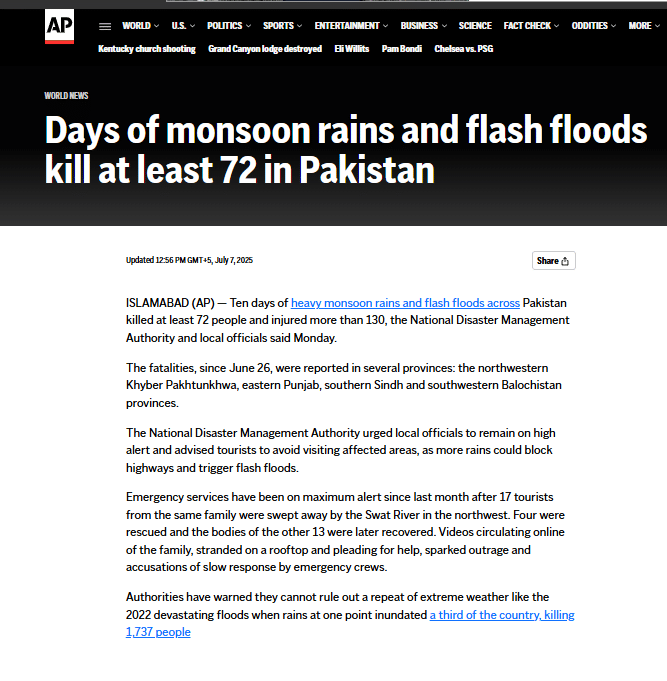
Image: AP News
Notably, it failed to acknowledge federal climate resilience initiatives, such as the National Flood Response Plan 2025, which was being implemented in vulnerable areas. This portrayal painted Pakistan as a “perennially unprepared” nation, reinforcing a negative international image rather than recognizing systemic efforts to improve disaster management. Ultimately, this narrative distorted Pakistan’s role in the context of climate injustice and undermined its credibility in global environmental discussions.
Abduction and Killing of Punjabi Passengers in Balochistan
On July 11, militants ambushed two passenger buses in Zhob and Loralai, forcibly offloading passengers based on ethnic identity. Nine individuals, all from Punjab, were executed, making the attack a clear case of ethnic profiling and terrorism. The Baloch Liberation Army (BLA), a separatist outfit with reported external support, was named by state officials as responsible. President Zardari, the Interior Ministry, and military spokespersons all condemned the incident, terming it a continuation of foreign-sponsored insurgency designed to destabilize Pakistan’s western provinces.
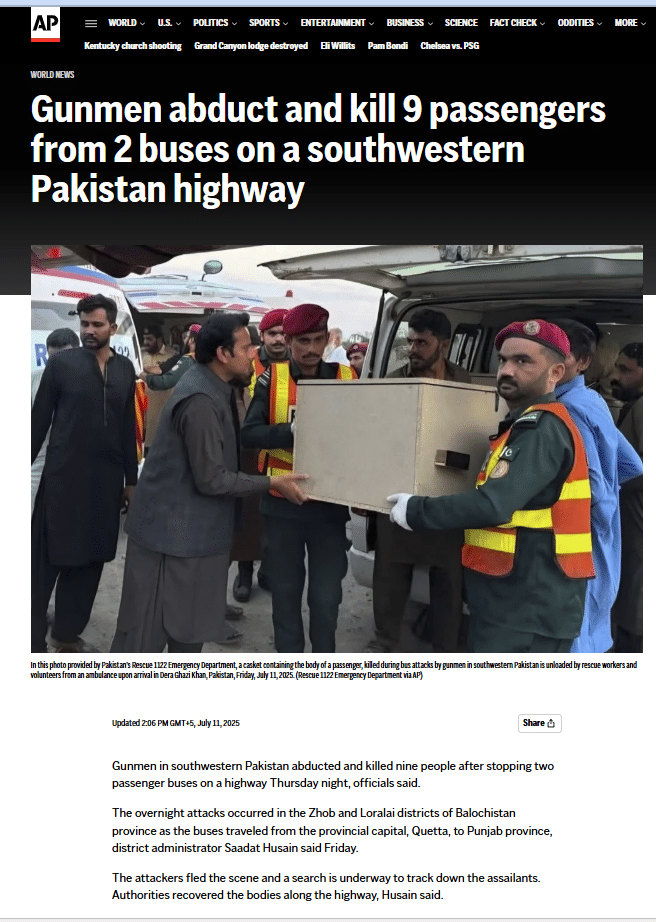
Image: AP News
AP News downplayed a serious incident by calling it an “ambush by unknown assailants,” neglecting to label it terrorism or address its ethnic targeting. The report overlooked Indian-funded networks and ongoing counterterrorism efforts in Balochistan, and ignored official condemnations and high-level security meetings that followed. Instead of focusing on the victims or the history of external militancy, AP framed the attack as stemming from “inter-provincial mistrust,” internalizing the conflict and sidelining international interference. This approach marginalized the state’s narrative, undermining Pakistan’s image and deflecting attention from the sponsored terrorism it faces.
Pakistani Forces Neutralize 30 Cross-Border Militants
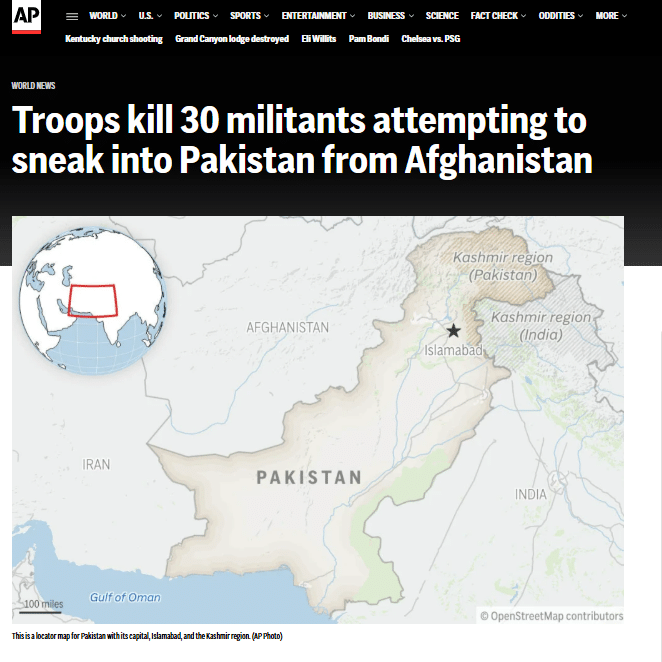
On July 9, Pakistani forces killed 30 militants attempting to infiltrate from Afghanistan into North Waziristan, near the volatile Durand Line. Intelligence revealed they were associated with the Fitna Al Khwarij Pakistan (FAK) and equipped with weapons allegedly routed through Indian-supported networks. Pakistani officials demanded that Kabul take responsibility under the Doha Agreement to prevent its soil from being used against neighbors.
Moreover, the news outlet did not highlight the praise issued by PM Sharif and President Zardari, nor the military’s operational transparency, including footage and detailed briefings. No mention was made of the intelligence-sharing efforts with regional allies or counterterrorism diplomacy with Kabul, significant efforts that show Pakistan is acting within international frameworks.
Source: apnews
This type of framing positions Pakistan not as a state under siege, but as one enmeshed in endless conflict. Such reporting reinforces outdated narratives of instability, erasing the progress Pakistan has made in border surveillance, counterinsurgency, and international cooperation. To restore impartiality, AP must:
Integrate government and provincial responses into crisis narratives, such as the Lyari collapse. AP News should showcase the full range of state actions, including rescue operations and relief announcements from federal and Sindh authorities. Coverage must include coordination efforts, accountability, and reforms post-disaster, presenting a comprehensive view of governance beyond just the suffering.
Reevaluate sources and elevate Pakistani official statements alongside external viewpoints. AP should aim for a balance between Western critiques and official responses, incorporating verified data from national institutions and on-the-record interviews for a more nuanced perspective on Pakistan’s actions.
Failure to adopt these steps transforms AP’s hub-Pakistan into a platform for foreign propaganda, misrepresenting a country working toward stability, modernization, and regional peace.