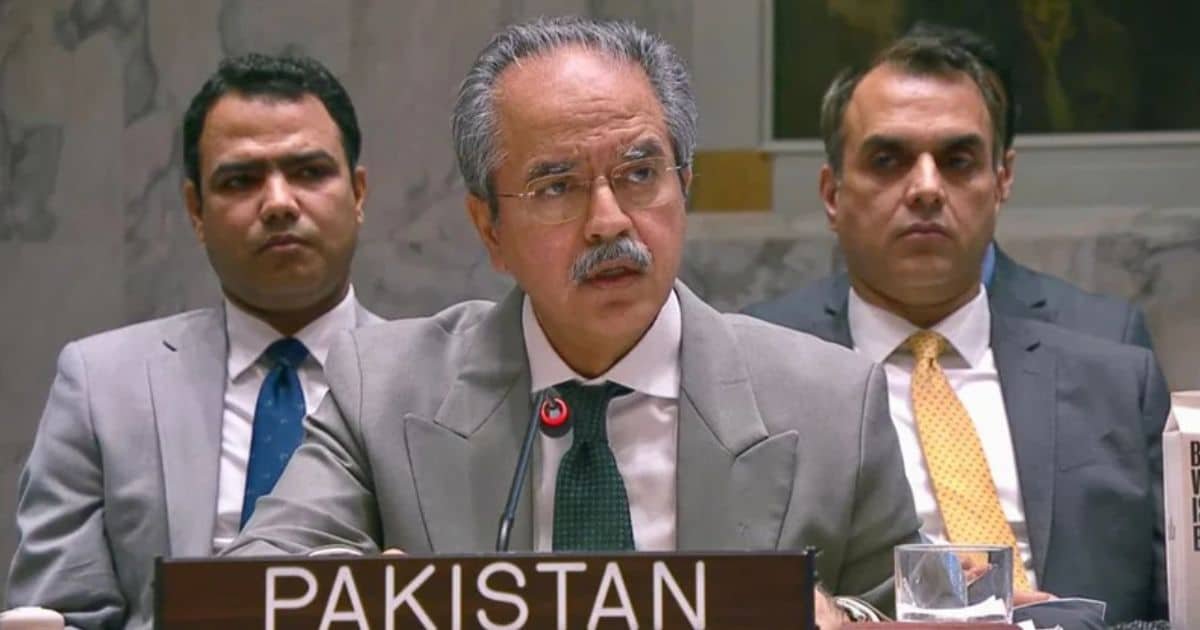




Pakistan told the United Nations Security Council (UNSC) on Wednesday that terrorist activity originating from Afghan soil had become the “gravest threat” to its national security and sovereignty, urging the international community to push the Afghan Taliban to take concrete action against militant groups operating with impunity.
Addressing a UNSC debate on the situation in Afghanistan, Pakistan’s Permanent Representative to the UN, Ambassador Asim Iftikhar Ahmad, outlined Islamabad’s growing concerns over intensifying cross-border terrorism, humanitarian challenges, and the deteriorating socio-economic situation in the neighbouring country.
Ambassador Ahmad said that despite Pakistan’s continued engagement with the Afghan Taliban since their 2021 takeover — including high-level exchanges, humanitarian facilitation, and trade concessions — the security environment had worsened. He warned that Afghanistan had again become a “safe sanctuary for terrorist groups and proxies,” with severe implications for Pakistan and regional stability.
The envoy said that nearly 1,200 Pakistanis had been killed this year in attacks “planned, financed and orchestrated” from Afghan soil, adding that since 2022, more than 214 Afghan militants, including suicide bombers, had been neutralised in Pakistani counterterrorism operations. Groups such as the banned Tehreek-i-Taliban Pakistan (TTP), Al-Qaeda, the Baloch Liberation Army (BLA) and the Majeed Brigade were receiving safe haven across the border, he asserted.
He added that Pakistan had repeatedly foiled TTP and BLA infiltration attempts, seizing military-grade weapons believed to have been left behind by international forces during the 2021 US withdrawal. Citing “credible evidence,” he said elements within the Taliban were facilitating these groups through joint training, weapons smuggling and coordinated cross-border attacks. He also suggested that a regional “spoiler” state was intensifying support for anti-Pakistan militants, without naming the country.
You May Also Like: German Government Faces Renewed Pressure Over Afghans Stranded in Pakistan
Ambassador Ahmad urged the UN Assistance Mission in Afghanistan (UNAMA) to strengthen monitoring of illicit arms flows and provide objective assessments of border security, stressing that cross-border terrorism — not political disagreements — lay at the heart of recent border tensions.
“No country desires peace and stability in Afghanistan more than Pakistan. No country has suffered from the consequences of decades of conflict more than Pakistan,” he said. https://t.co/R0vZtwm4h3
— Dawn.com (@dawn_com) December 11, 2025
Highlighting Islamabad’s diplomatic outreach, he referenced recent talks with the Taliban in Doha and Istanbul, thanking Qatar and Türkiye for their facilitation. However, he warned that failure by Afghan authorities to act against terrorists would compel Pakistan to take “all necessary defensive measures.”
The envoy also noted Pakistan’s decades-long hospitality toward Afghan refugees but said their return should now take place in a “dignified, phased and orderly” manner, with greater international support.
Reaffirming Pakistan’s desire for a peaceful and stable Afghanistan, he called on the global community to remain engaged, provide humanitarian assistance, and help foster conditions for long-term regional security and development.
Check out our latest video: