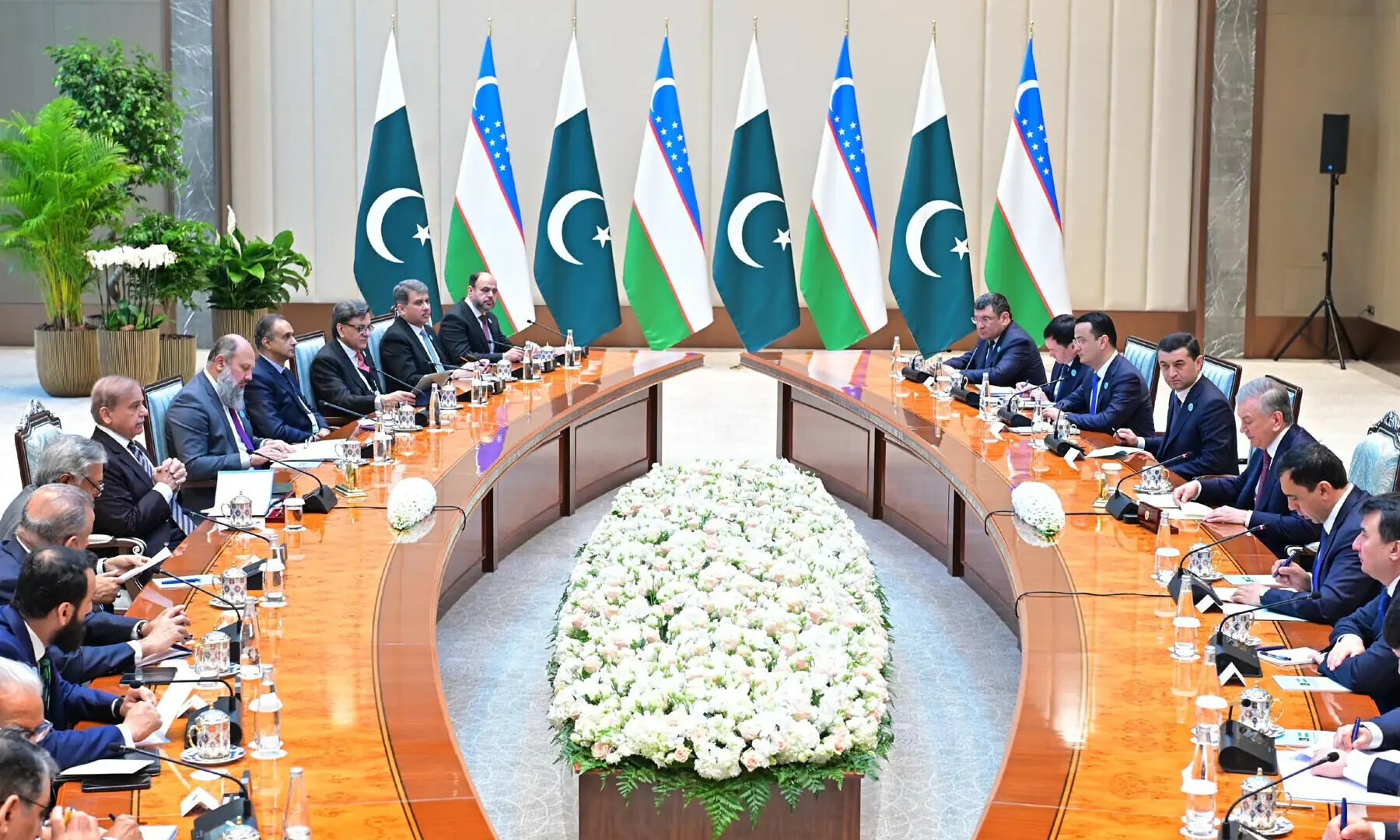



ISLAMABAD / TASHKENT — Pakistan and Uzbekistan will deepen customs cooperation using digital technology, artificial intelligence, and automated transit tracking, the two countries agreed after high-level talks on the sidelines of an international conference in Tashkent.
The agreement came out of a meeting between a Pakistani delegation led by Syed Shakeel Shah, Member Customs (Operations) at the Federal Board of Revenue, and the First Deputy Chairman of Uzbekistan’s Customs Committee. The talks happened during the UNODC-WCO Passenger and Cargo Control Programme conference.
Uzbekistan becomes first country with advance customs data exchange with Pakistan via Single Window; both sides to extend digital connectivity to transit trade
Read: https://t.co/S1zCIs2cN1 pic.twitter.com/KFiQCF2TxP
— Profit (@Profitpk) August 3, 2026
Pakistani officials pointed out that Uzbekistan was the first country to link up with Pakistan through an advance customs information exchange platform on the Pakistan Single Window, covering both imports and exports. The two sides now want to build on that by extending the system to cover real-time transit trade data as well.
That means tracking transit cargo across Central Asian border crossings through the Single Window platform, automating data exchange to cut down on delays at the border, and using AI and machine learning to set up National Targeting Centres for better risk prediction — catching illicit shipments before they move rather than after.
The talks also covered mutual recognition of Authorised Economic Operator status, which would let vetted traders on both sides clear goods faster and with less paperwork. Officials agreed to set up joint technical working groups to turn these commitments into actual operating protocols.
A joint statement from the meeting said extending digital connectivity to transit trade would improve the accuracy of data exchange, strengthen border controls, and speed up regional trade integration.
The broader UNODC-WCO conference drew senior customs officials from across Central and South Asia, who agreed to form their own technical working groups on data analytics, public-private trade partnerships, and mutual recognition of trade frameworks across the region.