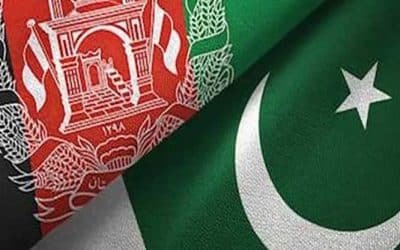




Pakistan’s “War on Terror” is the name given to the nation’s participation in the global US-led campaign against terrorism, after the tragic September 11 attacks. Pakistan had several reasons for joining this alliance, from external pressure to deciding what would be the best outcome for the country at the time. Pakistan’s involvement was based on complicated and nuanced factors to balance internal stability with external obligations. These reasons will be explored in this article.

Reference: BillyPenn
Pakistan’s Geopolitical Position and Other Factors
In 2001, following the September 11 attacks, Pakistan was thrust into the international spotlight owing to its geographic location and relations with Afghanistan. For the US, Pakistan could serve as a front-line ally in its war against terrorism. Since Pakistan was one of the countries that had diplomatic ties with the Taliban governed Afghanistan, the host country of the militant group allegedly responsible for the 9/11 attack, Washington began intensive negotiations with Islamabad. President Musharraf assured the US government that it would join the coalition against terrorism because Pakistan was also a victim of terror attacks and extremism.
There were other reasons, including that Pakistan had been receiving less military aid from the US than Estonia and Panama, primarily because of the sanctions imposed as punishment for testing and acquiring nuclear weapons. For Its agreement to the alliance allowed Pakistan to receive both military and economic support. The US even postponed the repayment of billions of dollars in debt, and the International Monetary Fund (IMF) approved a series of loans. In the three years following the 9/11 attacks, Pakistan received $4.2 billion, a significant increase from the $9.1 million it received in the preceding three years. Therefore, for Pakistan, joining the War on Terror was not simply a result of foreign pressure but a strategic move to help the country’s economy and bring stability.
Furthermore, India, which poses a constant threat to Pakistan, was eager to align itself with the US. Already, it had offered three airbases in Jammu, Punjab, and Gujarat, as well as unspecified port facilities. Pakistan feared it could use this opportunity to influence the US’s stance on Kashmir in its favor, as well as magnify its nuclear capabilities. Pakistan was in a tough spot and chose to side with the US for its best interests.
Pakistan’s Role in Counter-terrorism
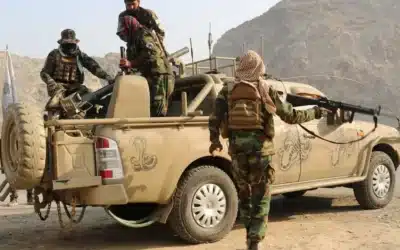
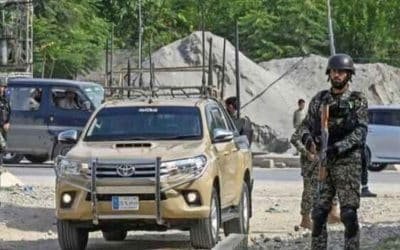
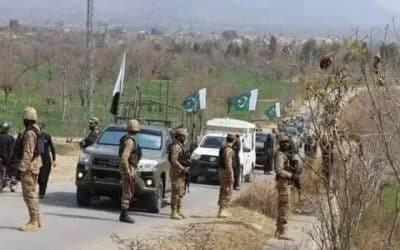
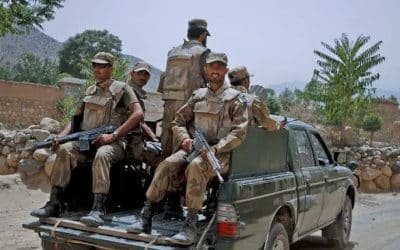
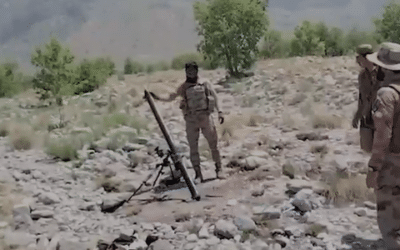
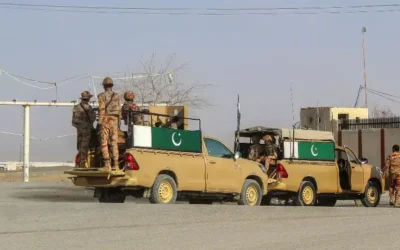
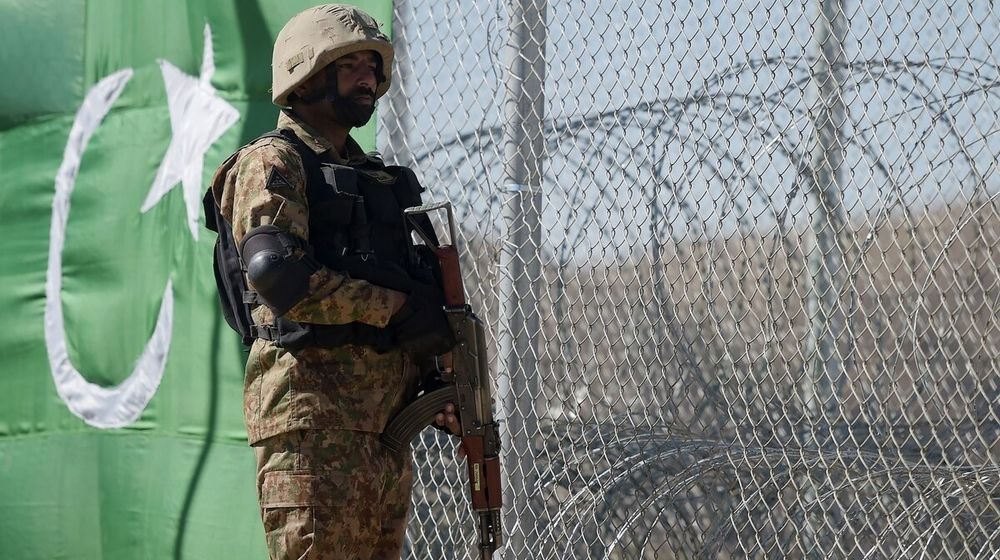
Pakistan’s fight against terrorism hasn’t been limited to intelligence operations alone; instead, the country carried out militant campaigns to root out terrorism as well. It provided integral logistical support, which proved crucial in the success of multiple operations. In addition to that, Pakistan arrested top al-Qaeda leaders with the help of its security agencies. Within one year, the country had made 99 raids and arrested 420 foreign officials. From 2004 onwards, Pakistan’s Armed Forces have From 2004 onwards, Pakistan’s Armed forices carried out multiple large-scale military campaigns to eliminate terrorist hideouts in the Federally Administered Tribal Areas (FATA) and Khyber Pakhtunkhwa (KP). Operations such as Rah-e-Haq (2007), Rah-e-Rast (2009), Zarb-e-Azab (2014), and Radd-ul-Fasaad (2017) reflect Pakistan’s determination to eradicate terrorist networks.
Operation Zarb-e-Azab was pivotal. It was launched in the aftermath of the Karachi Airport attacks and targeted North Waziristan, which was then considered to be the hub of militancy. The operation was widely regarded as successful, with the army stating it reclaimed 90% of the territory previously under militant control. It also claimed to have severely weakened Fitna al Khwarij (FAK), then known as Tehrik-e-Taliban Pakistan(TTP), and dispersed several other extremist groups. After the operation, terror attacks all over Pakistan were drastically reduced.
It is important to note that Pakistan suffered a significant loss of life. Thousands of Pakistani soldiers and officers lost their lives fighting terrorism. Civilians also endured the effects of terrorism and counter-terrorism efforts, with schools, mosques, and public areas being targeted to destabilize the state. However, Pakistan remained committed to fighting terrorism in all its forms. Despite that, in 2018, President Donald Trump accused Pakistan of still harboring Terrorists, to which Former Minister of Defence, Khurram Dastighir Khan, responded with “Pak as anti-terror ally has given free to US: land & air communication, military bases & intel cooperation that decimated Al-Qaeda over last 16yrs, but they have given us nothing but invective & mistrust. They overlook cross-border safe havens of terrorists who murder Pakistanis”.
The Human Cost
Pakistan paid a heavy price for its role in the War on Terror. Over 80,000 lives were lost, including civilians and military personnel. Beyond the loss of life, the economic impact has been significant, with damages exceeding $150 billion due to decreased foreign investment, trade disruptions, and infrastructure damage. The large-scale displacement of people from conflict zones, social upheaval caused by decades of insecurity, and generations of psychological trauma inflicted on millions of Pakistanis highlight the substantial internal challenges Pakistan has had to face alongside its external commitments.
For Pakistan, the War on Terror has been one of its most defining struggles in the 21st century. The country stood on the front lines of counter-terrorism efforts and maintained unwavering resolve. Despite facing significant losses and militant retaliation, it carried out its responsibilities as a member of the international community with courage. While the world holds mixed views on Pakistan’s role in the fight against terrorism—some acknowledging it and others criticizing it—it’s important to recognize that the country was a partner, not the problem, after 9/11, and this was evident in its decisive actions. The nation paid a heavy price but remains committed to its fight against terrorism.
References:
- Shah, S. M. A. (2007). Pakistan and the war against terrorism. *Pakistan Horizon, 60*(2), 85–107.
- Yamin, T. (n.d.). Examining Pakistan’s strategic decision to support the US war on terror.
- Al Jazeera. (2018, January 2). Pakistan‑US war of words over Donald Trump’s tweet. Al Jazeera.