




On 29 January 2025, President Asif Ali Zardari signed the Prevention of Electronic Crimes (Amendment) Act, 2025, ushering in sweeping changes to Pakistan’s cybercrime legal framework under the Prevention of Electronic Crimes Act, 2016 (PECA). The amendments—driven by concerns over disinformation and digital harms—fundamentally expand government oversight, create new regulatory and investigative bodies, and significantly elevate penalties for online speech.
Key Provisions of the Amendments
1. Criminalising Disinformation under Section 26A
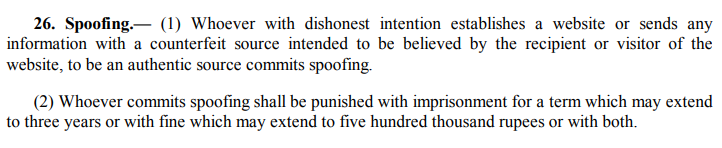
Section 26 penalises the intentional dissemination of “fake or false information” that could incite public panic, unrest, or fear. Violations now carry penalties of up to three years in prison, a fine of PKR 2 million, or both—previously, such offences were punishable by up to five years or a PKR 1 million fine under earlier drafts.
Source: PECA 2016
2. Creation of New Regulatory Bodies
- The Social Media Protection and Regulatory Authority (SMPRA) is instituted to oversee content regulation, enforce blocking orders, and require local enlistment from social media platforms.
- A Social Media Protection Tribunal is established to adjudicate disputes; its decisions are appealable to the Supreme Court within 60 days.
3. Establishment of a New Cybercrime Investigative Agency
The amendments dissolved the FIA Cybercrime Wing, replacing it with the National Cyber Crime Investigation Agency (NCCIA), headed by a Director General with a status equivalent to that of an Inspector General of Police.
Government Rationale vs. Civil Society Alarm
The government portrayed the amendments as necessary to combat online disinformation, safeguard public order, and regulate digital platforms under unregulated conditions. Law Minister Azam Nazeer Tarar defended the changes as measures to modernise Pakistan’s cyber legal infrastructure.
By contrast, journalists, civil society organisations, and digital rights activists voiced severe concern. The Pakistan Federal Union of Journalists (PFUJ) and other groups raised concerns that recent amendments, drafted without consultation, could restrict free expression across digital platforms. The Digital Rights Foundation, led by Nighat Dad, highlighted that the vague definition of “fake news” risked arbitrary enforcement. In response, PFUJ organized nationwide protests, including sit-ins, to demand the revocation of the amendments or a judicial review.
Initial Legal Blowback
Within months, the Islamabad High Court heard petitions challenging the constitutionality of the PECA 2025 amendments. Petitioners argued the law violates due process, free speech protections, and grants excessive executive authority via tribunal-based adjudication.

Source: Dawn
Meanwhile, the Lahore High Court’s Multan Bench ruled that PECA’s amended designation of certain offences as non-bailable cannot be applied retrospectively to alleged offences committed before the amendments came into force.
Strategic Importance for Pakistan’s Cybersecurity Framework
Despite controversy, the amendments have reshaped Pakistan’s digital governance landscape:
- The NCCIA now centralises cybercrime enforcement, combining existing FIA resources with expanded investigative authority.
- SMPRA, Social Media Tribunals, and Councils institutionalise regulatory oversight, though critics foresee risk of selective and politically motivated content suppression.
This represents a significant shift: the expansion of state surveillance and control over the digital domain in the name of national security—even as public debate suggests broader implications for rights and democratic norms.
Balancing Security and Civil Liberties
The enactment of the PECA Amendments Act 2025 marks a critical transformation in Pakistan’s approach to cybersecurity and online regulation. While the government frames it as a necessary tool against fake news and cyber threats, activists argue it poses risks to free expression, judicial oversight, and minority dissent.
Looking ahead, robust implementation will require transparency: clarifying definitions, establishing independent tribunals, and ensuring remedies for misuse. Without these safeguards, Pakistan risks evolving into a digital surveillance state—where the lifeblood of online dissent may wither under legal limitations originally intended to protect public interest.