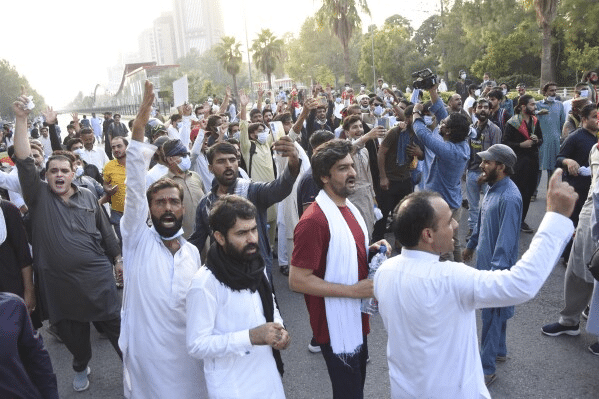





Pakistan’s vibrant democracy has increasingly shifted the focus of political discourse from the halls of parliament to public avenues. Street rallies, sit-ins, and confrontational exchanges have become routine, but the financial cost of this transition is staggering. In recent months, Finance Minister Muhammad Aurangzeb disclosed that opposition-led protests are costing the economy approximately PKR 190 billion per day—roughly $684 million in lost GDP, exports, and investment. This massive drain highlights the urgent need to strike a balance between democratic expression and economic stability.
When protests move to Islamabad’s Red Zone, authorities respond with strict containment measures. During recent PTI-led rallies, the city was barricaded with shipping containers and secured by a substantial security deployment. These lockdowns, while ensuring order, inflicted severe disruptions: retailers faced more than 50% drop in revenue in affected areas, and over 700 trucks were trapped along major highways, blocking crucial CPEC-linked routes. The total cost covers container rentals (PKR 40,000–60,000 daily), fuel, and personnel logistics, all contributing to the increasing financial strain.
Market Turbulence and Investment Flight
On the market floor, the impact is immediate and stark. The Pakistan Stock Exchange fell by more than 3,500 points within a single day of instability in late 2024, with sectors such as retail and transport bearing the heaviest losses. Foreign investors, already cautious of Pakistan’s fragile economy, view street politics as a warning sign, resulting in a daily FDI loss of PKR 3 Billion during periods of unrest. Investor confidence, easily shaken, struggles to regain its footing.
Digital Shutdowns & Technology Setbacks
Street-level rosters also include internet blackouts and mobile service suspensions. During high-stakes protests following the May 2023 unrest, telecom losses totalled PKR 2.49 billion, while freelancers and IT exports suffered considerably. One study estimated that a single day of shutdown wipes out PKR 1.3 billion—around 0.57% of daily GDP—for gig workers and digital businesses. These disruptions hamstring the country’s emerging digital economy at a critical moment.
Security Expenditures & Public Services
Non-violent but forceful tactics demand significant expenditure. In FY2022–23, Islamabad’s security budget to manage protests reached PKR 724 million, the highest in five years. Costs include personnel transport, food, lodging, and infrastructure. For ordinary citizens, this results in blocked roads, delayed ambulances, disrupted bus services, and closed schools. The “political theatre” thus imposes a human and social cost alongside its financial one.
Reuters reported thousands of PTI supporters facing tear gas and tearful scenes in Islamabad as wire barricades cut off major roads. Pakistan Today highlighted Finance Minister Aurangzeb’s statement: “Protests cost Rs. 190 billion daily,” capturing GDP and forex losses while tax collections and investment wilt.
Persistent confrontation erodes trust in democratic institutions. A South Asia Monitor report described the protests as “damaging to Pakistan’s economy, governance, and social harmony,” estimating over PKR 2 billion in property damage and PKR 1.5 billion in logistics for the police and Frontier Corps. Courts, including the Islamabad High Court, criticised unsanctioned sit-ins as illegal, further undermining institutional authority. With civic infrastructure bearing the brunt, the damage is structural.
A Way Forward: Responsible Democracy
Pakistan’s political actors must find common ground. Street protests can be a democratic expression, but when they paralyse cities, they undermine collective progress. Political theatre needs a counterpart: dialogue, negotiation, and legal channels. Parliamentary debate and judicial oversight should become primary platforms for dissent, not the streets. A conscious shift towards collaborative politics may cost fewer rupees and rebuild public trust.
From assembly chambers to streets, political theatre is more than stagecraft—it’s an economic burden. With a daily loss of PKR 190 billion, it disrupts trade, deters investors, and damages public infrastructure. Internet shutdowns further harm the emerging digital sector. Pakistan’s path to stability depends on respecting democratic rights without undermining economic foundations. Ensuring protests do not descend into disorder while maintaining civic discourse will determine whether democracy empowers the nation or impoverishes its people.