

Pakistan’s cities are swelling. By 2040, more than 50% of the country’s population is expected to live in urban centers, up from just 36% in 2020, according to the UN. Lahore, Karachi, and Islamabad are at the forefront of this transformation. The idea of “smart cities”—urban spaces enhanced by digital technologies for better governance, infrastructure, and public services has emerged as a solution. But for a country battling power shortages, infrastructure deficits, and economic instability, the gap between vision and execution is wide.
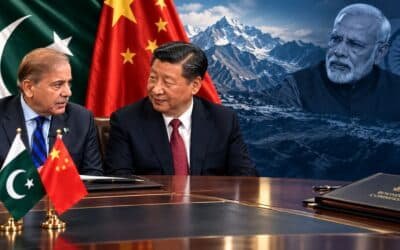
Pakistan and China eye deeper cooperation in AI, smart cities, and health techhttps://t.co/UEjKHzJYD2 pic.twitter.com/p9awZB849i
— PTV World (@WorldPTV) July 27, 2025
From Blueprint to Ground Reality
The concept of smart cities isn’t new to Pakistan. In 2016, the federal government proposed a phased development plan, advocating a three-tier governance structure: federal, provincial, and city-level boards. Islamabad, with its planned layout, and Lahore, with its rapid digitalization of public services, were seen as pilot grounds.
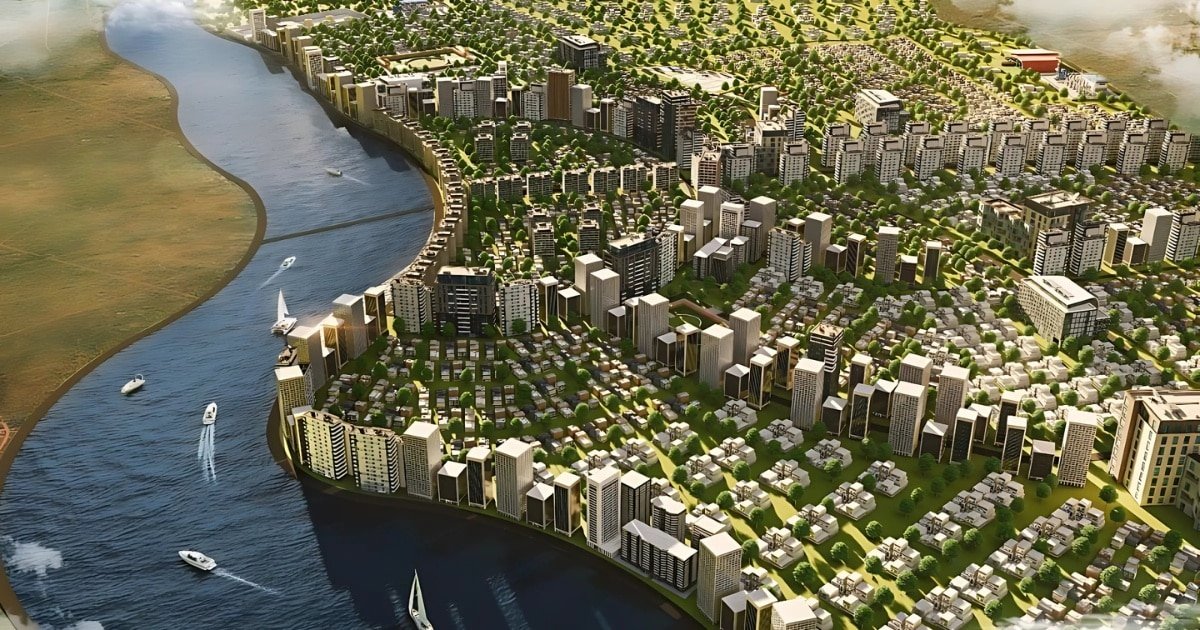
The Ravi Urban Development Authority (RUDA) and Lahore Smart City projects are among the most publicized. The Lahore Smart City aims to be Pakistan’s second smart city after Islamabad. These initiatives promise intelligent traffic systems, digitized land records, 24/7 surveillance, and green technologies. However, the projects have been marred by delays, legal disputes over land acquisition, and inconsistent political backing.
#RUDA turning waste into economic environmental treasure!
Ravi Urban Development Authority -RUDA committed to pioneering sustainable urban solutions that align with global best practices!#RaviCity #lahore #development #GovtOfPunjab #mehmoodbooti #nationalproject #environment pic.twitter.com/n9d2HWfdwm— Ravi Urban Development Authority (RUDA) (@Ravi_RUDA) June 4, 2025
“Pakistan’s smart city vision is attractive on paper, but it struggles in translation because we haven’t yet addressed foundational urban issues,” said Dr. Muhammad Zahir, urban policy analyst at NUST. “You cannot build a smart city on a broken sewer line.”
Technology vs. Readiness
Pakistan’s digital infrastructure remains patchy. As of 2024, internet penetration stood at 54%, according to the Pakistan Telecommunication Authority. In major cities, connectivity is stable, but in second-tier cities, such as Multan, Quetta, and Sukkur, it is inconsistent. Power outages still disrupt services, and outdated urban grids mean many local governments lack the baseline infrastructure needed to support real-time monitoring systems, let alone AI-powered traffic control or e-governance platforms.
A 2023 World Bank report on South Asia’s digital transformation noted that Pakistan “lags in urban digital readiness due to fragmented governance, underinvestment in public ICT infrastructure, and limited integration across city departments.”
You May Like To Read: Safer Roads Now: Pakistan’s New Traffic Tech Is Slashing Fatalities
Despite that, the Federal Ministry of IT & Telecommunication launched several public-private initiatives in 2022 to promote smart governance, including “Digital Pakistan” and “Smart Village” pilots. But smart city ambitions need more than pilot projects—they require systemic reform, interoperable platforms, and long-term political support.
Lahore: Promise and Pollution
Nowhere are the contradictions more visible than in Lahore. Once dubbed the “Paris of the East,” Lahore is choking literally. In 2023, it was ranked among the world’s most polluted cities by IQAir. Yet it’s also the center of Pakistan’s most ambitious smart city project.
RUDA, which oversees the $40 billion Ravi Riverfront project, promises green infrastructure, waste-to-energy systems, and tech parks. But critics argue the model caters to elite housing needs while sidelining the city’s overburdened public systems.
“Lahore’s smart city initiative risks becoming a gated digital utopia, disconnected from the lived realities of its low-income populations,” warned urban sociologist Asma Jilani. “Without affordable housing, public transport, and environmental sustainability, it’s not a smart city it’s just a tech bubble.”
The Punjab government has approved an ambitious plan to build a 40-kilometer-long green corridor in Lahore to combat rising air pollution and smog.
The corridor will stretch from Shahdara to Raiwind, transforming the area along the railway track into green belts.
According to… pic.twitter.com/TQ9Udr88Ld
— Pakistan Economic Network (@NetPakistan) August 4, 2025
International Lessons, Local Realities
Internationally, the Amsterdam Smart City model offers a contrast. The city transformed itself incrementally since 2009, focusing on citizen-led innovation and open data rather than mega-infrastructure. Similarly, Barcelona’s smart city framework emphasizes public Wi-Fi, digital inclusion, and transparency elements largely missing in Pakistan’s elite-driven model.
According to the International Telecommunication Union (ITU), successful smart cities prioritize “people-first” principles: inclusivity, sustainability, and efficiency. Pakistan’s approach remains infrastructure-heavy and socially narrow.
“In places like Amsterdam or Seoul, smart city planning is not about flashy tech; it’s about using data to solve real human problems: mobility, waste, energy, and housing,” said Dr. Adeel Nawaz, a smart city researcher affiliated with the Urban Sustainability Lab at the University of Melbourne. “Pakistan must recalibrate its goals or risk ending up with half-smart cities that solve little and exclude many.”
The Politics of Urban Modernization
Urban development in Pakistan is deeply political. Metro Bus projects, for example, have alternately been hailed as visionary or derided as vanity schemes depending on who’s in power. This politicization undermines continuity, essential for long-term smart city transformation.
In Khyber Pakhtunkhwa, PTI’s creation of Water and Sanitation Services Companies (WSSCs) marked a significant shift in municipal governance. By outsourcing waste management to professionalized entities, cities like Peshawar and Mardan showed tangible improvement. Yet such models remain isolated experiments rather than national policy.
The Pakistan Muslim League-Nawaz (PML-N) has emphasized traditional infrastructure roads, overpasses, and transport systems, while PTI has leaned toward digital service delivery and environmental upgrades. This divide has led to fragmented urban policies rather than an integrated smart cities roadmap.
A smart city cannot be imported or copied wholesale it must grow from the ground up. Pakistan’s urban population, particularly the youth, already engages with technology in meaningful ways, from ride-hailing apps to mobile banking. Local governments need to harness this digital fluency through open data platforms, crowdsourced urban monitoring, and digital feedback loops.
You May Like To Read: Why More Women Are Entering Politics—And Winning
Rather than build new cities from scratch, the government should focus on retrofitting existing cities. “Start with public transport integration, digitizing land records, and air quality monitoring,” suggested Fatima Malik, urban tech consultant with UNDP Pakistan. “We need low-cost, high-impact solutions first, then scale.”
With frequent floods, extreme temperatures, and poor air quality affecting daily life, urban resilience is no longer optional. Climate-smart infrastructure, renewable energy microgrids, and disaster early-warning systems should be central to any smart city initiative.
Whose City, Whose Future?
Smart cities are not just about sensors and skyscrapers. They’re about making urban life more livable, inclusive, and responsive. In Pakistan, the challenge is not ambition, it’s alignment. Unless technological goals are matched by institutional reform, financial planning, and community engagement, smart cities will remain a mirage.
Pakistan doesn’t need to spend $40 billion like South Korea’s Songdo to build a smart city. It needs to build trust, integrate public services, invest in people, and put innovation in the hands of its citizens. The question, then, is not whether Pakistan can build a smart city but who that city will truly serve.