




Strategic Frontline (1979-1989)
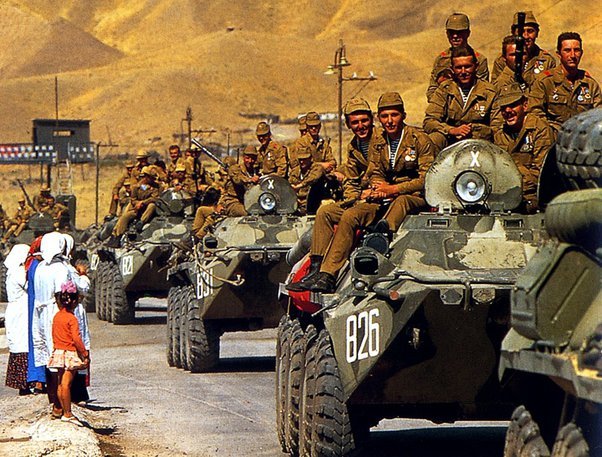
Soviet troops flooded Afghanistan in December 1979, rendering Pakistan an immediate frontline partner of the U.S. Islamabad took in fleeing Afghans and assisted in forming the Mujahideen militancy. The envoy of President Carter even proposed granting aid for $400 million, which Pakistan turned down as “peanuts,” insisting on a more substantial offer. U.S. aid increased during the presidency of Reagan to approximately $ 2 billion in the form of covert aid to Afghan rebels. The scholars observe that the support given by Pakistan played a fundamental role in expelling the soviets.
Source: DAWN
Refugee Crisis and Economic Hardship
The Soviet invasion caused mass migration. It is estimated that as of 1989, 3.1 million Afghan refugees fled to Pakistan. Islamabad established more than 300 refugee camps, which undermined its economy and services: today, at least 1,362,800 Afghan refugees (and possibly another two to three million unregistered) are still living in Pakistan. According to observers, the impact has been immense: the war left much damage to the society in Pakistan, as it introduced the culture of the Kalashnikov and narcotics, and the economy simply could not sustain itself.
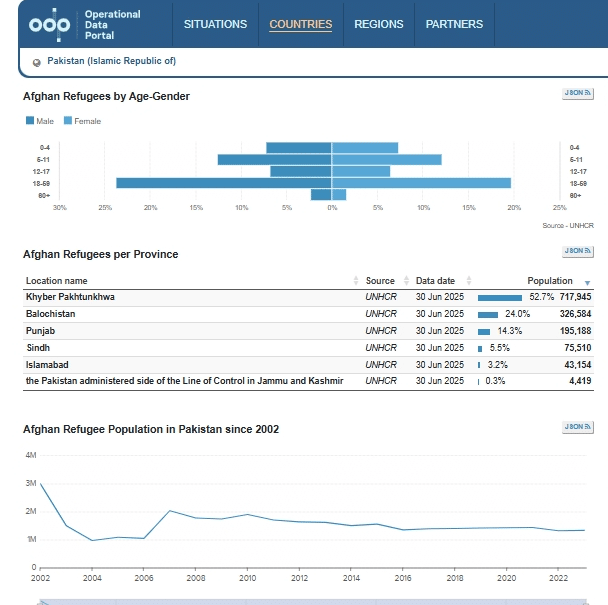
Source: UNHCR
Rise of Militancy and Domestic Blowback
When the Soviets withdrew in 1989, Afghanistan fell into civil war. Pakistan-backed mujahideen fought for Kabul and ultimately helped the Taliban take control of the city in 1996. However, the investment in jihad soared at home. Since the Afghan War, experienced militants and stockpiled weapons were left along the Durand Line. The Pakistani tribal belt experienced increased insurgency when extremist groups sheltered in Afghan camps launched attacks on Pakistani security agencies and civilians. Since 2001, Pakistan has been part of the American War on Terror, yet militancy has continued to grow. A recent UN report states that even the new Taliban regime continues to provide logistical and financial support to the Pakistani Taliban, leading to hundreds of attacks on Pakistan. By the end of 2024, analysts reported more than 600 militant strikes launched from Afghanistan. Pakistan has responded with a military campaign called Azm-i-Istehkam to target FAK hideouts across the border, but in recent years, more than 300 insurgent attacks have reached Khyber Pakhtunkhwa.
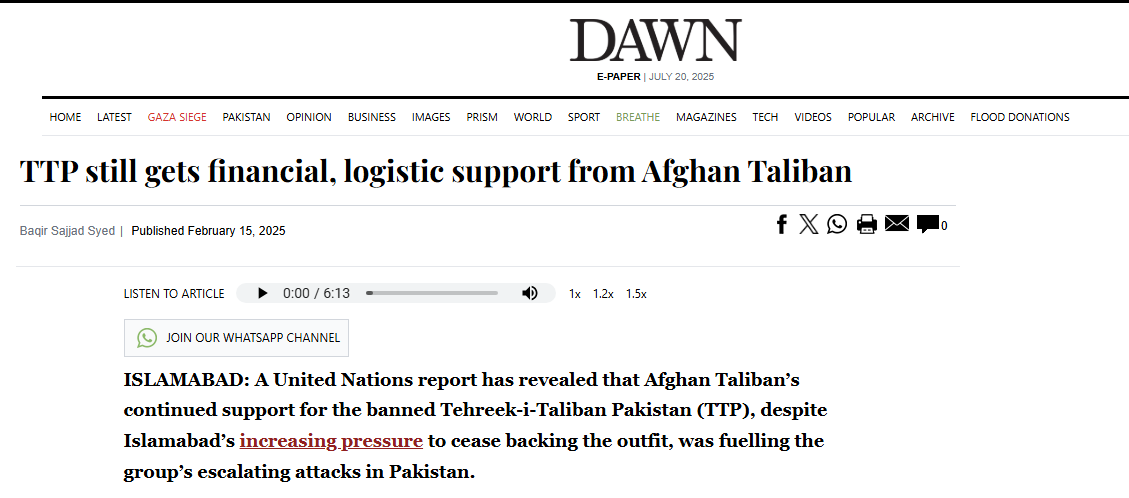
Source: DAWN
Geopolitical Effects and Modern Challenges
Pakistan’s strategic environment has undergone significant shifts after decades of conflict. In the immediate aftermath, its Cold War position led Pakistan to strengthen its ties symbolically with the U.S. and China. However, this legacy has resulted in ongoing volatility. Currently, Islamabad states that Kabul has failed to act against the movement of militant groups and warns of self-defense measures if necessary. Afghan leaders, in reply, often cite historical interference by Pakistan: former President Karzai has accused Pakistan of trying to control Kabul’s policies. This has created a tentative standoff along the Durand Line, as each capital claims to pursue stability.
Pakistan’s Refugee Policy Criticized
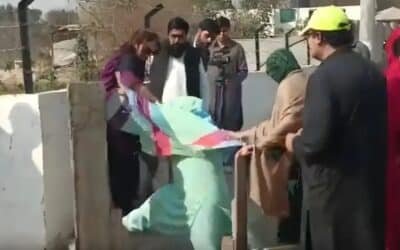
The recent attempts by Pakistan to control the numbers of the refugee population attract criticism from Western media, although the decision is founded on the actual national security issues. According to Ambassador Muhammad Sadiq, some of the most high-profile terrorist attacks committed on Pakistani territory involved Afghan nationals or individuals crossing the border with illegal refugee status. Despite diplomatic promises made by Kabul, infiltration and smuggling of arms continue in Islamabad. Throughout the repeated explanations made by the Foreign Office, it has been assured that all the deportations and regulations are being carried out under the IFRP, to ensure the process is conducted respectfully and without causing harm or distress to anyone involved.

Source: DAWN
The Need for Regional Cooperation
Although Pakistan suffers due to frequent instability in Afghanistan, it has always maintained a constructive status in diplomacy. At the May 2025 ISSI “Pakistan and the Region” conference, speakers emphasized that Pakistan has stressed the need for a regional counterterrorism mechanism. According to various briefings by the MOFA, Pakistan feels that the key to ending Afghan militancy lies not in isolation but in comprehensive political inclusion through talks, fencing of the border lines, and collaboration of intelligence efforts. Pakistan is warning that the cost of another Afghan collapse will not be confined to a single nation but will roll throughout the entire region.
Source: ISSI
Conclusion
Additionally, Pakistan’s significant role in pushing back the Soviets turned out to be very costly. Pakistan largely remains burdened by the legacy of the Afghan war, which includes millions of refugees, weapons caches, and jihadist networks. The effects of the conflict that began in 1979 continue to be felt, with Islamabad balancing strenuous counterterrorism efforts domestically and cautious foreign relations.