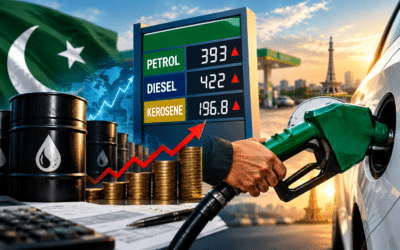





ISLAMABAD — Energy and economic experts have issued a stern warning to the federal government against imposing taxes on solar panels and batteries, arguing such a move would dismantle the “people-led solar revolution” that has saved Pakistan billions in fuel imports. During a high-level dialogue titled “Beyond the Barrel,” speakers cautioned that penalizing renewable energy adopters would leave the nation defenseless against volatile global oil prices and geopolitical shocks.
🇵🇰 Solar push helps Pakistan temper Gulf energy shock
Across the Pakistani capital, Islamabad, rooftops are dotted with solar panels, a sign of the country’s widespread adoption of the renewable energy source, which analysts say has cushioned it from the full impact of the… pic.twitter.com/NtxBSEtacz
— AFP News Agency (@AFP) April 9, 2026
The ‘Strait of Hormuz’ Wake-Up Call
The consultative dialogue, organized by the Pakistan Renewable Energy Coalition (PREC) and SDPI, highlighted how the recent closure of the Strait of Hormuz has exposed Pakistan’s dangerous over-reliance on imported fossil fuels.
-
Geopolitical Vulnerability: Engr. Ubaidur Rehman Zia of SDPI noted that the shattered assumption of “safe shipping lanes” makes indigenous energy—specifically solar—a matter of national survival.
-
Inflationary Trigger: Dr. Abid Qaiyum Suleri warned that if international oil breaches $105 per barrel, domestic inflation will surge back into double digits, threatening the progress made under the current IMF program.
The $12 Billion Hedge
Renewable energy advocates presented data showing that solar power has acted as a “structural hedge” for the country’s economy.
-
Import Savings: Since 2018, decentralized solar adoption has helped Pakistan avoid an estimated $12 billion in oil and gas imports.
-
Consumer Protection: Experts argued that citizens who invested their own capital in solar have effectively cushioned the national economy from price volatility. Taxing these consumers now would be “penalizing those who solved the problem.”
The Strait of Hormuz is a fossil fuel tinderbox, but Pakistan is busy winning the real war. 50GW of solar imported so far by the people – not the bureaucrats. That’s $120b in fuel costs SAVED over the panels’ life
Energy independence from the bottom up: By spending $7.4b on… pic.twitter.com/kvmIpFsDpy
— Assaad Razzouk (@AssaadRazzouk) April 3, 2026
The LNG Paradox and Capacity Payments
The dialogue also shed light on the “contractual rigidities” plaguing the energy sector:
-
Looming Surplus: Due to unaligned planning, Pakistan faces a surplus of 24 LNG cargoes between 2025 and 2031, even as industry shifts toward self-generated solar to escape rising gas prices.
-
The Debt Trap: Lidy Nacpil of APMDD highlighted the “twin burden” of sovereign debt and capacity payments, urging the government to renegotiate legacy power purchase agreements instead of taxing clean energy.
Budget 2026–27: The Road Ahead
The recommendations from this dialogue are set to be integrated into advocacy efforts for the FY2026–27 Federal Budget. Civil society and policy institutes are demanding:
-
Zero Tax on Storage: Incentivizing batteries to stabilize the grid.
-
Grid Modernization: Investing public resources into a flexible, renewables-ready infrastructure.
-
Policy Consistency: Ending the “reactive” cycle of fuel cost adjustments in favor of a proactive, indigenous energy framework.
“Taxing solar panels and batteries at this juncture would undermine both energy security and consumer protection,” concluded Dr. Suleri, emphasizing that the focus must remain on energy sovereignty.
You May Like To Read: Oil Dives Below $100 as ‘Islamabad Breakthrough’ Halts War Fears
Check out our latest video: