



Pakistan and China see themselves as “ironclad” partners. Their alliance includes extensive joint military drills across armies, navies, and air forces. These exercises cover counterterrorism, combined-arms combat, and maritime security. Over the past twenty years, the scale and frequency of these drills have increased, boosting joint capabilities and showing mutual resolve in the region.
Army Exercises
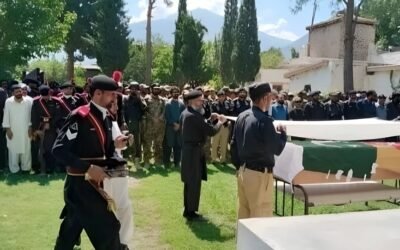
Joint ground drills began with the “Friendship” counterterrorism series in Xinjiang. This was the first time a foreign army trained on Chinese soil. By 2011, the fourth Friendship exercise took place in Pakistan. The series was renamed “Warrior” and focused on counter-insurgency and combined-arms tactics. These exercises happen annually between Pakistan and China. Warrior VI, held in 2019, according to a press release from the ISPR, saw both armies’ special forces train across Kharian over four weeks in close-quarters combat, raid tactics, and counterterrorism. Warrior-VIII occurred in November 2024, Khyber Pakhtunkhwa. These multi-week war games involve infantry, artillery, and special forces. They perform tasks such as mountain patrols, urban clearing, and explosive ordnance training. Pakistani officials say each Warrior drill aims to “refine professional skills” and enhance coordination between the two armies.

Source: X/@PakistanFauj
Air Force Exercises
The air forces hold annual “Shaheen” (Falcon/Eagle) exercises. These are alternately hosted in Pakistan and China and have occurred roughly every year since 2011. Daily Times noted that Shaheen-IX, held in Pakistan in December 2020, was the ninth in the series. It involved fighter and support aircraft from both nations. In Shaheen-IX, Pakistani F-16s and JF-17s flew alongside China’s J-10s and J-11s. They were supported by AWACS (airborne early-warning) aircraft. Pilots practiced integrated missions, including air patrol, interception, ground attack, and search and rescue. Each Shaheen exercise allows both air forces to compare tactics, radar systems, and communications in real-time.
The Pakistan Air Force (PAF), in conjunction with the People’s Liberation Army Air Force of China (PLAAF), conducted the aerial exercise Indus Shield-Chinese in 2024 to enhance combat readiness and deepen defense collaboration. The exercise also involved sophisticated systems, such as China’s J-16 and J-10C fighter jets, as well as Q-22 air defense systems, electronic warfare systems, and Pakistan’s J-10C and JF-17 Block-III jets. This combined exercise not only enhanced interoperability between the two forces but also showed that Pakistan was interested in modernizing its airpower and strengthening its strategic relations.
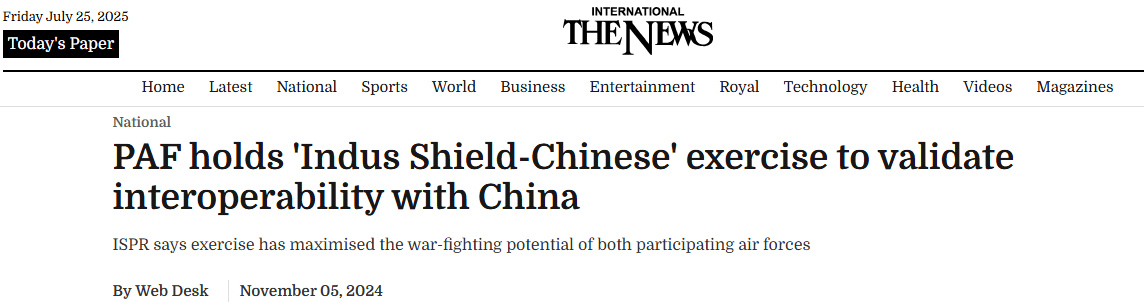
Source: The News
Naval Exercises
Joint naval drills began recently under the name “Sea Guardian.” The first Sea Guardian exercise took place in 2020, and by November 2023, Pakistan had hosted Sea Guardian-3, the eighth bilateral naval exercise since 2014. Karachi’s Sea Guardian-3 involved surface ships, submarines, and aircraft from both navies. China deployed a Type-052D destroyer and a Type-054A frigate, while Pakistan contributed two F-22P frigates and fast missile boats. These exercises include fleet maneuvers and live-fire drills. Notably, Sea Guardian-3 was the first to feature a combined Arabian Sea patrol. Crews practiced coordinated anti-submarine and anti-air operations, and the Chinese navy tested its new ships in realistic conditions.
Strategic Significance
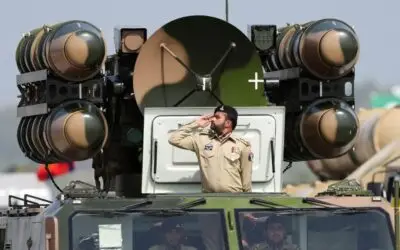
These joint exercises hold both practical and symbolic value. They facilitate fundamental skills transfer. Pakistani officers gain experience with Chinese weapons like JF-17 jets and Z-9 helicopters. Meanwhile, Chinese crews learn about Pakistan’s terrain and operational challenges. Pakistan’s navy chief described Sea Guardian as an opportunity to test and enhance our “technical and tactical capabilities” for both fleets. Experts highlight a focus on anti-submarine warfare, especially with India’s increasing sub-hunting capabilities. A defense analyst noted that China sees Pakistan as a key partner in securing sea lanes. These drills prepare for a Pakistani-supported Chinese presence in the Indian Ocean. China now utilizes Pakistani ports during exercises and may be planning to establish expanded naval bases.
Politically, each exercise conveys a message. High-ranking officers and state media frame them as examples of mutual trust. After Warrior-VIII, Pakistani COAS Asim Munir praised the drills for strengthening historic military-to-military relations among the ironclad brothers. The timing of these drills often responds to regional dynamics. For instance, Sea Guardian-3 was highlighted in mid-2023 due to the growing Indian naval cooperation with the U.S. Overall, the exercises indicate that China and Pakistan are prepared to coordinate their forces.
Key Activities and Benefits:
- Army: Counter-insurgency and combined-arms drills to sharpen tactics and coordination.
- Air Force: Integrated fighter operations are improving joint air defense and strike capabilities.
- Navy: Fleet maneuvers in the Arabian Sea, including anti-submarine warfare and live firing.
- Diplomatic Impact: Each exercise is publicized to reinforce the “all-weather” partnership. Military spokesmen emphasize friendship while analysts point out that the drills deter rivals by showing an operational Sino-Pak bloc.
Conclusion
Pakistan-China drills have evolved from one-off “Friendship” shows to regular, sophisticated exercises. Each iteration combines combat training with high-profile diplomacy. The Warrior, Shaheen, and Sea Guardian series highlight that these drills are now central to their alliance. They provide tangible military benefits, from skills training to equipment testing, while sending a clear political message that Pakistan and China remain aligned.