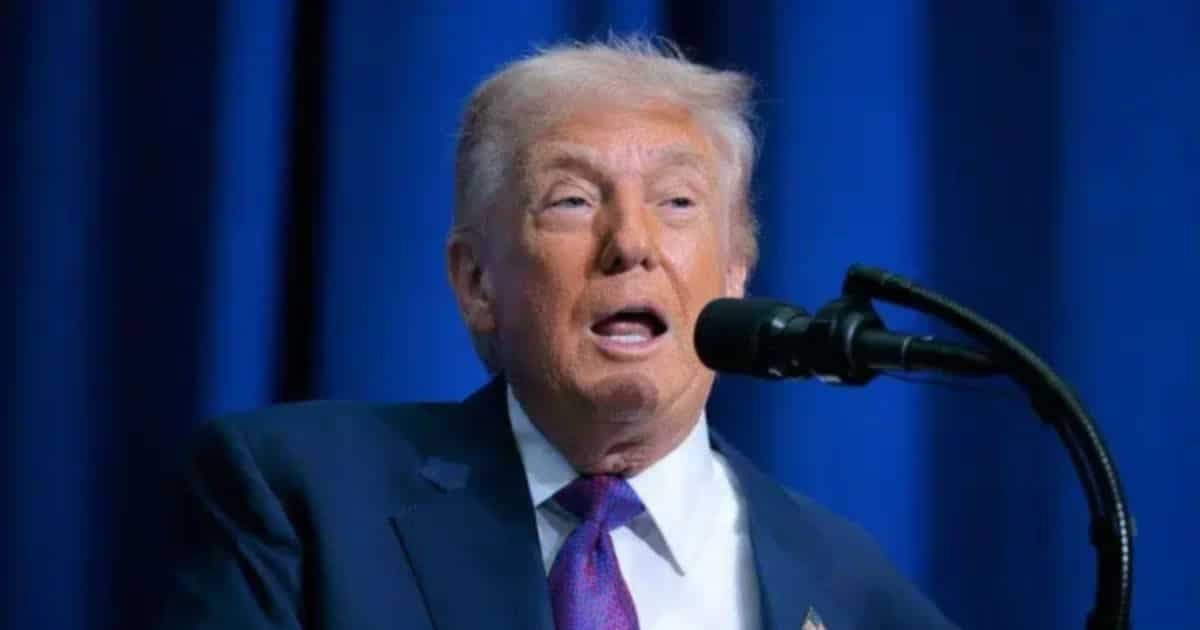





On Thursday, February 19, 2026, President Donald Trump issued a high-stakes ultimatum to the Iranian government, stating the world has approximately 10 days to see if a "meaningful" nuclear deal can be reached. Speaking at the inaugural meeting of his Board of Peace in Washington, Trump warned that "bad things happen" if negotiations fail to produce an agreement.
The deadline comes during a period of extreme regional tension, marked by a massive U.S. military buildup and memories of the June 2025 strikes on Iranian nuclear facilities (Operation Midnight Hammer).
At the first Board of Peace meeting, Trump warned he might bomb Iran within the next 10 days...
Welcome to 2026. https://t.co/7Qu3dnfSET pic.twitter.com/Hl6qQb96oZ
— Mario Nawfal (@MarioNawfal) February 20, 2026
The Diplomatic Track: "Good Talks" in Geneva
Despite the aggressive rhetoric, indirect negotiations are ongoing in Switzerland.
- Lead Negotiators: U.S. Special Envoys Steve Witkoff and Jared Kushner have been leading talks in Geneva, mediated by Oman.
- Core Conflict: Washington is demanding zero uranium enrichment and a permanent halt to Iran's nuclear program. Tehran, represented by Foreign Minister Abbas Araghchi, insists on its right to civilian enrichment and demands the total lifting of "illegal" U.S. sanctions.
- Progress: Araghchi noted that "guiding principles" have been agreed upon, but the White House maintains that the two sides remain significantly apart.
The Military Squeeze: A "Massive Armada"
The U.S. has positioned a historic level of air and naval power in the Middle East to back the President’s "Maximum Pressure" campaign.
- Carrier Presence: The USS Abraham Lincoln is currently operating off the coast of Oman, while the USS Gerald R. Ford (the world's largest carrier) is crossing the Mediterranean to provide additional strike options.
- Air Assets: Advanced F-35, F-22, and F-16 jets have been shifted to regional bases, with satellite imagery showing a surge of attack aircraft and refueling tankers in Jordan and Diego Garcia.
- Objective: U.S. officials state the buildup is a deterrent to prevent Iranian retaliation for the 2026 Iran massacres (government crackdowns on domestic protesters) and to signal readiness for strikes.
A Rift with the UK
A significant diplomatic hurdle has emerged with one of America's closest allies. The British government has reportedly refused to grant the U.S. permission to use UK bases, including RAF Fairford and Diego Garcia—for pre-emptive strikes against Iran.
- Legal Concerns: London cited fears that such an attack might breach international law.
- Trump's Response: The President criticized Prime Minister Keir Starmer and withdrew support for the Chagos Islands deal, warning that Britain must remain "strong in the face of Wokeism" and not give away the strategic base on Diego Garcia.
Congressional Pushback: The War Powers Resolution
At home, a bipartisan effort is forming to prevent unilateral military action.
- The Bill: Reps. Ro Khanna (D-CA) and Thomas Massie (R-KY) plan to trigger a War Powers Resolution vote next week.
- The Argument: They argue that any strike on a sovereign nation of 90 million people must be authorized by Congress to avoid a "catastrophic" regional war.
Economic Note: This geopolitical uncertainty was a primary driver behind the 6,683-point crash of the Pakistan Stock Exchange yesterday, as investors fear the impact of potential conflict on global oil prices and regional stability.
Trump's 10-day ultimatum to Iran This video provides a direct record of President Trump's remarks at the Board of Peace meeting regarding the 10-day deadline and the potential for military action.
You May Also Like: