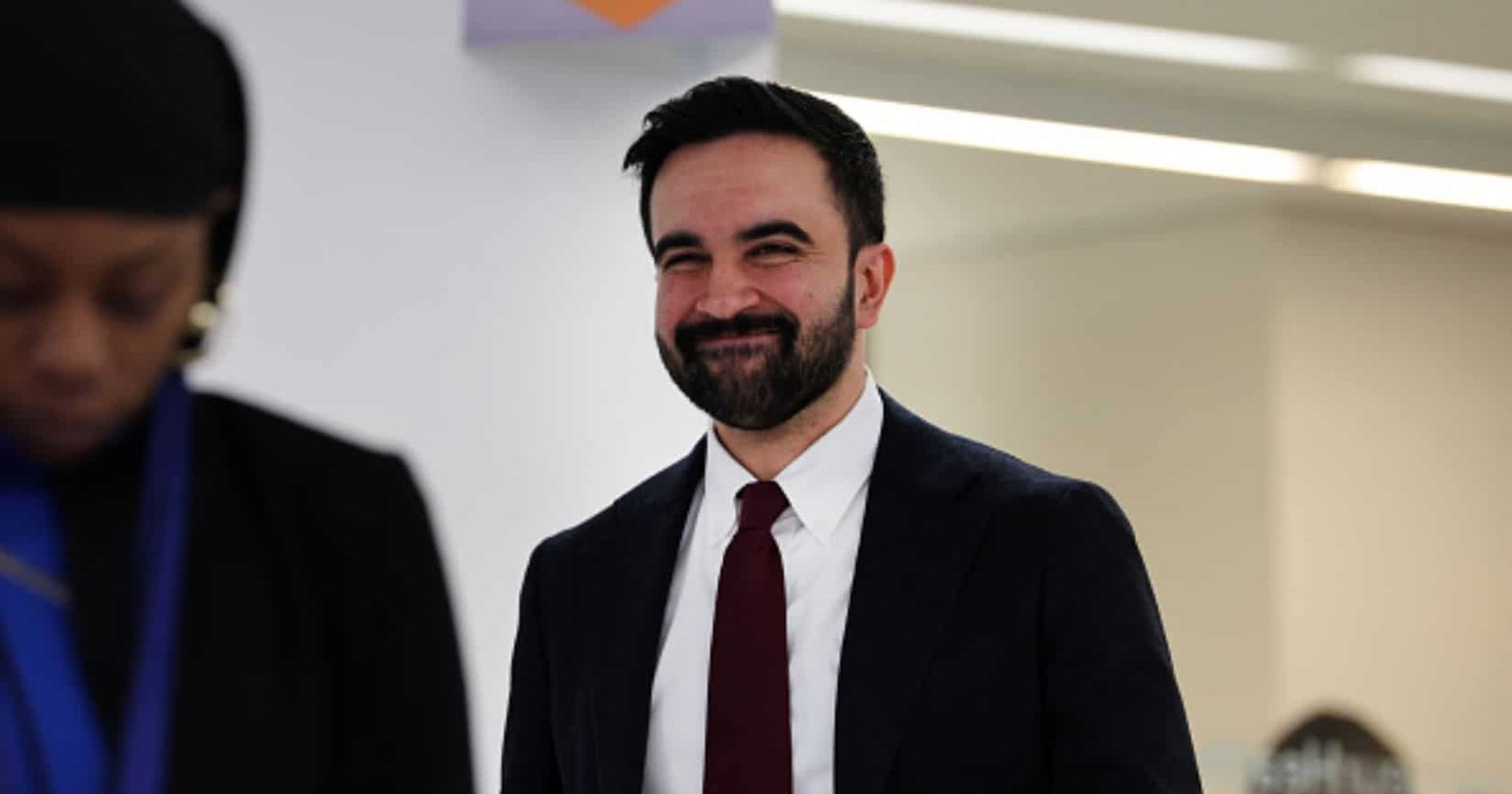


In a bold move that has ignited debate across the Atlantic, New York City’s first Muslim mayor, Zohran Mamdani, has invoked one of Islam’s most sacred historical narratives to defend the city’s immigrant population. Speaking at an interfaith breakfast, Mamdani utilized the concept of the Hijrah, the Prophet Muhammad’s (SAW) migration from Mecca to Medina, as a moral blueprint for modern US immigration policy.
The Scriptural Framework
Mamdani, who took office just weeks ago on January 1, framed Islam as a faith inherently “built upon a narrative of migration”.
He reminded his audience that the Prophet (SAW) was himself a “stranger” and a refugee fleeing persecution, only to be welcomed with sanctuary in Medina.
Citing Surah An-Nahl (16:41) and the Hadith, Mamdani argued that the duty to protect “the stranger” is not merely a political choice but a spiritual imperative.
Speaking at a multi-faith event, NYC Mayor Zohran Mamdani referenced Islamic teachings — including the Hijrah, the Prophet Muhammad’s migration from Mecca to Medina — to frame migration as a shared moral responsibility.
He called on government to protect and support those facing… pic.twitter.com/IirrI3aD5c
— TRT World (@trtworld) February 7, 2026
Political Action: The Sanctuary Order
This wasn’t just a theological lecture; it was the preface to a significant executive action.
Mamdani announced new protections for New Yorkers against what he termed “abusive immigration enforcement,” specifically targeting ICE operations.
By elevating the Hijrah to a governing framework, he signaled that New York City would remain a sanctuary city, even in the face of escalating federal crackdowns.
Mamdani has such excellent eloquence, the way he here highlights the need to protect immigrant rights by explaining the concept of Hijrah in a simple and concise manner, using strong references from the Sunnah. https://t.co/yGLnymIZ56
— Ihsanullah Tipu Mehsud (@IhsanTipu) February 7, 2026
The Cultural Spark
The reaction has been a microcosm of global polarization. Supporters, including many in the Pakistani diaspora, have hailed the speech as a masterclass in using faith to advocate for human rights. Critics, however, have accused the mayor of using religious doctrine to shield illegal migration.
For many, Mamdani’s stance represents a new era of Muslim political identity in the West, one that refuses to be in the shadows and instead uses its own history to fight for a more compassionate future.
You May Like To Read: