

From May to July 2025, The Guardian has published a series of articles about Pakistan that, while factually accurate in parts, present an unbalanced and often alarmist view of the country. By emphasizing drama and downplaying governance, resilience, and reform, the outlet repeatedly skews public perception. Instead of recognizing Pakistan’s institutional responses to challenges—be they environmental, legal, or political—The Guardian tends to focus on spectacle and suffering, often framing the state as ineffective or absent. A review of several recent articles reveals a pattern of misrepresentation that undermines Pakistan’s international image.
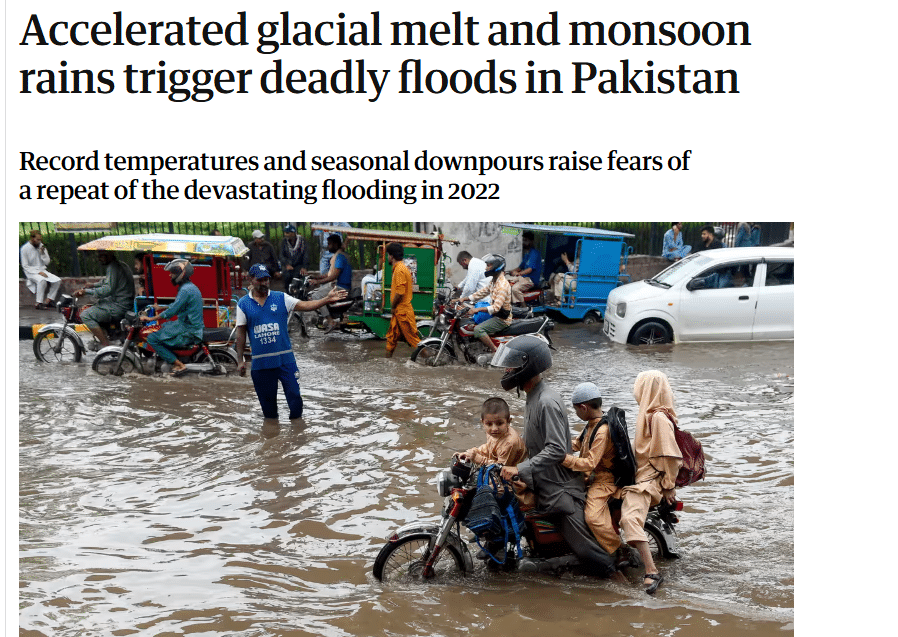
Accelerated glacial melt and monsoon rains trigger deadly floods in Pakistan.
On July 9, The Guardian ran a climate-focused story titled “Accelerated glacial melt and monsoon rains trigger deadly floods in Pakistan.” The article described widespread destruction, citing intense heat waves, melting glaciers, and deadly flash floods that killed at least 72 people and displaced thousands. While the report captured the urgency of the climate crisis, it entirely omitted the government’s emergency response. No mention was made of the National Disaster Management Authority (NDMA), the deployment of rescue helicopters, provincial-level disaster control rooms, or emergency aid distributed through army-coordinated missions. Nor did it reference the ongoing implementation of Pakistan’s Flood Response Plan 2025 or climate adaptation protocols being advanced with UN partnerships. By framing Pakistan solely as a climate victim, the article ignored the state’s proactive measures and institutional engagement. The result was a powerful but incomplete narrative that removed Pakistan’s agency in managing climate disasters.
Source: theguardian
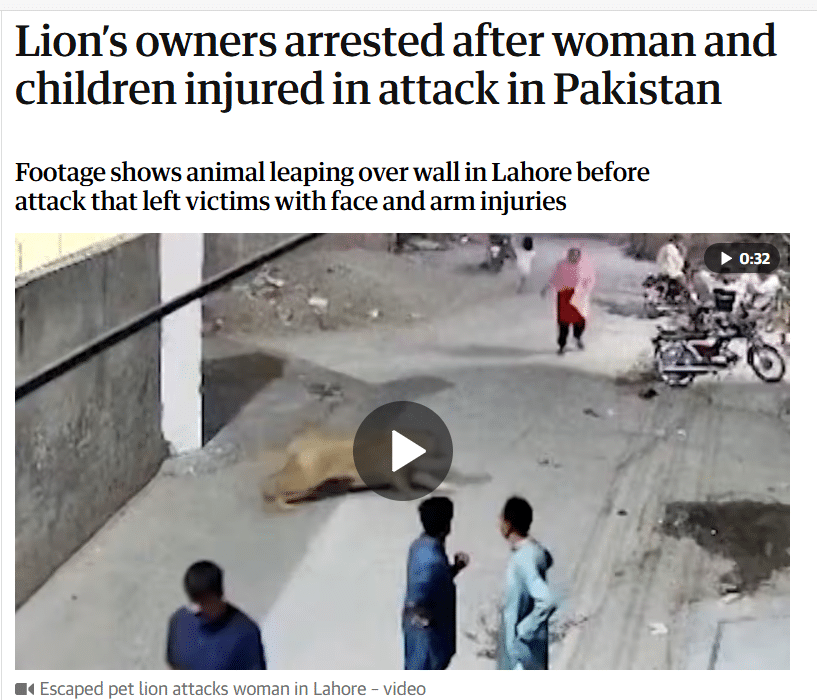
A Pet Lion Attacked a Woman and Kids in Lahore
Another sensational headline appeared on July 6, when The Guardian reported a story on a pet lion attack in Lahore. The report, while correctly identifying that a woman and children were injured, failed to place the event in the broader legal and regulatory framework. Before the attack, the Sindh Wildlife Department had launched a crackdown on exotic pet ownership, issuing public safety warnings and carrying out random inspections. After the incident, the owner was arrested under amended wildlife protection laws. This case has sparked further debate in legislative circles about banning large exotic animals in residential areas. However, none of these developments were mentioned. Instead, The Guardian focused on the bizarre nature of the event, reinforcing the perception of lawlessness and chaos in Pakistan without acknowledging the legal structures and reforms underway to prevent such incidents.
Source : The Guardian
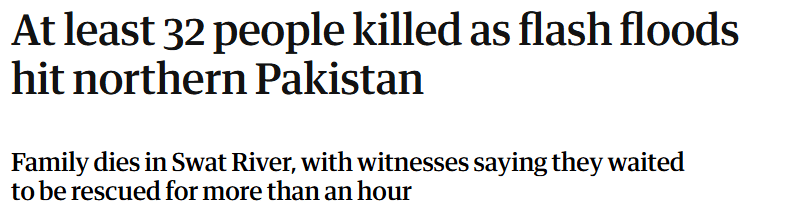
At least 32 people were killed as flash floods hit northern Pakistan
The outlet has also made sweeping generalizations when covering natural disasters. In a June 28 story, it reported that “at least 32 people were killed as flash floods hit northern Pakistan.” Yet again, the article failed to recognize the extensive rescue operations conducted by provincial disaster authorities, as well as the immediate suspension of officials found negligent in safety preparedness. These omissions give the impression that the state was inert when, in fact, various departments were coordinating relief efforts on the ground. Pakistan’s increasing vulnerability to glacial lake outburst floods (GLOFs) is a climate issue recognized by multiple international agencies. Still, The Guardian offered no context about Pakistan’s climate diplomacy or multilateral advocacy.
Source: The Guardian
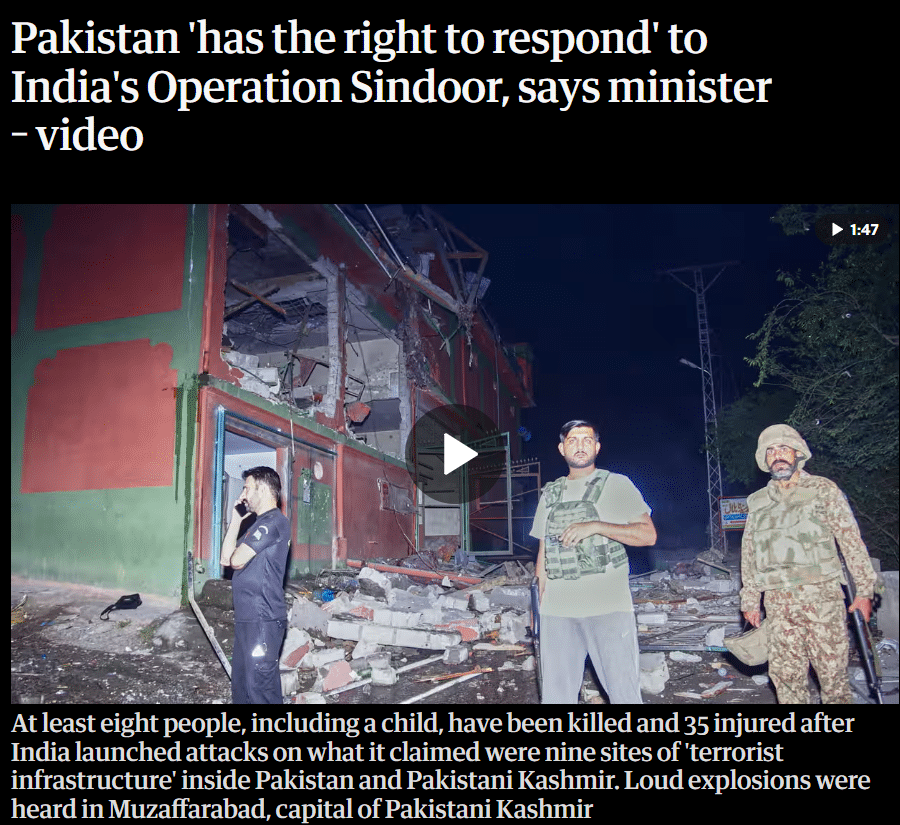
Operation Sindoor
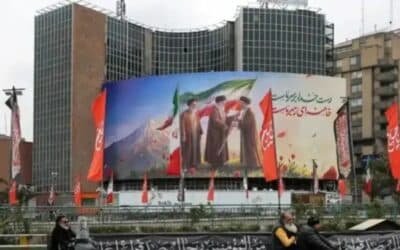
This pattern also extends into The Guardian’s political and security reporting. On May 7, the publication covered the Indian military operation dubbed “Operation Sindoor,” which targeted alleged Pakistan-backed insurgents in Kashmir. The article cast Pakistan as the provocateur, yet omitted the Pakistani government’s demand for an impartial investigation via the UN Military Observer Group in India and Pakistan (UNMOGIP). Furthermore, Pakistan’s restraint in the face of repeated Indian aggression and its emphasis on diplomatic engagement were ignored. The article missed an opportunity to show Pakistan’s use of legal frameworks and international forums in advocating for Kashmir. This strategic omission misleads readers into thinking Pakistan promotes rather than de-escalates conflict in the region.
Source: The Guardian
What’s most concerning is not that The Guardian reports on crises or failures, these are newsworthy and should be covered. Instead, it’s that the outlet consistently fails to balance this reporting with coverage of state action, civic response, or legal reform. These gaps don’t just mislead global audiences; they perpetuate a one-dimensional image of Pakistan as a failing state. This is particularly damaging in an international media ecosystem where perception shapes diplomacy, trade, and public opinion.
To ensure fair and informed journalism, The Guardian must recalibrate its coverage of Pakistan. It should integrate government statements, highlight legal developments, and offer balanced views when covering controversial or tragic events. All the discussed reports are highlighting the media manipulation against Pakistan. Contextual reporting on Pakistan should reflect both the nation’s challenges and its efforts to address them. Such reporting doesn’t weaken a story’s power—it enhances its credibility and relevance.
You May Like to Read: