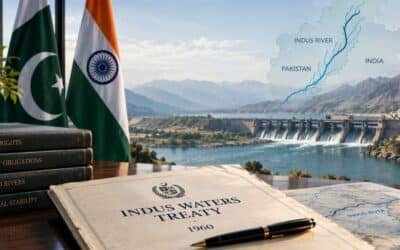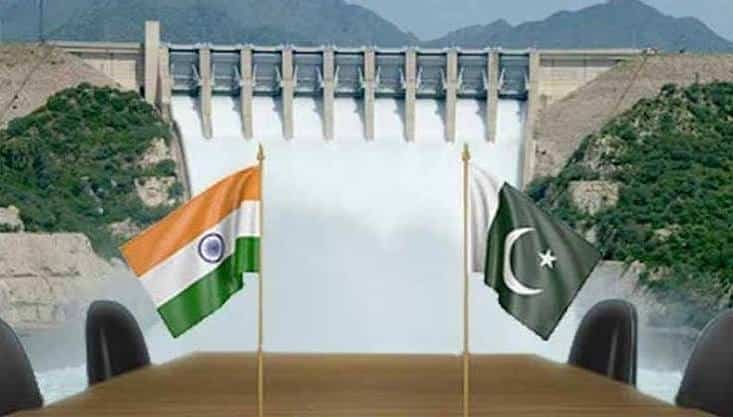





“Water is the lifeblood of the region and should never be weaponized,” Prime Minister Shehbaz Sharif told the Shanghai Cooperation Organization summit on Tuesday. He said this at a meeting of the SCO Council of Heads of State in Bishkek, Kyrgyzstan. Without naming India, he raised the issue of the Indus Waters Treaty and said it should be honored.
Key Takeaways
- PM Shehbaz asks for ‘unconditional’ implementation of Indus Waters Treaty
- Hague court ruling following which: The IWT continues to be fully in force
- Permanent Court of Arbitration puts a lid on India’s construction of Kishanganga hydro project
- India calls court ‘illegally constituted ’; rejects verdict
- Neutral expert to determine treaty compliance by project by July 2027
Today, I was honoured to address the SCO Council of Heads of State Meeting in Bishkek as Pakistan assumed the SCO Chairmanship for 2027. I congratulated the Kyrgyz Republic on successfully hosting the Summit and steering the Organization with distinction.
Guided by the Shanghai… pic.twitter.com/1mvRW85klD
— Shehbaz Sharif (@CMShehbaz) September 1, 2026
PM: “Water cannot be a tool of coercion”
Speaking in Bishkek, Shehbaz said the region cannot reach its full potential without durable peace. Water was central to the vision he was painting. “Water is the lifeblood of our region. “It sustains millions of lives, it sustains our land, and it secures the very future of our coming generations,” he said.
He was candid about where he saw the biggest risk. “Water must never be weaponized,” he said. “It can’t be used as an instrument of coercion, and it can’t be exploited for political leverage.” He went further on the binding character of international water agreements. “The treaties that govern our shared waters are serious, binding international agreements. These are not political issues of convenience to be thrown aside at will. “They must be honored without conditions, in the letter and in the spirit,” he said.
The Hague Ruling Gives More Weight to the Speech
Shehbaz said this a day after the Permanent Court of Arbitration at The Hague ruled that the Indus Waters Treaty remains fully in force. The court said India had no basis for suspending the agreement, either under the treaty or under international law. The decision was unanimous. The judges rejected every one of India’s reasons for suspending or terminating the agreement.
India requested the suspension of the treaty, and Pakistan filed an application before the PCA under Article IX and Annexure G of the treaty for a ruling on the treaty’s legal status. As part of its ruling, the court also blocked India from pouring concrete any higher on a hydroelectric project it is building in disputed Kashmir. The restrictions will be in place for 90 days after a decision by a neutral expert appointed by the World Bank on whether the project’s design meets the treaty’s requirements. That expert is supposed to decide by July 2027.
Importantly, the court noted that India did not take part in the proceedings or make any written or oral submissions. While New Delhi was not directly involved, the judges said they still considered India’s known positions, as expressed in public statements.
India denies the Hague ruling
India was quick to strike back. Its Ministry of External Affairs put out a statement declaring the tribunal “illegally constituted” and saying its decisions have no bearing on India’s sovereign actions or hydroelectric projects. India had never accepted the legal status of the arbitration body and had always refused to participate in its proceedings, the ministry said.
New Delhi also reiterated that its decision to hold the treaty in abeyance is still in effect, a position New Delhi has maintained since suspending the agreement in the wake of the April 2025 Pahalgam attack that killed 26 people. Pakistan denied involvement in that attack. India has said the treaty will remain suspended until Pakistan demonstrably and permanently stops supporting cross-border militancy, a condition Pakistan dismisses as baseless.
A Dispute Arises Over Last Year’s Conflict
This showdown over water is part of a much bigger, much more dangerous chapter in India-Pakistan relations. In April 2025, India unilaterally suspended the treaty, and a brief military conflict between the two countries followed in May that year, one of the most serious escalations between the nuclear-armed neighbors in years.
In that context, Shehbaz’s comments in Bishkek carry more than symbolic weight. Now, with The Hague supporting Pakistan’s position on the legal status of the treaty, and India bluntly rejecting that ruling, the Indus Waters Treaty seems set to be a source of acrimony between the two countries for the foreseeable future, one that will likely remain unresolved at least until the neutral expert’s verdict on the Kishanganga project is issued in 2027.