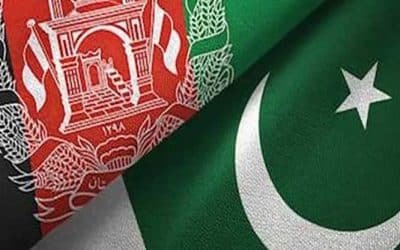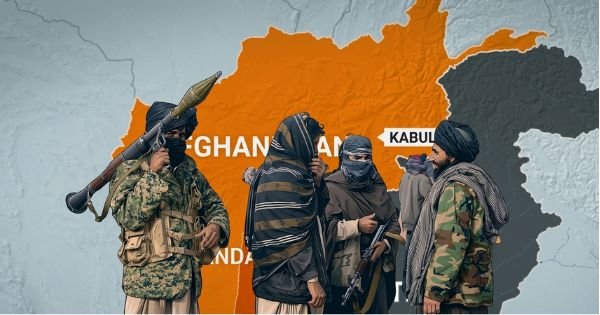
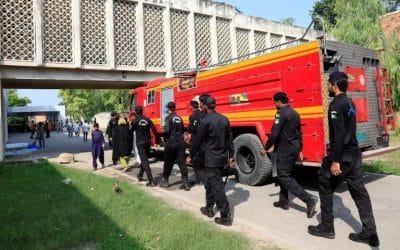


Pakistan conducted an airstrike on a site near Kabul in March 2026 that Islamabad said was linked to TTP infrastructure. Kabul said it was a rehabilitation center and that there were more than 400 casualties. Pakistan outrightly denied it. But the two sides have been unyielding, and the long-running dispute is indicative of the current state of affairs between Pakistan and Afghanistan. Once close allies, the two are at loggerheads and blame each other for allowing militant groups to operate.
The confusion often starts with the names of those trying to keep track of Pakistan’s security situation. The Afghan Taliban and the Tehreek-e-Taliban Pakistan have a name in common, a rough ideology, and, Islamabad says, a border that they have turned into a revolving door for militants. But they are not the same institution. They have never been formally merged, and the gap between what unites them and what divides them lies at the heart of Pakistan’s current security debate.
Key Highlights
- The Afghan Taliban movement emerged from Kandahar’s madrassas in 1994 and ruled Afghanistan from 1996 until the 2001 US-led intervention, then returned to power in August 2021.
- Founded in December 2007 under Baitullah Mehsud, the Tehreek-e-Taliban Pakistan (TTP) emerged as a distinct umbrella group centered in Pakistan, uniting about five militant factions from the tribal districts.
- Between 2013 and 2020, the TTP splintered repeatedly—Jamaat-ul-Ahrar, Hizb-ul-Ahrar, the Hafiz Gul Bahadur network, and Mehsud-Wazir factions all broke away at different points, only for several to rejoin under current TTP chief Noor Wali Mehsud from 2020 onward.
- The term “TTA,” used by some Pakistani officials to refer to the Afghan Taliban government, is not recognized by Kabul. It was originally a rhetorical technique implying that the Islamic Emirate and the TTP are effectively the same.
- Pakistan and the Afghan Taliban reached a ceasefire and non-interference deal brokered in Doha in October 2025. But by March 2026, Islamabad said Kabul had breached the agreement and launched Operation Ghazab lil-Haq, retaliating against targets inside Afghanistan.
- Even the Afghan Taliban’s own house is split between Kandahar’s religious leadership under Haibatullah Akhundzada and the Haqqani-linked administrative wing in Kabul.
Two Names, One Persistent Confusion
Start with the word that trips up just about every reader outside the security beat: TTA. It sounds like a natural complement to TTP, the Tehreek-e-Taliban Afghanistan, rather than Pakistan. Some Pakistani officials talk that way. This is exactly what Defense Minister Khawaja Asif did in parliament in 2023, when he referred to the Afghan Taliban government as “Tehreek-e-Taliban Afghanistan” while pressing Kabul on TTP sanctuaries, a framing meant to argue that the ruling authority in Kabul and the militant group attacking Pakistan are, in practice, cut from the same cloth.
The Afghan Taliban flatly reject this coupling. It rules under the name Islamic Emirate of Afghanistan (IEA) and has consistently denied that the TTP operates even from its soil, telling Pakistan in one exchange that the “assertions” about thousands of TTP fighters based in Afghanistan were “contrary to facts on the ground,” despite UN monitoring reports saying otherwise. Thus, when this report uses the term “TTA,” it is referring to a specific piece of Pakistani political rhetoric, not a self-description of any actual group—a distinction that is worth keeping in mind, because conflating the two is itself part of the debate between Islamabad and Kabul.
Where the Afghan Taliban Came From
The group that would become the Afghan Taliban emerged in 1994 around a group of former mujahideen fighters in Kandahar led by one-eyed veteran Mullah Mohammad Omar. The Soviet withdrawal and the fall of Mohammad Najibullah’s government in 1992 left Afghanistan fractured, with warlords controlling isolated patches of terrain and ordinary Afghans caught between checkpoints and shifting front lines (Coll, Directorate S, 2018). The Taliban had promised order at first. An austere, madrassa reading of Islamic law, which meant an end to warlord predation.
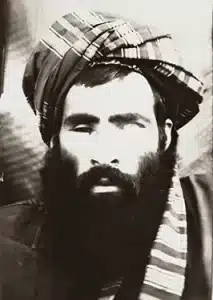
Mollah Omar (1960-2013) is considered the founder of the famous Taliban movement in Afghanistan.
They seized Kabul in 1996 and ruled about 75 percent of the country until the U.S.-led intervention following the September 11 attacks. The first Emirate attracted worldwide notoriety with a long list of prohibitions including musical instruments, satellite dishes, chess boards, Christmas cards, etc., all enforced by a religious police apparatus (Coll, 2018). The 2001 intervention, aided by CIA paramilitary teams working with Northern Alliance commanders and by defections such as Hamid Karzai’s, who reportedly rode into southern Afghanistan on a motorbike to organize Pashtun resistance to the Taliban (Coll, 2018), ousted them from power within weeks. Washington’s blunt ultimatum to Islamabad at the time: On September 13, 2001, Deputy Secretary of State Richard Armitage presented General Pervez Musharraf with seven non-negotiable demands, including cutting fuel supplies to the Taliban and stopping Pakistani volunteers from crossing the border to fight for them (Coll, 2018) – a reminder that Pakistan’s entanglement with Afghan militancy predated the TTP by years.
For the next two decades, the Taliban was an insurgency, rebuilding its strength in the “guerrilla-held countryside” while Kabul and other cities remained government-held islands, until it retook the country in August 2021 as US and NATO forces withdrew.
2007: A Pakistani Taliban Is Born
The TTP is a different organization, with a different origin story, even if it draws on the same well of Deobandi jihadism. Baitullah Mehsud, a commander of the Mehsud tribe of South Waziristan, united some five militant factions from Pakistan’s Federally Administered Tribal Areas (FATA) under one umbrella, formally announced in December 2007. What set it off was the Pakistani military’s own campaign against militants in the tribal belt that year, after the army stormed the Lal Masjid in Islamabad.
Crucially, the TTP was never in the chain of command of the Afghan Taliban. “Independent” from, but ideologically loyal to, “Mullah Omar’s movement” — a group of Pakistani fighters who saw themselves as continuing the same jihad, but aimed the bulk of their violence at the Pakistani state rather than at foreign forces in Afghanistan, according to one long-running analysis. That one difference — who the guns are pointed at — is the neatest dividing line between the two movements, and it has held for almost two decades even as personnel, training camps and safe houses have crossed the border in both directions.
Not all tribal militant leaders were on the same page with Baitullah’s strategy from the beginning. Hafiz Gul Bahadur and Mullah Nazir were two prominent commanders who broke away from the direction the TTP was taking, as they opposed turning guns on the Pakistani military and preferred to protect the foreign fighters, including al-Qaeda and Haqqani-linked figures, who were sheltering in their areas. In 2008, the two created a rival network, the Muqami Tehrik-e-Taliban, which explicitly renounced attacks on the Pakistani state.
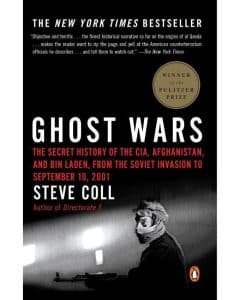
Ghost Wars: The Secret History of the CIA, Afghanistan, and Bin Laden, from the Soviet Invasion to September 10, 2001, abbreviated as Ghost Wars, is a book written by Steve Coll, published in 2004 by Penguin Press. It won the 2005 Pulitzer Prize for General Nonfiction.
The Fracture Years
US drone strike killed Baitullah Mehsud in August 2009. His successor, Hakimullah Mehsud, was killed by a drone strike of his own in November 2013, and leadership passed to Mullah Fazlullah, the first non-Mehsud amir – which in itself created friction inside a group whose original core was built around Mehsud tribal loyalty.
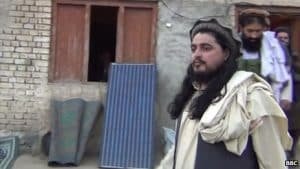
Hakimullah Mehsud (1979-2013) was a Pakistani militant who was the second emir of Tehrik-i-Taliban Pakistan (TTP) from 2009 to 2013
The most significant split came in August 2014 when Fazlullah removed Omar Khalid Khorasani as the TTP commander for the Mohmand tribal district after a series of internal disputes. In response, Khorasani founded Jamaat-ul-Ahrar (JuA), taking with him a chunk of TTP’s Mohmand-based fighters and pursuing an even more aggressive campaign of mass-casualty attacks, partly to establish the new group’s credibility.
One of the country’s deadliest actors quickly emerged as JuA. It claimed twin suicide bombings on churches in Lahore’s Youhanabad neighborhood that killed around 15 people in March 2015. In Easter Sunday, 27 March 2016, a JuA suicide bomber detonated at the entrance of Gulshan-e-Iqbal Park in Lahore, deliberately timed to hit Christian families; the attack killed roughly 75 people, 29 of them children, and injured well over 300.
Six months later, on 16 September 2016, a JuA bomber struck a mosque in Payee Khan, Mohmand Agency, during Friday prayers, killing 36 people in what the group described as retaliation against tribal elders cooperating with the government. In February 2017, a JuA bomber hit a pharmacist’s protest outside the Punjab Assembly in Lahore, killing at least 13 — an attack that helped trigger the military’s Operation Radd-ul-Fasaad.
JuA wasn’t the only piece to break off. A faction under Khan Said “Sajna” split away in the same period, as did a group under Shehryar Mehsud, and a separate Punjabi Taliban wing announced it was stepping back from armed violence toward “preaching” only.
Hizb-ul-Ahrar, led by another Omar Khalid Khorasani-linked commander, split off from JuA itself in 2015 over disagreements about pledging loyalty to ISIS. By the mid-2010s, what had started as a single umbrella group looked more like a loose archipelago of Taliban-branded factions, each with its own leadership, territory, and tactical preferences—some hitting Pakistani cities, others sticking to ambushes on security convoys along the Afghan border.
Noor Wali Mehsud’s Reconsolidation
Noor Wali Mehsud has rejuvenated much of the organization since becoming the TTP’s chief in 2018. Where his predecessors struggled to keep the umbrella together, Noor Wali pursued a patient strategy of reunification, folding smaller sectarian and splinter groups back into the fold. Both JuA and Hizb-ul-Ahrar formally re-joined the TTP in August 2020, with the group’s media wing describing the reunion as a shot in the arm to the ‘holy war’ against Islamabad. Soon after, a Lashkar-e-Jhangvi sectarian faction led by Khush Muhammad Sindhi emerged.
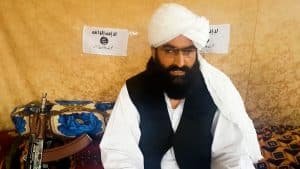
Noor Wali Mehsud, the 4th head of TTP, has rejuvenated much of the organization since becoming the TTP’s chief in 2018
By January 2026, threat assessments would show a TTP that had “solidified its internal structure by reabsorbing several splinter factions” and improved its media operations, the Strategic Threat Outlook said. It also would shift to more targeted IED and ambush campaigns rather than the high-profile suicide bombings that were common during the JuA years. The TTP’s total strength has been estimated at about 25,000 at its peak in 2014, 6,000 to 6,500 by UN intelligence in 2024, and 7,000 to 10,000 by the Pakistani government in 2022. But all recent studies agree that the group is still one of the most active militant groups in the region.
But peace was not achieved everywhere. The TTP and JuA’s Central Shura Council again saw arguments over leadership in 2023. JuA made its presence felt through its own attacks in 2025. In May 2026, 19 JuA fighters and 3 TTP members were killed in a bloody battle between the two sides in the Kurram district. The fighting shows that the TTP still comprises a range of groups that can turn on each other when their aims are not in sync.
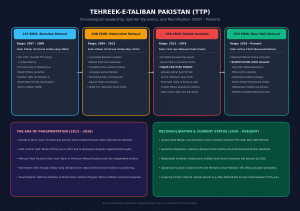
TTP Leadership Timeline
What the TTP Looks Like Today
Since the TTP formally ended its ceasefire with Islamabad on 28 November 2022, Pakistan has recorded a sustained uptick in attacks, concentrated in Khyber Pakhtunkhwa and Balochistan. A few incidents illustrate the range of groups still operating under or alongside the TTP banner.
One of the most active anti-Pakistan networks along the North Waziristan border today is the Hafiz Gul Bahadur group; the same network that broke away from the TTP’s founding structure back in 2008 over targeting the Pakistani state, and which has since reversed course. On 15 July 2024, ten of its fighters drove a vehicle laden with explosives into the perimeter wall of Bannu Cantonment. The blast and subsequent firefight killed eight Pakistani soldiers before all ten attackers were killed.
In March 2025, a Hafiz Gul Bahadur-linked faction, Jaish-e-Fursan-e-Muhammad, launched another attack on Bannu Cantonment with twin suicide bombings during an Iftar gathering that killed nine people, including five children. And on June 28, 2025, a Hafiz Gul Bahadur suicide bomber rammed an explosives-laden vehicle into a military convoy in Mir Ali, North Waziristan, killing 13 soldiers and injuring 29 more. Since the Taliban’s 2021 takeover of Kabul, the group has carried out more suicide attacks than any other group, according to analysts tracking it, and has mostly targeted Pakistani security installations in North Waziristan, Bannu, and Lakki Marwat.
Older history linked to the TTP continues to shape public memory of the group inside Pakistan more than any of this. The deadliest single terrorist attack in the country’s history was the Army Public School attack in Peshawar on 16 December 2014 when seven TTP gunmen stormed the school and killed some 147 people, the overwhelming majority of them children, in an assault the group said was revenge for the military’s operations in North Waziristan. That one day changed Pakistani counterterrorism policy, ushering in the National Action Plan and years of military operations that pushed much of the TTP leadership across the border into Afghanistan — the very sanctuary issue that now defines Islamabad-Kabul ties.
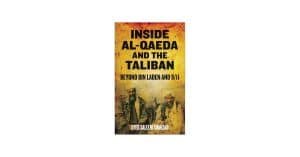
Inside Al-Qaeda and the Taliban: Beyond Bin Laden and 9/11 is a 2011 book written by Pakistani investigative journalist Syed Saleem Shahzad. It discusses the emergence of TTP & other terrorist factions along the Pak-Afghan border.
.
The Rift Inside the Afghan Taliban’s Own House
Pakistani commentary tends to treat the Afghan Taliban as a single bloc facing off against Islamabad, but Kabul has its own internal fault line, and it matters for anyone trying to predict how the TTP question gets resolved, if it ever does.
One rift runs between what can be described as a Kandahar spiritual center, led by supreme leader Haibatullah Akhundzada, and a Kabul-based political and administrative wing that actually runs the government day to day. The Kandahar leadership is deeply embedded in Durrani-tribe networks that have historically been the main players in Afghan politics and increasingly finds itself fighting for cabinet posts and resources against the Haqqani network, which is based in the Ghilzai-tribe areas of greater Paktika (Firdous, RSIS Counter Terrorist Trends and Analyses, 2024). The second rift is over who deserves credit for the 2021 return to power. Mullah Abdul Ghani Baradar’s camp credits the Doha negotiations that he led, while Sirajuddin Haqqani’s camp maintains that the war was won on the battlefield through military operations led by Haqqani (Firdous, 2024).
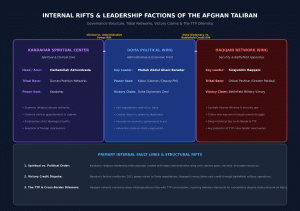
TTA Internal Grouping
This matters for Pakistan because it means “the Afghan Taliban’s position on TTP” isn’t necessarily one position. The Haqqani network in particular has long-standing historical ties to not only al-Qaeda but also TTP commanders through personal and tribal ties — which helps explain why Pakistani officials have named Sirajuddin Haqqani’s circle specifically when pushing Kabul on the TTP sanctuary, even as the Kandahar leadership makes its own separate calculations about religious legitimacy and relations with Pakistan.
Where TTP and the Afghan Taliban Overlap
There is a real overlap between the two movements, and that is why Pakistan has a hard time seeing them as separate issues. Both are rooted in the Deobandi jihadist ideology and Pashtun tribal networks that extend across the Durand Line. TTP fighters fought alongside the Afghan Taliban against US-led coalition forces for years prior to 2021, forging personal and operational ties that did not end with the Afghan Taliban’s takeover of Kabul. Since then, the TTP has continued to enjoy safe havens on Afghan soil – Pakistan’s government has cited estimates of over 5,000 TTP fighters based in Afghanistan, a figure disputed by Kabul. Experts also highlight a shadow front, Tehreek-e-Jihad Pakistan, operating as an al-Qaeda cutout that allows Kabul to maintain “plausible deniability” as fighters tied to it attack Pakistani military installations (Firdous, RSIS, 2024).
Where They Diverge
There is a very real divergence. Today the Afghan Taliban run a state that must keep its economy going, feed its people, and win the goodwill of international donors and neighbors, despite their occasional reluctance. This creates incentives for at least minimal restraint, which the TTP lacks because it faces no international pressure and controls no territory. The Afghan Taliban publicly state that the Taliban Terrorist Organization (TTP) is an internal Pakistani issue, the result of failed Pakistani policies in tribal areas. This is Kabul’s position, given that many TTP fighters operate from Afghan territory.
Pakistan holds the opposite view – that Kabul has failed or been unwilling to prevent the TTP from operating within its borders, consistent with the counterterrorism commitments made in the Doha Agreement and a Pakistan-specific ceasefire signed in Doha in October 2025. This was to be resolved in an agreement in October 2025 between Taliban Defense Minister Mohammad Yaqoob Mujahid and Defense Minister Khawaja Asif, which was to include a technical committee with the help of Qatar and Turkey and a ceasefire. But it was a short one. Pakistani officials and analysts told The Nation that the Afghan Taliban will break “all commitments and pledges” made in Doha by March 2026, citing increasing cross-border attacks and ongoing TTP training camps inside Afghanistan. Pakistan responded with Operation Ghazab lil-Haq, targeting militant hideouts, ammunition dumps and military headquarters inside Afghanistan.
The ISPR said the clashes killed 297 Afghan Taliban fighters and martyred 12 Pakistani soldiers. Pakistan said a strike targeted a TTP facility near Kabul in March 2026, while Afghan officials said a rehabilitation center was targeted, killing more than 400 civilians, a claim Islamabad denied. After the strikes, the Afghan Taliban reportedly told the TTP leadership to move south of Kabul, to avoid further attacks. This admission suggests the TTP leaders had been harbored very close to the Afghan capital, although this was never officially admitted.
The Other Players Worth Knowing
The story of this rivalry cannot be told without the actors who circle both movements. The TTP and the Afghan Taliban remain bonded by the “ideological gel” of al-Qaeda, which was reinforced by the killing of al-Qaeda’s leader Ayman al-Zawahiri in a US drone strike in 2022 at a safe house in Kabul with links to the Haqqani movement (Firdous, RSIS, 2024). At the other extreme is the Islamic State Khorasan Province (ISKP), which seeks to be a regional spoiler. It recruits Tajik and Uzbek fighters by denouncing the Afghan Taliban as apostates for their diplomatic overtures to Iran and Shia communities, and targets Russian and Chinese diplomatic interests in particular to break Kabul’s external ties (Firdous, 2024).
The Taliban government in Afghanistan is also facing pockets of resistance from the National Resistance Front led by Ahmad Massoud and the smaller Afghanistan Freedom Front in the north and east, a reminder that the Taliban’s control over the country is not complete even after retaking Kabul more than four years ago (Firdous, 2024).
Frequently Asked Questions
Is the Afghan Taliban the same organization as the TTP? No. They share ideological roots and, in places, fighters, but they were founded separately, operate under different leadership, and pursue different immediate goals—one governs Afghanistan, the other fights to overthrow the Pakistani state.
What does “TTA” actually mean? This label is not used by the Afghan Taliban itself. The Pakistani officials, including Defense Minister Khawaja Asif, have most prominently used it, conflating the government in Kabul with the TTP.
Why doesn’t the Afghan Taliban hand over TTP leaders to Pakistan? The Afghan regime publicly denies any presence of the TTP, or any other terrorist organization, on its land. However, analysts have been pointing out for decades that Afghanistan has become a safe haven for all the terrorists.
Is the TTP banned in Pakistan? Yes, since 2008, and it is also designated a terrorist organization by the United Nations and the United States.
Is the TTP the same as ISIS-Khorasan? No, and the two are frequently rivals rather than allies, with ISKP actively recruiting away from both the TTP and the Afghan Taliban.
What triggered the collapse of the 2021-22 TTP-Pakistan ceasefire? Talks stalled over TTP demands, including rolling back the merger of tribal areas into Khyber Pakhtunkhwa, and the ceasefire officially ended in November 2022, followed by a sharp rise in attacks.
What happened in the March 2026 Kabul strike? Pakistan struck what it called TTP infrastructure near Kabul. Afghan authorities said the strike hit a rehabilitation center and killed more than 400 people. The two sides still disagree on their accounts.
You May Like To Read: NAVTTC’s Free Livestock, Fisheries, and Export Logistics Training: What You Need to Know