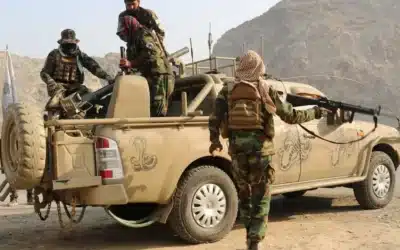
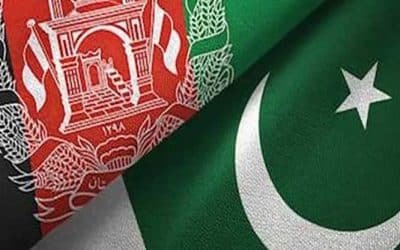
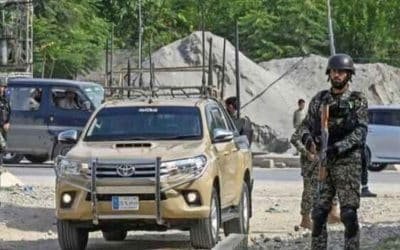
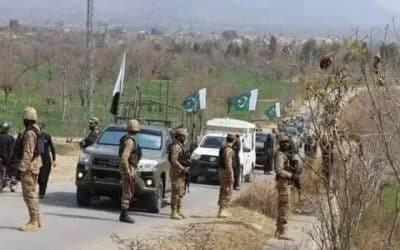
Pakistan today stands at a defining juncture in its regional security policy. The resurgence of the Tehreek-e-Taliban Pakistan (TTP), coupled with the complexities of its western frontier, has brought Pakistan and Afghanistan back into the global spotlight. The evolving situation has compelled Islamabad to recalibrate its security doctrine, one that prioritizes defence, dialogue, and development in equal measure.
While Pakistan continues to advocate peace and stability in the region, its patience is increasingly tested by the persistent wave of terrorist attacks emanating from Afghan soil. According to recent ACLED data, more than 600 attacks in 2025 have been traced back to planning and facilitation networks operating inside Afghanistan. These attacks are not isolated; they represent an organised campaign targeting Pakistan’s security forces and civilians alike.
We’ll cover these 8 hard-hitting points :
TTP 2025 surge: 600+ attacks planned from Afghan soil (ACLED data)
Istanbul Talks collapse: Why Taliban refused written commitment on TTP
Economic chokehold: $60M Afghan losses vs Pakistan’s $150M – who’s really hurting? Is economy…— Abdullah Hussain (@ManOfOneGod) November 10, 2025
The Breakdown of the Istanbul Talks
In early 2025, the Istanbul Talks were expected to bring about a new phase of bilateral understanding between Islamabad and Kabul. The negotiations sought to formalize a written commitment from the Afghan Taliban government to prevent the use of its territory by the TTP and other hostile actors. However, despite verbal assurances, Kabul reportedly refused to sign any document that would legally bind it to act against these groups.
This refusal deepened Pakistan’s concerns about Afghanistan’s willingness and capacity to restrain militant networks that operate with apparent impunity in border regions. Diplomats familiar with the matter maintain that Islamabad’s insistence on a written agreement was rooted in pragmatism, not mistrust. History has shown that verbal promises alone cannot sustain peace.
In the words of one senior Pakistani official, “Peace built on silence is peace built on sand.” Without verifiable mechanisms, Pakistan argues, cross-border assurances hold little operational value.
Economic Pain on Both Sides
The ongoing tension has also carried a heavy economic cost for both nations. Border disruptions, restricted trade, and logistical blockages have reportedly inflicted losses of over $60 million on Afghanistan and around $150 million on Pakistan this year alone.
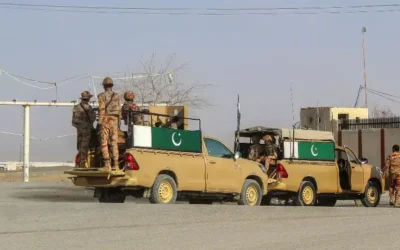
Pakistan’s western frontier has long been a vital artery for bilateral commerce and regional connectivity. However, the frequent closure of crossing points such as Torkham and Chaman has underscored a painful reality: economic cooperation cannot flourish amid insecurity. The suspension of goods traffic affects ordinary traders, transporters, and daily wage earners on both sides of the border.
Analysts note that Pakistan has continued to maintain humanitarian corridors and essential trade routes despite its security challenges, signaling that Islamabad’s actions are defensive, not punitive. The economic interdependence between the two nations remains strong, but Pakistan insists that security must precede economic integration.
Security as the Currency of Investment
For Pakistan, the link between security and economic stability has never been clearer. Without peace, no sustainable development initiative—whether domestic or regional—can succeed. This connection is especially relevant in the context of the China–Pakistan Economic Corridor (CPEC), which Islamabad sees as a strategic anchor for regional prosperity.
The idea of extending CPEC into Afghanistan has been discussed for years, but Pakistan now conditions such cooperation on the assurance of genuine peace and border security. As one Islamabad-based security analyst put it, “CPEC can become Afghanistan’s economic lifeline—but only if Kabul ensures that no bullet crosses the border while goods do.”
Pakistan’s new security calculus emphasizes that long-term development and foreign investment depend on stability. The government argues that global investors, whether from China, the Middle East, or the West, will not commit capital to a region still haunted by militancy. Security, in short, has become the first prerequisite for growth.
Surgical Strikes and Defensive Doctrine
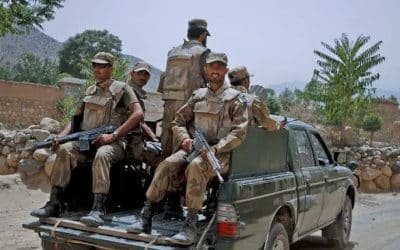
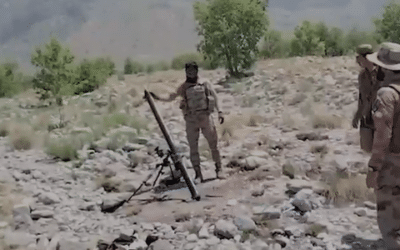
Pakistan’s recent surgical operations against terrorist hideouts along the western frontier reflect a more proactive defensive posture. Officials describe these actions as precision-based, intelligence-driven, and consistent with Pakistan’s right to self-defence under international law.
While some regional observers interpret these strikes as escalatory, Pakistan frames them as necessary, targeted responses to prevent further loss of life. Government statements emphasize that such measures are not intended as acts of aggression against Afghanistan but as protective operations to safeguard Pakistan’s citizens.
A former security adviser explained the shift succinctly: “Pakistan’s new doctrine is not to wait for the threat to cross the border—it is to neutralize it before it kills.” This policy echoes lessons learned from past counter-terrorism campaigns that achieved measurable results through rapid, localized interventions rather than prolonged operations.
You May Like To Read: Afghan Taliban Used Talks to Extend Ceasefire, Not Act Against Terrorism: FO
Balancing Regional and Global Pressures
The Afghan frontier has always been a complex geopolitical theatre. Pakistan now faces the dual challenge of maintaining its sovereignty while balancing relations with key partners such as China, the United States, and the broader Muslim world.
Islamabad’s leadership insists that its security policy is not aimed against Afghanistan, but rather for the stability of the entire region. The goal, officials say, is not confrontation but cooperation based on verifiable trust.
To that end, Pakistan has called for renewed diplomatic engagement under the facilitation of neutral mediators such as Qatar and Turkey, both of which have previously hosted negotiations. The idea is to establish a transparent mechanism for information sharing, joint border monitoring, and verification of counter-terror commitments.
Pakistan’s regional vision emphasizes strategic autonomy—working with all partners who respect its sovereignty and share its goal of lasting peace.
Afghanistan’s Economic Reality and the China Factor
In Afghanistan’s current economic climate, isolation is no longer an option. The Taliban government faces significant fiscal challenges and limited foreign recognition. For Kabul, engagement with Pakistan and integration into regional frameworks such as CPEC could offer a path to recovery.
Pakistan’s policymakers, while open to cooperation, argue that peace must come first. Extending CPEC or expanding bilateral trade without addressing cross-border militancy would undermine the project’s very foundations. China, too, has quietly indicated that stability is a precondition for investment.
Thus, Pakistan’s message to Kabul is both firm and constructive: security first, prosperity next. This principle forms the cornerstone of Islamabad’s emerging security policy.
You May Like To Read: Suicide Blast Near Islamabad G-11 Courthouse Claims Nine Lives, Injures Over a Dozen
A Policy Anchored in Realism
Pakistan’s new approach is not driven by emotion but by realism. It recognizes that the Afghan frontier cannot be stabilized overnight and that sustainable peace requires both internal reform and external cooperation. The country’s leadership continues to express willingness to work with Afghanistan—but not at the cost of its own citizens’ safety.
The doctrine rests on three interlinked pillars: defence, dialogue, and development. Defence ensures protection, dialogue builds trust, and development secures long-term peace. Pakistan’s strategy aims to harmonize these elements rather than treat them as separate silos.
The Road Ahead
Pakistan’s evolving security policy reflects a nation seeking balance—between firmness and flexibility, between sovereignty and regional responsibility. The border it shares with Afghanistan is not just a line on a map; it is a line between peace and chaos, between progress and regression.
If the Taliban-led government in Kabul genuinely desires stability, it must act decisively against the TTP and other groups that use Afghan soil to destabilize Pakistan. The continuation of such attacks would not only harm Pakistan but also jeopardize Afghanistan’s own economic and diplomatic future.
As Islamabad asserts, peace is the best trade agreement both countries can sign.
Pakistan’s message remains consistent: it is ready for cooperation, verification, and a shared future where the frontier becomes a gateway for trade rather than a passage for terror.
You May Like To Read: Nine killed, two abducted in separate incidents across Balochistan
Check out our latest video: